Mike Malott vs Joaquin Buckley: 5 Key Fight Factors
Mike Malott vs Joaquin Buckley was one of the major welterweight matchups on the UFC Edmonton card, bringing together a rising Canadian contender and a dangerous knockout artist seeking to regain his momentum. Their scheduled main event at Rogers Place in Edmonton, Alberta, on October 17, 2026, presented a compelling contrast between technical versatility and explosive striking power.
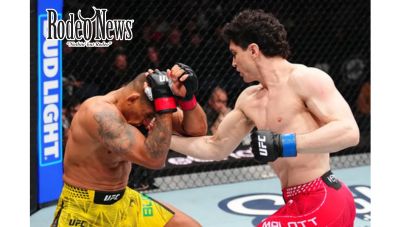
The matchup attracted attention because both fighters had important reasons to deliver a strong performance. Malott entered the contest riding a four-fight winning streak, while Buckley was looking to recover after consecutive defeats against Kamaru Usman and Sean Brady.
The original preview published by MMA Mania identified Malott’s kickboxing, Brazilian jiu-jitsu and takedown opportunities as important factors. However, Buckley’s knockout ability and experience in demanding fights made him a dangerous opponent regardless of his recent results.
Although the event has now taken place, the pre-fight analysis remains useful for understanding the tactical questions surrounding the matchup. The betting prices discussed below are historical figures from the original preview and should not be interpreted as current odds.
Mike Malott vs Joaquin Buckley: Why the Matchup Mattered
The contest represented a significant opportunity for Malott to strengthen his position among the UFC’s welterweight contenders.
Malott had established himself as a well-rounded fighter capable of combining striking with effective grappling. His recent performances had also increased expectations among Canadian MMA fans, particularly after his victory over former title challenger Gilbert Burns in April 2026.
Buckley, meanwhile, had demonstrated that he possessed the athleticism and punching power to trouble highly regarded opponents. His six-fight winning streak at welterweight had included impressive victories over established names, helping him establish himself as a serious contender.
However, defeats against Usman and Brady raised questions about how effectively Buckley could respond when opponents consistently challenged his defensive wrestling.
That made this matchup particularly interesting. Malott could attempt to exploit the weaknesses exposed in Buckley’s recent performances, while Buckley could use his speed, strength and striking to prevent the Canadian from implementing his preferred strategy.
The central question was whether Malott could turn his technical advantages into sustained control without allowing Buckley to land a decisive punch.
1. Malott’s Grappling Could Be a Major Advantage
One of the most important factors in the Mike Malott vs Joaquin Buckley matchup was the Canadian fighter’s ability to combine striking with submission grappling.
Malott is a Brazilian jiu-jitsu black belt who has developed a versatile approach to mixed martial arts. Rather than relying exclusively on punches and kicks, he can use clinch positions, takedowns and ground control to create additional opportunities.
That versatility is particularly valuable against opponents who prefer to operate at striking range.
When a fighter commits aggressively to a combination, the resulting movement can create openings for a level change or a body-lock entry. An opponent who struggles to recover position after a takedown may then be forced to defend against ground strikes or submission attempts.
MMA Mania’s original preview highlighted Buckley’s defensive grappling as a potential vulnerability. His previous losses to Usman and Brady had demonstrated how difficult it could be for him to maintain his preferred style when an opponent consistently threatened takedowns.
Malott’s challenge was to reproduce those difficult situations without becoming predictable.
Repeatedly attempting takedowns from too far away could expose him to powerful counterpunches. Instead, he needed to use his striking to encourage Buckley to move forward before changing levels or entering the clinch.
If successful, that approach could reduce the amount of time Buckley spent attacking in open space.
Why submission threats matter
A credible submission threat can influence a fighter’s decisions even when a fight remains standing.
Buckley would need to consider the possibility of being taken down whenever he committed to a forward attack. That extra concern could affect his timing, movement and willingness to throw combinations.
For Malott, the objective was not necessarily to force an immediate submission. Establishing control, exhausting his opponent and creating repeated defensive problems could be just as important.
Nevertheless, grappling superiority alone would not guarantee victory. Buckley had the physical tools to resist takedowns, scramble back to his feet and punish mistakes.
2. Joaquin Buckley’s Knockout Power Remained a Serious Threat
Despite his recent setbacks, Buckley entered the matchup with a reputation as one of the division’s most dangerous explosive strikers.
His punching power allows him to change the direction of a fight quickly. An opponent can control distance for several minutes and still lose the contest after one poorly timed entry.
Buckley’s career had included 15 knockout victories before the Edmonton matchup, according to the original MMA Mania preview. That record underlined why Malott could not afford to focus exclusively on wrestling.
Buckley also possesses the athleticism to attack from unusual angles. His ability to accelerate into combinations can overwhelm opponents who retreat in straight lines or react too slowly to changes in distance.
However, explosive attacks can create defensive openings when they are poorly timed.
If Buckley rushed forward without first establishing position, Malott could respond with kicks, lateral movement or takedown attempts. Those defensive options would become especially important against a fighter who could generate substantial power in close quarters.
Buckley’s ideal strategy involved making his attacks more measured rather than relying entirely on explosive exchanges.
By cutting off the cage and forcing Malott toward the boundary, he could reduce the Canadian’s opportunities to escape laterally.
That would also give Buckley more chances to land body shots and combinations before Malott could establish a clinch.
3. Distance Management Could Shape the Contest
The difference in their physical profiles added another tactical dimension to the matchup.
Malott was listed at 6 feet 1 inch, while Buckley stood 5 feet 10 inches. Buckley held the reach advantage, however, with a listed reach of 76 inches compared with Malott’s 73 inches.
Those measurements illustrated why height and reach should not be considered interchangeable advantages.
Malott could use his height to create kicking opportunities and change levels, but Buckley’s longer reach could help him connect with punches if he established the correct distance.
The key was how effectively each fighter used those measurements.
Malott needed to avoid remaining directly in front of Buckley after throwing kicks. Moving sideways after an attack could make it more difficult for Buckley to respond with a clean combination.
Buckley, on the other hand, needed to close distance without charging forward recklessly.
Effective footwork could help him pressure Malott toward the cage, where lateral movement becomes more difficult. Once the Canadian’s escape routes were limited, Buckley could increase his striking output.
The fight therefore presented a contest between two different forms of distance management.
Malott needed space to apply his kicking game and create grappling entries. Buckley needed to reduce that space without giving his opponent easy opportunities to initiate takedowns.
4. Cardio Was an Important Question in a Five-Round Fight
Endurance represented another significant consideration because the main event was scheduled for five rounds.
Malott’s only UFC defeat before the contest had come against Neil Magny, a fight in which fatigue became a major issue. That performance provided a reason to examine how he might respond to sustained pressure over an extended contest.
Buckley had also competed in demanding fights and possessed experience against high-level opposition.
For Malott, managing his energy would be essential. Repeatedly attempting takedowns, maintaining top control and defending explosive striking exchanges can consume considerable energy.
A measured approach could help him preserve his effectiveness in the later rounds.
That did not mean he needed to avoid grappling. Instead, he needed to choose his opportunities carefully and avoid spending unnecessary energy on unsuccessful entries.
Buckley’s approach could involve body attacks, consistent forward pressure and forcing Malott to defend multiple exchanges before resetting.
Body shots are particularly relevant in longer contests because their cumulative impact can affect movement and endurance. If Buckley could make Malott work continuously, the fight might become more competitive as the rounds progressed.
However, pressure also carries risks. A fighter who advances without controlling distance can leave openings for counters and takedowns.
The five-round format therefore made pacing, defensive discipline and tactical adjustments just as important as raw athletic ability.
5. Mike Malott vs Joaquin Buckley Betting Odds and Prediction
The original MMA Mania preview listed the following FanDuel prices before the event:
| Betting market | Mike Malott | Joaquin Buckley |
|---|---|---|
| Moneyline | -125 | -102 |
| KO/TKO/DQ | +380 | +230 |
| Submission | +550 | +1800 |
| Decision | +260 | +500 |
These figures reflect the odds published in the original preview, not verified closing prices. Sportsbook lines can change between publication and fight time.
At those prices, Malott was a slight favorite on the moneyline, while Buckley offered a different potential route to victory through his knockout power.
The original analysis favored Malott by submission, reasoning that his kickboxing and grappling could expose Buckley’s defensive weaknesses.
That prediction depended on several conditions. Malott needed to manage distance, avoid extended exchanges in Buckley’s preferred punching range and establish effective grappling positions.
If he could consistently threaten takedowns, he might force Buckley to devote more attention to defense and create openings for a submission attempt.
Buckley’s clearest route involved maintaining a disciplined striking approach, attacking the body and preventing Malott from settling into a rhythm.
His knockout power meant that he remained dangerous even if Malott won portions of the technical exchanges.
The pre-fight prediction was therefore based on Malott’s versatility, rather than an assumption that Buckley lacked the ability to win.
Because the bout has already taken place, the prediction should be understood as a record of the original pre-fight assessment, not as a statement of the final result.
What the Matchup Meant for the UFC Welterweight Division
Beyond the immediate contest, the matchup carried implications for the future of both fighters.
For Malott, a victory over a ranked opponent would strengthen his case for more demanding matchups. His win over Gilbert Burns had already provided an important milestone, and another strong performance would help demonstrate whether he could compete consistently against established welterweight contenders.
The Canadian fighter’s development also mattered to the domestic MMA scene. Competing in front of a home crowd at Rogers Place offered him an opportunity to build momentum while representing a growing Canadian presence in the UFC.
Buckley faced a different challenge.
After consecutive losses to Usman and Brady, he needed to demonstrate that he could address the defensive issues opponents had exploited. A strong performance would help restore momentum, while another setback would increase questions about his path back toward title contention.
Neither fighter’s long-term prospects depended solely on one performance. The welterweight division features several dangerous contenders, and sustained success against high-level opposition is necessary to reach a championship opportunity.
Still, the contrasting styles made the matchup a useful test of both athletes’ strengths and weaknesses.
Final Analysis
The Mike Malott vs Joaquin Buckley matchup brought together two fighters with different tactical advantages.
Malott offered a versatile combination of kickboxing, clinch work and Brazilian jiu-jitsu. His ability to move between striking and grappling gave him several potential routes to victory.
Buckley brought explosive athleticism, significant knockout power and the experience of competing against established welterweight names. His ability to close distance and land clean combinations made him dangerous throughout the scheduled five rounds.
The central tactical question was whether Malott could exploit grappling opportunities without exposing himself to Buckley’s strongest weapons.
The original preview favored Malott by submission, but the result of any MMA contest remains uncertain until the fight is decided in the Octagon.
For readers reviewing the matchup after UFC Edmonton, the most important distinction is between the pre-fight forecast and the verified result. The historical odds and technical analysis explain why the contest attracted attention, but they should not be presented as evidence of how the fight ultimately ended.
For official event coverage and confirmed results, consult the UFC’s official website and MMA Mania’s UFC Edmonton coverage.