Mercedes-AMG GT SUV: 1,153 HP and 710 kW Charging
Mercedes-AMG has unveiled an all-electric performance SUV that combines supercar-level power with ultra-fast charging technology. The new Mercedes-AMG GT electric SUV delivers up to 1,153 horsepower in its flagship version and supports DC fast charging at up to 710 kW, positioning it as a major contender in the luxury electric vehicle market.
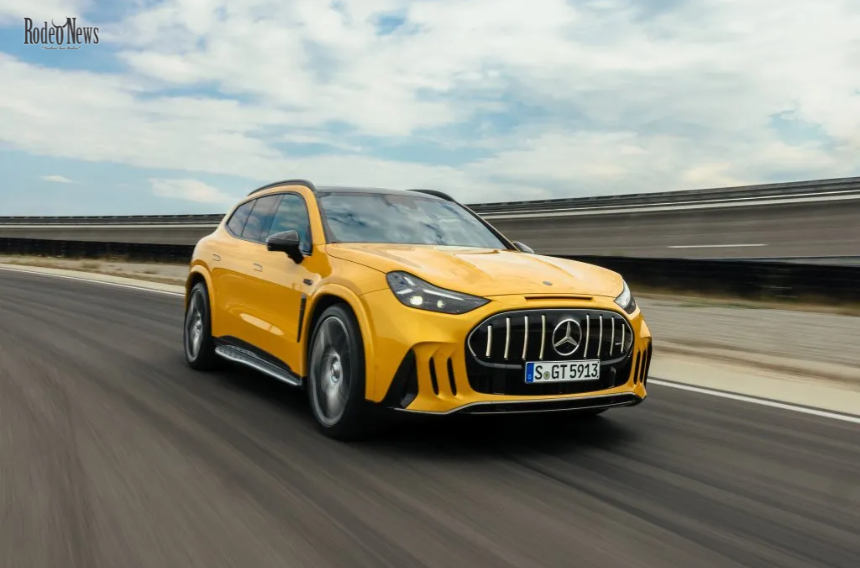
The new model will compete directly with the Porsche Cayenne Electric. Mercedes expects the first units to reach US dealerships in summer 2027, although pricing has not yet been announced.
Mercedes-AMG GT Electric SUV Delivers 1,153 HP
The Mercedes-AMG GT electric SUV is the first full-size SUV developed entirely in-house by AMG. It is built on the dedicated AMG.EA electric vehicle architecture, designed to deliver high performance, improved driving dynamics, and rapid charging.
Mercedes plans to offer three versions: the GT 53, GT 55, and GT 63.
The flagship GT 63 produces up to 1,153 horsepower at peak output and 1,475 lb-ft of torque. Mercedes estimates acceleration from zero to 60 mph at 2.6 seconds, or 2.4 seconds when measured with a one-foot rollout.
The GT 55 delivers up to 805 horsepower, while the GT 53 produces 536 horsepower. These figures represent peak output rather than continuous power, which is lower.
The GT 63 and GT 55 use three axial-flux electric motors. This motor design delivers high power relative to its size and weight, helping AMG achieve substantial performance without relying on a traditional combustion engine.
710 kW Charging Sets the Electric SUV Apart
One of the most notable features of the Mercedes-AMG GT electric SUV is its charging capability.
The GT 63 and GT 55 feature a 128 kWh usable battery pack and an 800-volt electrical architecture. Under suitable conditions, the system supports DC fast charging at up to 710 kW.
Mercedes says the larger battery can charge from 10% to 80% in approximately 12 minutes. The company also claims that drivers can add up to 450 kilometers of WLTP-rated driving range in just 10 minutes.
The GT 53 uses a smaller 106 kWh battery and supports charging at up to 600 kW.
However, achieving these peak speeds requires a compatible charging station and favorable battery conditions. Many public charging networks cannot currently deliver power close to 710 kW, meaning the vehicle’s full charging advantage may depend on future infrastructure development.
Advanced Battery Technology Supports Performance
Mercedes has equipped the SUV with cylindrical battery cells featuring an NCMA cathode and a silicon-containing anode. The cells are cooled directly using a non-conductive oil system designed to manage heat during charging and demanding driving.
This approach aims to support repeated high-power delivery while maintaining battery performance.
The larger-battery versions have a claimed WLTP driving range of approximately 385 to 435 miles. The GT 53 is rated for around 371 to 415 miles under the same European testing standard.
Actual range will vary according to driving speed, weather, road conditions, and other factors. US EPA estimates may differ from WLTP figures.
The vehicle also weighs approximately 5,942 pounds in GT 63 configuration, making efficiency and thermal management important considerations for everyday driving.
Suspension Technology Improves Handling
High power alone does not guarantee sports-car handling, especially in a large electric SUV. Mercedes-AMG has therefore equipped the GT lineup with advanced chassis technology.
Rear-axle steering of up to six degrees comes standard, improving maneuverability at lower speeds and helping stabilize the vehicle at higher speeds.
The GT 63 also features AMG Active Ride Control+, which uses active hydraulic components and air springs to manage body movement during acceleration, braking, and cornering.
The system is designed to reduce body roll and pitch while balancing comfort with responsive handling.
Inside, the SUV features a 14-inch central display and a 10.2-inch driver instrument screen. An additional 14-inch passenger display is available as an option.
The five-seat cabin offers 21.4 cubic feet of cargo space behind the rear seats, alongside a 2.8-cubic-foot front trunk.
Mercedes-AMG GT Electric SUV Challenges Porsche
The Porsche Cayenne Turbo Electric is a key rival for the new Mercedes-AMG model.
According to the figures reported by Electrek, the Mercedes GT 63 produces 1,153 horsepower, compared with 1,139 horsepower for the Porsche Cayenne Turbo Electric. Both vehicles have estimated acceleration figures of approximately 2.4 seconds from zero to 60 mph when measured using a one-foot rollout.
The Mercedes also has a larger usable battery and a higher stated peak charging rate. Its 710 kW charging capability compares with the Porsche’s reported 400 kW maximum.
Nevertheless, real-world charging performance depends on available infrastructure, and vehicle pricing will be an important factor in the comparison.
Mercedes has not yet announced US pricing for the GT SUV range.
What the New Electric SUV Means for Mercedes-AMG
The Mercedes-AMG GT electric SUV demonstrates how performance-focused automakers are advancing electric powertrains, battery cooling, charging speeds, and chassis technology.
Its combination of up to 1,153 horsepower, a 128 kWh usable battery, and 710 kW charging capability gives it impressive specifications on paper.
The biggest question is how those figures translate into real-world performance, charging convenience, and ownership costs. Ultra-fast charging infrastructure remains limited, while the vehicle’s size and weight could affect efficiency.
As the expected 2027 US launch approaches, pricing and independent testing will help determine whether the new Mercedes-AMG GT electric SUV can establish itself as a leading choice in the premium electric performance segment.