World’s Oldest Shipwreck Found Off Turkey’s Coast
Archaeologists have uncovered the remains of what may be the world’s oldest known shipwreck off the Mediterranean coast of Turkey, revealing new evidence of maritime trade dating back nearly 4,700 years. The discovery near Kekova Island, in the southern province of Antalya, offers a rare glimpse into how ancient communities transported goods across the eastern Mediterranean during the Early Bronze Age.
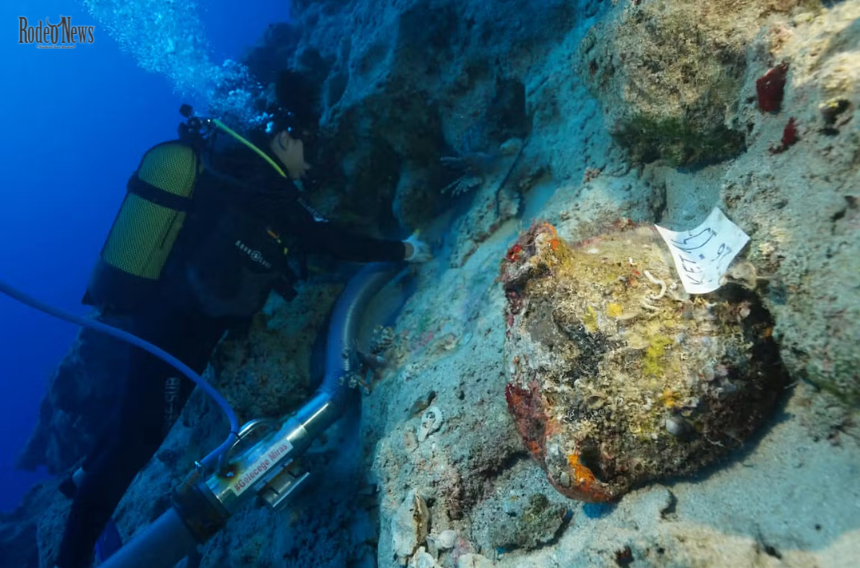
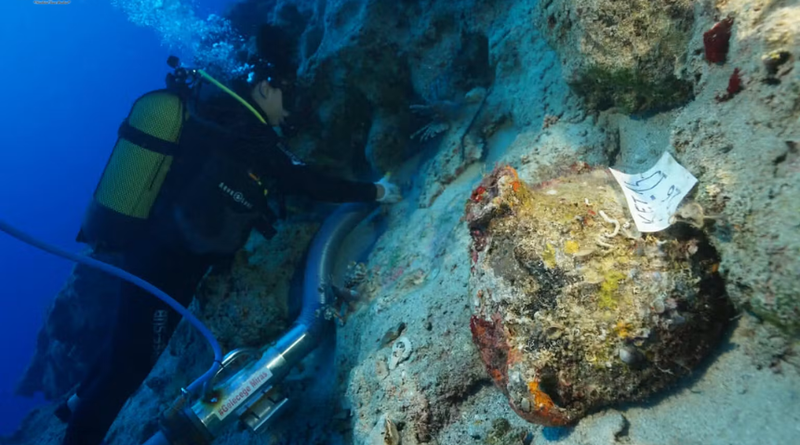
Although the ship’s wooden structure has not survived, ceramic storage jars and other artifacts recovered from the seabed have helped researchers estimate its age. The findings suggest the vessel was carrying commercial goods across the sea at a time when some of the ancient world’s most important civilizations were developing.
The discovery could reshape our understanding of early seafaring and the connections between communities in the eastern Mediterranean.
World’s Oldest Shipwreck Dates Back 4,700 Years
The underwater archaeological site lies near Kekova Island, off Turkey’s southern Mediterranean coast. Researchers estimate that the shipwreck dates to between 4,400 and 4,700 years ago, placing it in the Early Bronze Age.
That period coincided with the construction of Egypt’s Great Pyramid of Giza, providing a striking historical comparison for the age of the vessel.
The discovery was announced by Turkey’s Culture and Tourism Minister Mehmet Nuri Ersoy, who highlighted its importance for understanding the country’s maritime heritage.
Underwater archaeologist Hakan Öniz of Akdeniz University led the research team investigating the site. The discovery adds significant evidence to the study of ancient shipping, particularly because physical remains of early seagoing vessels are exceptionally difficult to preserve.
Wooden ships often deteriorate over centuries underwater. However, ceramic containers and stone objects can survive for thousands of years, leaving archaeologists with valuable clues about vessels that otherwise disappeared.
Researchers identified the shipwreck’s age by comparing its pottery with similar artifacts found at other archaeological sites in the Mediterranean and the Middle East.
Ancient Cargo Reveals Early Mediterranean Trade
One of the most important aspects of the discovery is the collection of ceramic storage jars found on the seabed. More than 30 pottery containers and three stone anchors have been reported at the site.
The containers, commonly known as amphorae, were designed to hold and transport goods. Their shape, construction and decorative features can help archaeologists identify where they were manufactured and how they were used.
Initial analyses suggest that the jars may have originated in workshops in the Jordan Valley, part of the broader eastern Mediterranean region. Similar pottery styles have been identified at archaeological sites in Egypt, Turkey and Greece.
These similarities suggest that ancient communities maintained commercial and cultural connections across considerable distances.
Researchers believe the ship may have been transporting products such as olive oil or wine. However, further examination of the containers and any surviving residues will be important in determining precisely what they carried.
The discovery provides evidence that maritime trade networks were already operating thousands of years ago, allowing goods and ideas to move between coastal settlements.
Where Was the Ancient Ship Heading?
Archaeologists believe the vessel may have been travelling westward from the Levantine coast when it sank near what is now southern Turkey.
Possible destinations include the ancient settlement of Troy, located in northwestern Anatolia, or Crete, an island associated with the development of the Minoan civilization.
These destinations remain possibilities rather than confirmed details of the ship’s journey. Nevertheless, the distribution of similar pottery across the region supports the idea that early traders traveled between distant Mediterranean communities.
Sea transport offered an important way to move bulky goods along coastal routes. Compared with transporting heavy cargo overland, ships could carry substantial quantities of supplies between ports and settlements.
The wreck therefore offers a valuable opportunity to investigate how early maritime commerce operated before the development of many better-documented ancient trading systems.
A Unique Pottery Vessel Offers Clues About Sailors’ Lives
Among the recovered artifacts, one ceramic container has attracted particular attention because of its unusual design.
The vessel features nine markings and two holes in its body. Researchers have suggested that it may have been used to churn butter or produce cheese.
If that interpretation is correct, the artifact could provide insight into how sailors managed food during long journeys. It raises the possibility that some provisions were prepared aboard ships rather than carried entirely in finished form.
However, the proposed function remains an interpretation that requires further investigation.
The container is important because archaeological discoveries can reveal more than the goods traded between regions. They can also help researchers understand the practical routines, food preparation methods and working conditions of people who traveled by sea thousands of years ago.
Even a single unusual object can offer clues about daily life in a period when written records of ordinary sailors are scarce.
Why the Shipwreck Discovery Matters
The discovery near Kekova Island highlights the importance of underwater archaeology in reconstructing the ancient past.
Unlike many archaeological sites on land, shipwrecks can preserve groups of objects that were used together during a particular journey. Cargo, anchors and pottery can provide information about trade, technology and the movement of goods.
In this case, the survival of ceramic artifacts has allowed researchers to investigate a vessel whose wooden hull has disappeared.
The findings may also help scientists understand the development of early maritime technology. Studying the distribution and characteristics of the artifacts could reveal more about the routes ancient traders followed and the relationships between communities around the eastern Mediterranean.
Further analysis may clarify the cargo’s origins, the vessel’s intended destination and the circumstances that led to its sinking.
Protecting Turkey’s Underwater Heritage
The shipwreck is also a reminder of the importance of protecting underwater cultural heritage. Ancient wreck sites can be vulnerable to looting, environmental damage and disturbances caused by unregulated diving.
Careful excavation and documentation allow researchers to preserve information that could otherwise be lost permanently.
Turkey’s ongoing archaeological work aims to bring these discoveries to light while contributing to a broader understanding of the region’s maritime history.
As researchers continue examining the recovered artifacts, the site near Kekova Island could provide additional evidence about trade and travel during the Early Bronze Age.
The discovery is significant not simply because of its extraordinary age, but because it preserves a record of human activity from a distant period. Nearly five millennia after the vessel sank, its surviving cargo is helping archaeologists reconstruct the commercial connections and everyday lives of ancient Mediterranean communities.