China Exports Surge 36.3% as AI Boom Pushes Trade Surplus Toward Record
China’s exports surged by 36.3% in September 2026, delivering a major boost to the world’s second-largest economy as strong global demand for artificial intelligence technology, semiconductors and other high-tech products strengthened overseas shipments.
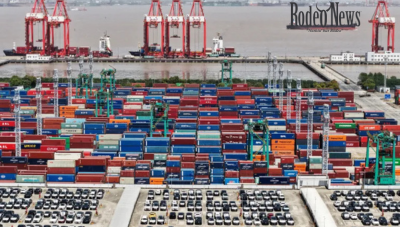
Data released by China’s General Administration of Customs on Wednesday showed that exports reached approximately $447.18 billion, accelerating from 25% year-on-year growth in August. The increase exceeded economists’ expectations and highlighted the growing importance of technology-related manufacturing to China’s economic performance.
Imports also increased significantly, rising 31% compared with the same month a year earlier. Despite stronger demand for foreign goods, China recorded a substantial trade surplus as exports continued to outpace imports.
For the first nine months of 2026, China’s trade surplus reached approximately $938.1 billion, putting the country on course to challenge its record annual surplus from 2025.
The figures underscore the strength of China’s export sector, but they also raise questions about the sustainability of an economic model that relies heavily on overseas demand while domestic consumption and investment remain relatively weak.
AI Demand Drives China’s Export Growth
Technology products played a central role in September’s export performance. Semiconductor exports increased by more than 108% year-on-year in value, while shipments of automatic data processing equipment and related components rose nearly 55%.
The figures reflect strong international demand for products used in data centers, artificial intelligence infrastructure, computing systems and other advanced technologies.
As businesses worldwide invest in AI development, demand has increased for the electronic components and equipment needed to train and operate increasingly powerful computing systems. Chinese manufacturers have benefited from this investment cycle, helping sustain production and international shipments.
China’s extensive industrial supply chains have also supported its ability to manufacture electronic equipment, machinery and other products at competitive prices.
Taylor Wang, an economist at HSBC in Hong Kong, identified strong demand connected to artificial intelligence, together with China’s pricing and supply-chain advantages, as important factors behind the export momentum, according to Al Jazeera.
Automobiles have also become an increasingly important part of China’s overseas trade. Chinese electric vehicles and hybrid models have gained attention in international markets, expanding the country’s manufacturing footprint beyond traditional industrial goods.
However, the strong performance of technology exports does not necessarily indicate that every part of China’s economy is experiencing the same improvement. Domestic spending and investment continue to face significant challenges.
China’s Trade Surplus Nears $1 Trillion
China’s expanding export business has produced a substantial gap between the value of goods it sells abroad and the goods it purchases from international suppliers.
During the first three quarters of 2026, exports rose 21.3% year-on-year to approximately $3.37 trillion. Imports increased 27.5% to around $2.43 trillion over the same period.
The resulting trade surplus reached approximately $938.1 billion by the end of September.
The surplus reflects China’s ability to sell large quantities of manufactured goods internationally, particularly in sectors where its production capacity and supply networks provide competitive advantages.
A large trade surplus can support economic growth by generating revenue for domestic manufacturers and helping sustain employment across industrial supply chains. It can also strengthen the country’s position in global markets.
Nevertheless, persistent trade imbalances can create friction with trading partners. Governments facing rising imports of Chinese goods may argue that domestic manufacturers are struggling to compete, particularly in industries such as automobiles, machinery and electronics.
If the current pace of trade continues, China could surpass its previous annual surplus record. The final result, however, will depend on global demand, exchange rates, commodity prices and potential changes in trade policy during the final months of the year.
Southeast Asia and Europe Strengthen Their Trade Links
China’s export expansion has been supported by demand across several major markets, including Southeast Asia, Europe and the United States.
The Association of Southeast Asian Nations, known as ASEAN, was China’s largest export market in September. Shipments to the regional bloc increased by more than 52% to approximately $81.7 billion.
The growth highlights the importance of regional manufacturing networks and commercial relationships across Asia. Southeast Asian economies are closely connected to Chinese suppliers through electronics production, industrial components, machinery and consumer goods.
Exports to the European Union increased 25.3% to approximately $60.15 billion. Shipments to the United States rose 39.6% to around $47.88 billion.
These increases show that Chinese exporters continue to find demand in major international markets despite political disagreements and ongoing concerns about trade competition.
At the same time, the figures could intensify pressure on governments to protect domestic industries. Policymakers in Europe and the United States have expressed concerns about manufacturing competition, industrial overcapacity and the consequences of rapidly expanding Chinese exports.
The challenge for China will be maintaining access to international markets while managing disagreements over trade practices and the competitiveness of its manufacturing sector.
Europe Seeks to Limit Chinese Vehicle Imports
Relations between China and the European Union remain an important issue for the global trading system.
European officials have raised concerns about the bloc’s trade deficit with China and the growing presence of Chinese-made vehicles in European markets.
Recent negotiations between Beijing and Brussels have included an agreement aimed at limiting Chinese hybrid vehicle imports into the European Union. The arrangement reflects European efforts to address trade imbalances while managing competition in the automotive sector.
The vehicle industry is particularly sensitive because it supports extensive networks of factories, suppliers and workers across Europe.
Chinese automakers have benefited from large-scale production and established battery supply chains, allowing them to compete in an increasingly important global market for electric and hybrid vehicles.
For European manufacturers, the expansion of Chinese imports presents both a competitive challenge and pressure to improve efficiency, pricing and technology.
For China, any restrictions or quotas could affect an important growth industry at a time when exporters are helping compensate for weaker domestic economic conditions.
The outcome of negotiations between China and its trading partners will therefore be important for the automotive industry and broader international commerce.
Domestic Economic Weakness Remains a Concern
Despite the strong export figures, China continues to face economic difficulties at home.
Consumer spending and investment have remained relatively subdued, while a prolonged property market downturn has weighed on confidence and economic activity.
The weakness creates a challenge for policymakers seeking to maintain growth while reducing dependence on exports and industrial investment.
China has set an economic growth target of 4.5% to 5% for 2026. However, the International Monetary Fund recently lowered its forecast for the country’s economic expansion to 4.5%, citing domestic weaknesses that strong exports have not fully offset.
The government has introduced measures intended to support demand, including assistance with mortgage interest payments. Policymakers have also emphasized the need to encourage household spending and create a more balanced growth model.
A stronger domestic consumer market could help reduce reliance on international demand and make the economy less vulnerable to trade disputes or a slowdown in global manufacturing.
For now, exports remain a significant source of economic support. Yet the contrast between strong overseas shipments and weaker domestic conditions suggests that the recovery remains uneven.
What China’s Export Boom Means for the Global Economy
China’s September trade figures demonstrate how global technology investment is reshaping international commerce.
Demand for semiconductors, data processing equipment and other AI-related products has provided a substantial boost to Chinese manufacturers. The country’s industrial capacity and established supply chains have helped it respond to that demand.
However, continued export growth also brings risks. Trading partners may introduce new restrictions, pursue negotiated limits on specific products or increase scrutiny of Chinese manufacturing practices.
A slowdown in AI investment could also weaken demand for some of the products currently supporting export growth.
China’s economic outlook will therefore depend on more than its ability to ship manufactured goods overseas. Sustained growth will also require stronger domestic demand, continued competitiveness and stable commercial relationships with major trading partners.
September’s figures provide a strong near-term boost, but the longer-term challenge is turning export strength into more balanced economic growth while avoiding deeper trade disputes.
As China moves toward the final quarter of 2026, the performance of its technology sector, consumer market and international trade relationships will remain central to the outlook for the world’s second-largest economy.