Russia-Ukraine Energy Ceasefire Faces 5 Critical Challenges

The Russia-Ukraine energy ceasefire proposal faced immediate uncertainty on Monday after Ukrainian President Volodymyr Zelenskyy reported continued Russian attacks on energy infrastructure, despite U.S. President Donald Trump’s announcement that the two countries had agreed to stop targeting energy facilities. The developments raised fresh questions about whether the proposed arrangement had been accepted by Moscow and whether it could reduce the damage caused by the ongoing war.
Speaking at the Warsaw Security Forum in Poland on October 12, Zelenskyy said Ukraine had learned about the reported agreement through media coverage. He indicated that Kyiv was prepared to respect a mutual pause in attacks but had not received confirmation that Russia would do the same.
The uncertainty comes as Ukraine prepares for colder weather, when damage to power generation, heating, and gas infrastructure could place additional pressure on civilians. Energy facilities have repeatedly become targets during the conflict, disrupting essential services and creating humanitarian concerns.
Trump announced the proposed ceasefire on social media on Sunday, October 11, saying it would take effect immediately. However, the announcement provided few details, and Kremlin spokesperson Dmitry Peskov said Monday that contacts were continuing without clearly confirming Moscow’s acceptance.
The situation highlights five major challenges: the lack of a clearly confirmed agreement, continued attacks, the vulnerability of civilian infrastructure, disagreements over the conditions for peace, and uncertainty surrounding international efforts to end the war.
1. Russia-Ukraine Energy Ceasefire Lacks Clear Confirmation
The central question surrounding the Russia-Ukraine energy ceasefire is whether both sides have formally accepted the same conditions.
Trump’s announcement suggested that Russia and Ukraine had agreed to stop attacks on energy infrastructure. Yet Zelenskyy said Ukraine had not received confirmation from Russia and was waiting for further information from Washington.
That distinction matters because an announcement by a third party does not necessarily establish that both parties have agreed on the precise terms of a ceasefire.
A workable arrangement would need to clarify which facilities are protected, when the restrictions begin, how violations are assessed, and what happens if either side breaches the agreement.
Without those details, competing interpretations could undermine the initiative before it has a meaningful effect.
Kremlin spokesperson Dmitry Peskov said contacts were ongoing but did not clearly confirm that Moscow had accepted the proposed arrangement.
Zelenskyy expressed support for the idea, provided Russia also halted its attacks.
The Ukrainian president also called on Trump to press the Kremlin to commit to the proposal.
The immediate challenge, therefore, is turning a public announcement into an arrangement that both governments recognize and follow.
2. Continued Russian Strikes Raise Questions About Compliance
Ukrainian officials said Russian attacks continued even after Trump’s announcement.
Zelenskyy reported strikes against several energy-related facilities, including a power plant in Kharkiv, a gas production facility, and a civilian gas station.
These reports complicated expectations that the proposed agreement would immediately reduce attacks on critical infrastructure.
The broader pattern of strikes has made energy security a major concern for Ukraine throughout the war. Damage to electricity and heating systems can affect homes, hospitals, businesses, and other essential services.
The timing is particularly important as temperatures begin to fall across parts of the region.
Ukrainian authorities have repeatedly warned that attacks on energy facilities can create widespread civilian hardship, especially when repairs become difficult or repeated strikes damage the same infrastructure.
However, the precise status of the proposed ceasefire remains unclear because the parties have not publicly established a mutually confirmed framework.
Ukraine Says It Is Prepared to Halt Retaliatory Strikes
Zelenskyy said Ukraine was willing to stop attacking Russian oil refineries if Moscow halted attacks on Ukraine’s energy system.
This position presents a potential starting point for negotiations. A reciprocal arrangement could reduce damage to infrastructure on both sides and provide civilians with greater protection.
Nevertheless, reciprocity would require both governments to agree on the scope of prohibited attacks and how compliance would be monitored.
Energy infrastructure includes more than power plants. Depending on the terms, an agreement might cover electricity generation, transmission networks, oil refineries, gas facilities, fuel storage sites, and other installations.
Defining these categories clearly would help reduce disagreements over what constitutes a violation.
3. Ukraine’s Energy Security Faces Winter Pressure
The Russia-Ukraine energy ceasefire proposal has particular significance because of the approaching winter season.
Ukraine depends on a functioning energy network to provide electricity, heating, and other essential services. Damage to major facilities can create disruptions that extend beyond the immediate location of an attack.
For households, prolonged outages can make ordinary activities difficult. Hospitals and other critical institutions may need backup power, while businesses can face interruptions that affect employment and local economic activity.
Repairing damaged facilities also requires equipment, technical expertise, and access to affected areas. Repeated attacks can complicate those efforts.
Ukrainian officials have described Russia’s strategy of targeting energy infrastructure as an attempt to weaken civilian resilience during the war.
The Kremlin’s broader military objectives and the specific rationale behind individual attacks cannot be established solely from the public statements surrounding the ceasefire proposal. Nevertheless, the consequences of damage to civilian energy systems are a central concern.
Why Protecting Energy Infrastructure Matters
Energy systems support nearly every part of modern civilian life.
Electricity is essential for hospitals, communications, water systems, refrigeration, and public services. Gas networks and district heating systems are also important during periods of cold weather.
When these systems are disrupted, the effects can spread quickly through communities.
A credible ceasefire covering energy facilities could therefore offer practical humanitarian benefits if both sides accepted and consistently observed it.
However, a pause in energy strikes would not necessarily end other military operations. The scope of any agreement would determine whether it addressed only infrastructure or formed part of a broader effort to reduce hostilities.
For this reason, the details of the proposal are as important as the announcement itself.
4. European Officials Remain Skeptical About the Proposal
She also argued that a ceasefire should protect people from being killed, rather than focusing exclusively on energy infrastructure.
Her comments reflect a broader concern among European governments that limited agreements may provide only temporary relief without addressing the wider conflict.
A pause in attacks on energy facilities could reduce one source of civilian suffering. However, it would not automatically end fighting elsewhere or resolve the political and territorial issues underlying the war.
European governments have continued to discuss military support for Ukraine, sanctions policy, energy security, and diplomatic efforts aimed at ending the conflict.
The proposed ceasefire therefore presents a difficult balance: governments may welcome any credible reduction in attacks while remaining cautious about whether the arrangement can be enforced.
The Challenge of Monitoring Compliance
A ceasefire is more likely to be effective when the parties understand exactly what is prohibited and how alleged violations will be investigated.
Monitoring mechanisms can help establish what happened during a particular incident. They can also provide a basis for communication between the parties when disagreements emerge.
In an energy ceasefire, monitoring could involve documenting damage to protected facilities, examining the timing and location of attacks, and exchanging information through agreed diplomatic channels.
The practical arrangements would depend on the terms accepted by Russia and Ukraine.
Without an agreed process, each side could accuse the other of violating the arrangement while disputing the available evidence.
That uncertainty could weaken confidence in the proposal and make future negotiations more difficult.
5. Civilian Casualties Underscore the Human Cost of the War
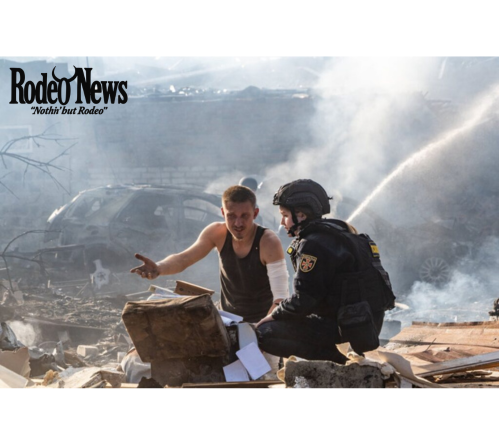
The latest reports of attacks in Ukraine highlighted the continued danger faced by civilians.
According to Ukrainian authorities cited by The Associated Press, a Russian drone attack on the village of Pisochyn in the Kharkiv region on Sunday killed three people and injured nine others, including children.
Investigators said the attack struck a populated area near apartment buildings and grocery stores, causing a fire.
Separately, Russian strikes in Kyiv on Monday injured two people, according to the city’s military administration.
Officials also reported falling debris and damage in residential and other urban areas.
These incidents illustrate why the proposed ceasefire has implications beyond military infrastructure.
Even when an attack is directed at a specific facility, nearby communities may face secondary risks from fires, explosions, debris, and interruptions to essential services.
Civilian protection remains a central issue in international humanitarian discussions about the conflict.
A narrowly defined energy ceasefire could help reduce certain risks, but its effectiveness would depend on implementation and compliance.
It would also leave many other dangers associated with the war unresolved.
Trump’s Proposal Comes Amid Wider Disagreements
The ceasefire announcement came during a period of renewed diplomatic tension over the war and its economic consequences.
Trump has criticized Ukrainian attacks on Russian energy facilities, including oil refineries, as part of his broader effort to push both countries toward an agreement.
The U.S. president has also connected the conflict to fuel prices and domestic economic concerns.
His reported agreement with Russian President Vladimir Putin to purchase Russian diesel has drawn criticism from some U.S. lawmakers and European officials.
Critics argue that purchases could provide Moscow with additional revenue while Russia continues its war against Ukraine. Supporters of the proposed transaction would need to demonstrate that it can achieve its stated economic objectives without undermining other policy goals.
The issue illustrates how energy markets, sanctions, military strategy, and diplomacy have become increasingly interconnected.
These competing interests complicate efforts to secure a durable agreement.
Could the Russia-Ukraine Energy Ceasefire Lead to Peace?
A functioning Russia-Ukraine energy ceasefire could represent a limited but meaningful step toward reducing the conflict’s humanitarian costs.
If both countries stopped attacking designated energy facilities, the arrangement could give repair crews greater opportunities to restore damaged infrastructure and help communities prepare for winter.
It could also provide diplomats with a practical test of whether the two governments are willing to honor specific commitments.
However, an agreement covering energy infrastructure would not resolve the broader issues driving the war.
Questions involving territory, security guarantees, military operations, and the future relationship between Russia and Ukraine would remain.
The history of previous ceasefire efforts also highlights the importance of clear terms and reliable implementation. Trump announced a similar understanding about energy infrastructure in September, but that earlier proposal did not produce a lasting arrangement.
The latest initiative will therefore need more than public statements to demonstrate progress.
A credible agreement would require clear commitments, communication between the parties, and a process for addressing alleged violations.
It would also need to operate alongside broader diplomatic efforts if the objective is to achieve a lasting end to the war.
What Happens Next?
The next steps depend largely on whether Moscow formally accepts the proposal and whether Washington can clarify the terms.
Ukraine has indicated that it is prepared to stop striking Russian energy facilities if Russia halts attacks on Ukrainian energy infrastructure.
The Kremlin, meanwhile, has said contacts are continuing without clearly confirming its acceptance of the proposed ceasefire.
European officials are watching for evidence that the arrangement can be implemented in practice.
For civilians, the most important measure will be whether attacks decline and essential services become more secure.
For diplomats, the immediate task is establishing whether the proposal represents a genuine agreement or an announcement that still requires negotiation.
Until the conditions are clarified and both sides demonstrate compliance, the future of the Russia-Ukraine energy ceasefire remains uncertain.
Conclusion
The Russia-Ukraine energy ceasefire proposal has raised hopes of reducing attacks on critical infrastructure, but continued Russian strikes reported by Ukrainian officials have exposed major questions about its status.
Zelenskyy has expressed willingness to halt attacks on Russian energy facilities if Moscow takes equivalent action. Yet Russia has not clearly confirmed that it has accepted the proposed arrangement.
The approaching winter adds urgency to the debate, as disruptions to electricity, heating, and gas supplies could have serious consequences for Ukrainian civilians.
European officials have welcomed the possibility of a pause while expressing skepticism about whether it will be respected.
Ultimately, the proposal’s success will depend on clear terms, reciprocal commitments, and evidence that both sides are following the agreement.
Until those conditions are met, the ceasefire remains an uncertain diplomatic initiative rather than a confirmed and functioning halt to energy strikes.