
APOE4 Alzheimer’s Breakthrough: Damage May Be Reversible
A new APOE4 Alzheimer’s study has identified a mechanism that may help explain how the strongest genetic risk factor for the disease damages the brain’s blood vessels — and researchers say the process could potentially be reversed.
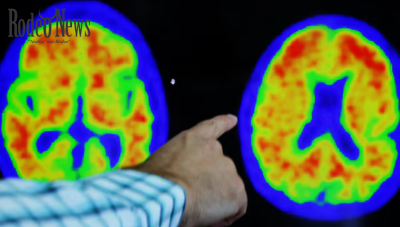
Scientists at the Icahn School of Medicine at Mount Sinai in New York found that the APOE4 gene can cause specialized cells surrounding the brain’s smallest blood vessels to change their behavior. Instead of maintaining and stabilizing those vessels, the cells can transform into scar-forming cells, contributing to vascular damage and increased accumulation of amyloid.
The researchers also found that blocking a biological pathway involving a protein called TGF-beta reversed the blood-vessel degeneration associated with APOE4 in mice.
The findings, published in two studies in Cell and Cell Stem Cell, could point toward new approaches for protecting the brain’s vascular system in people at risk of Alzheimer’s disease. However, the research remains preclinical. The experiments do not demonstrate that existing or experimental treatments can reverse Alzheimer’s disease in human patients.
APOE4 Alzheimer’s Research Targets Blood Vessels
For years, researchers have known that Alzheimer’s disease is associated with changes in the brain’s blood vessels.
Those changes can affect how efficiently blood moves through the brain and may interfere with the delivery of oxygen and nutrients. They can also affect systems responsible for maintaining the blood-brain barrier, a protective interface that helps regulate what moves between the bloodstream and brain tissue.
The new research focuses on a genetic factor known as APOE4.
APOE is involved in lipid transport and metabolism. Humans can carry different versions of the APOE gene, and APOE4 is the strongest common genetic risk factor for late-onset Alzheimer’s disease.
Having APOE4 does not mean that a person will inevitably develop Alzheimer’s. Genetic risk is only one part of the disease’s complex biology.
What the Mount Sinai researchers wanted to understand was how APOE4 contributes to the physical deterioration observed in the brains of people with Alzheimer’s.
Their findings point to the brain’s small blood vessels as an important part of that process.
How APOE4 Changes Pericytes
One of the central discoveries involves cells called pericytes.
Pericytes surround small blood vessels and help maintain their structure and function. They also play an important role in supporting the blood-brain barrier.
According to the researchers, APOE4 can cause these cells to undergo a major change.
Instead of continuing to perform their normal vessel-supporting role, the pericytes can transform into cells with characteristics of myofibroblasts — cells associated with tissue repair and scar formation.
That transformation can produce vascular fibrosis, essentially creating excessive scar-like tissue around blood vessels.
The result is a less healthy vascular environment.
Researchers found that the process was associated with increased accumulation of amyloid around the affected vessels. Amyloid plaques and related protein abnormalities are major features of Alzheimer’s disease and have been central targets of several modern Alzheimer’s treatments.
The new findings therefore connect two important aspects of the disease: vascular damage and abnormal protein accumulation.
TGF-Beta Provides a Potential Treatment Target
The research also identified a possible pathway for intervention.
The scientists focused on TGF-beta, a protein involved in cell signaling, tissue remodeling and repair.
Their experiments indicated that APOE4-related changes in pericytes were associated with activation of this pathway.
When researchers blocked TGF-beta signaling, the effects were different.
In mouse models carrying APOE4, blocking the pathway protected the pericytes and reversed features of the associated vascular degeneration. The treatment also reduced fibrosis and vascular amyloid accumulation.
Mount Sinai described the findings as evidence that APOE4-associated cerebrovascular degeneration can be therapeutically reversed in the experimental models used by the researchers.
That distinction is important.
The study provides evidence of biological reversibility in experimental systems. It does not establish that a TGF-beta-blocking drug can reverse Alzheimer’s disease in people.
What the APOE4 Alzheimer’s Finding Means
The discovery changes the way scientists may think about APOE4-related vascular damage.
For years, deterioration of brain blood vessels in Alzheimer’s was often viewed primarily as a consequence of the disease.
The Mount Sinai findings suggest that the relationship can be more active.
APOE4 itself may contribute to the process that damages blood vessels.
That raises the possibility that vascular injury is not merely something that happens after other Alzheimer’s pathology has already developed. Instead, it could be one of the mechanisms helping drive or amplify the disease.
Joel Blanchard, a co-author of both studies, said the findings indicate that blood-vessel damage associated with APOE4 may be reversible and could provide new therapeutic targets for maintaining vascular function and limiting amyloid accumulation.
If future research confirms the mechanism in humans, it could open another avenue for Alzheimer’s treatment.
Rather than targeting amyloid alone, researchers could potentially develop therapies designed to protect the brain’s blood vessels and restore their function.
Human Brain Tissue Was Part of the Research
The research was not based solely on ordinary laboratory cell cultures.
The scientists combined human brain data with experimental models, including a stem-cell-derived human brain tissue platform known as a miBrain.
This type of model is designed to reproduce aspects of human brain biology in a laboratory environment.
According to Mount Sinai, the researchers used human brain tissue and miBrains to investigate how APOE4 affects the cells supporting the brain’s vascular system.
The team also studied aged mice carrying APOE4.
That combination is important because researchers need multiple forms of evidence before determining whether a biological mechanism is worth pursuing as a potential treatment target.
Human tissue can reveal whether a mechanism appears relevant to actual disease biology.
Laboratory models allow researchers to manipulate specific pathways and observe what happens.
Animal models can then provide additional evidence about whether an intervention can affect the process within a living organism.
But none of those steps replaces a human clinical trial.
Why APOE4 Matters in Alzheimer’s Disease
APOE4 is one of the most extensively studied genetic risk factors for Alzheimer’s.
Some people inherit one copy of APOE4, while others inherit two. Generally, carrying more APOE4 copies is associated with greater Alzheimer’s risk compared with carrying the more common APOE3 version.
But APOE4 is not a diagnostic test.
Some people with APOE4 never develop Alzheimer’s, while people without APOE4 can still develop the disease.
This distinction is especially important when discussing genetic research because a risk-associated gene is not equivalent to a disease-causing mutation that guarantees a particular outcome.
Instead, APOE4 appears to influence multiple biological processes connected with Alzheimer’s.
The new Mount Sinai work adds brain vascular damage to that picture.
Blood-Brain Barrier Damage Could Be Important
The brain’s blood vessels perform more than simply transporting blood.
They also participate in the blood-brain barrier, which controls the movement of substances between blood and brain tissue.
This barrier helps protect neurons from potentially harmful substances while allowing essential nutrients and other molecules to enter the brain.
Pericytes are important components of this system.
When they change their behavior, the structure and function of small blood vessels can be affected.
The researchers’ findings therefore suggest that APOE4 may contribute to Alzheimer’s through a vascular mechanism that begins at the level of individual cells.
That could help explain why vascular dysfunction and abnormal protein accumulation appear together in some Alzheimer’s brains.
The Connection to Amyloid
Amyloid remains one of the central biological targets in Alzheimer’s research.
The protein can accumulate into abnormal deposits in the brain, and the development of amyloid-targeting drugs has produced some of the first disease-modifying treatments capable of slowing cognitive decline in selected patients.
However, amyloid is only one component of Alzheimer’s biology.
Tau pathology, inflammation, vascular dysfunction, neuronal loss and metabolic changes are also involved.
The Mount Sinai research adds evidence that the blood-vessel environment may influence amyloid accumulation.
Researchers found that APOE4-driven changes in pericytes promoted fibrosis and increased vascular amyloid. Blocking TGF-beta signaling reduced those changes in the experimental models.
This suggests that protecting the vascular system could potentially complement other strategies aimed at abnormal proteins.
Why the Discovery Is Not Yet a Human Treatment
The word “reversible” in the research findings requires careful interpretation.
Researchers demonstrated reversal of APOE4-associated vascular degeneration in mice after blocking TGF-beta signaling.
That is different from demonstrating reversal of Alzheimer’s disease in humans.
A treatment that works in mice can fail in people for many reasons.
Human biology is more complex, and drugs can behave differently across species. Researchers must also determine whether a treatment can reach the relevant cells in the human brain, whether it is safe over the long term and whether altering TGF-beta signaling creates unwanted effects elsewhere in the body.
TGF-beta is involved in many normal biological processes.
Therefore, simply blocking the pathway throughout the body would not automatically be considered safe.
Future research will need to determine whether the pathway can be targeted precisely enough to provide a benefit without causing unacceptable side effects.
A New Direction for Alzheimer’s Treatment
The findings could nevertheless influence the direction of future Alzheimer’s research.
Current treatment strategies include approaches designed to remove or reduce amyloid and treatments intended to manage symptoms.
The new research suggests another possibility: targeting the vascular damage that may contribute to disease progression.
That could involve protecting pericytes, reducing abnormal fibrosis, maintaining the blood-brain barrier or preventing APOE4 from triggering harmful cellular changes.
It could also involve combining vascular treatments with therapies directed at amyloid or other Alzheimer’s mechanisms.
Such combinations remain hypothetical at this stage.
The current research establishes a biological mechanism and a potential target, rather than a ready-to-use therapy.
Researchers Need More Evidence
The next step will be determining whether the same mechanism operates in people with Alzheimer’s and APOE4.
Researchers will need to study the pathway across larger collections of human brain tissue and establish how strongly vascular changes correspond to disease progression.
They will also need to determine whether targeting TGF-beta can produce meaningful improvements in more sophisticated disease models.
If those results remain encouraging, researchers could eventually investigate specific drugs or drug candidates in clinical trials.
Those trials would need to determine safety first and then evaluate whether the intervention actually changes meaningful outcomes for patients.
That process can take years.
What the Discovery Could Mean for the Future
The significance of the APOE4 Alzheimer’s research lies in the possibility that some brain damage associated with the disease may be biologically more dynamic than previously assumed.
The Mount Sinai researchers have identified a pathway in which APOE4 affects cells supporting the brain’s smallest blood vessels. Those cells can become scar-forming, contributing to vascular fibrosis and abnormal amyloid accumulation.
In mice, blocking TGF-beta signaling reversed key features of the vascular damage.
The findings do not mean that Alzheimer’s disease can currently be reversed in patients.
Instead, they provide researchers with a specific mechanism to investigate and a potential therapeutic target.
That distinction is critical.
Alzheimer’s remains a complex neurodegenerative disease with no single cause or universal treatment. But understanding how genetic risk factors such as APOE4 affect individual cell types could help scientists develop treatments that target the disease at earlier and more specific stages.
For now, the new research represents an important preclinical step: it suggests that APOE4-related damage to the brain’s vascular system may not be entirely irreversible, and that restoring healthier blood-vessel biology could eventually become part of a broader strategy for treating Alzheimer’s disease.