
Friday Night Lights Lands at No. 14 on New York Times’ 100 Best TV Shows of the 21st Century
More than a decade after Friday Night Lights ended its five-season run, the acclaimed drama has received another major recognition, landing at No. 14 on The New York Times’ list of the 100 best television shows of the 21st century.
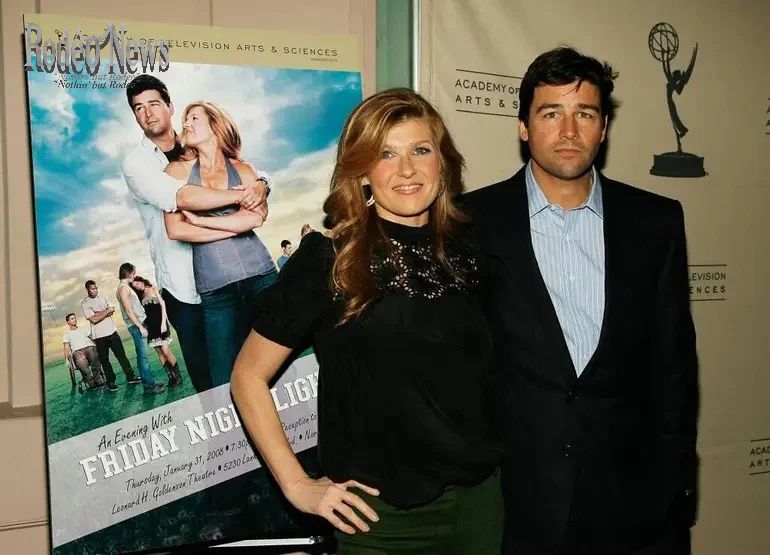
The ranking, released September 25, was compiled from the votes of 516 people working across the television industry, including actors, showrunners, directors and other behind-the-scenes professionals. Voters were asked to select their 10 favorite series that premiered on or after January 1, 2000, opening the field to dramas, comedies, reality programs, limited series and other forms of television.
The resulting list places Friday Night Lights among a remarkable group of modern television landmarks. It sits between Girls at No. 13 and Six Feet Under at No. 15, while the top 10 includes Breaking Bad, The Wire, Mad Men, Succession and Fleabag.
A Texas Football Drama That Became Much More
When Friday Night Lights premiered in 2006, its premise appeared relatively straightforward. Set in the fictional Texas town of Dillon, the series followed a high school football team and its coach, Eric Taylor, played by Kyle Chandler.
Football was central to the show’s identity, but it was never the entire story.
Over five seasons, the series explored marriage, family, friendship, ambition, economic hardship, education, race, teenage relationships and the pressures placed on young athletes. The football field provided the setting, but the characters’ lives supplied the emotional foundation.
That broader focus helped the series develop an audience beyond traditional sports television.
Coach Taylor and his wife, Tami Taylor, played by Connie Britton, became the heart of the show. Their marriage was portrayed through disagreements, compromises and major changes in their careers, giving the series an unusually grounded depiction of an adult relationship.
The teenagers surrounding them also developed into some of the show’s most memorable characters.
The Cast Became a Major Part of Its Legacy
The Friday Night Lights cast helped establish the show’s reputation for emotionally complicated performances.
The series introduced audiences to actors including Taylor Kitsch, Jesse Plemons, Michael B. Jordan, Minka Kelly, Adrianne Palicki, Zach Gilford and Jurnee Smollett. Several of those performers went on to substantial careers after the series ended.
Michael B. Jordan’s role as Vince Howard arrived during the later seasons and became particularly significant in retrospect. His performance came before his rise to major film roles, making Friday Night Lights part of the early television work that helped establish his career.
Taylor Kitsch’s Tim Riggins became another defining figure. His troubled personal life, complicated family circumstances and enormous expectations surrounding him made the character considerably more than a stereotypical high school football star.
Meanwhile, Matt Saracen’s story brought a quieter perspective to the series. Played by Zach Gilford, Saracen had to balance football with family responsibilities and the challenges of growing up faster than many of his classmates.
Why the No. 14 Ranking Matters
The New York Times ranking provides a snapshot of how television professionals view the medium’s development since the beginning of the century.
Friday Night Lights is surrounded by programs that helped define different periods of modern television. The series sits ahead of shows such as The Office U.K., The Americans, Chernobyl and The Crown, according to the published ranking.
Its placement also reflects the enduring influence of character-driven television.
The series did not depend on elaborate mythology or expensive spectacle. Instead, it built its reputation around performances, relationships and the everyday consequences of decisions made by people living in a small community.
That approach has helped the show remain relevant years after its finale.
The Show’s Distinctive Style
Another element of Friday Night Lights that has frequently been associated with its identity is its loose visual style.
Rather than relying heavily on conventional blocking and carefully choreographed scenes, the production frequently embraced handheld cameras and multiple angles. That approach created an intimate feeling and allowed actors greater freedom during scenes.
The result was a style that could make conversations in a kitchen feel almost as immediate as a football game under stadium lights.
The football sequences themselves were also filmed with an emphasis on atmosphere and emotion rather than simply presenting the mechanics of the sport. Crowd noise, close-ups and rapidly shifting camera angles helped put viewers inside the experience of Friday-night football in Dillon.
A Show That Survived Its Network Challenges
The series also developed a reputation for surviving uncertainty.
Friday Night Lights originally aired on NBC and struggled to become a major mainstream ratings success despite strong critical support. Its continued existence became something of a television story in itself as fans campaigned for its survival.
The show ultimately ran for five seasons, concluding in 2011.
Its legacy grew considerably after the finale, as streaming and home-video audiences discovered the series and introduced it to viewers who had not watched it during its original broadcast.
That delayed appreciation is particularly significant in the context of the New York Times ranking.
Part of a Changing Television Landscape
The broader list illustrates just how dramatically television changed during the 21st century.
The New York Times included conventional network programs alongside premium-cable dramas, streaming series, reality television, sketch comedy and experimental productions. Friday Night Lights represents an era when the traditional weekly television drama was increasingly competing with ambitious cable and emerging streaming productions.
The list’s methodology also explains why some famous television titles are missing.
The Sopranos, for example, was not eligible because it premiered in 1999, despite continuing into the early years of the 21st century. The Times specifically limited voters to series that premiered from January 1, 2000 onward.
That distinction is important because the ranking is not intended to identify the greatest television programs of all time. Instead, it focuses specifically on the first quarter-century of the 21st century.
Friday Night Lights Continues to Find New Viewers
The No. 14 placement is another indication that Friday Night Lights has maintained its cultural footprint long after its final episode.
Its story about a football-obsessed Texas community ultimately became a larger examination of growing up, marriage, parenthood, ambition and the difficult choices that shape people’s lives.
The show’s famous philosophy could be summed up in the phrase associated with Coach Taylor: “Clear eyes, full hearts.”
More than a decade after the series ended, that spirit remains part of its appeal.
The New York Times ranking does not simply bring attention back to a television series about high school football. It places Friday Night Lights within the larger history of 21st-century television, alongside shows that transformed how audiences watched, discussed and remembered serialized storytelling.
For longtime viewers, the recognition reinforces the show’s lasting reputation. For a new generation discovering Dillon and its characters through streaming, the ranking may provide another reason to return to the field.