iPhone 18 Pro Camera Review: Austin Mann Highlights Major Photography Upgrades
Apple’s iPhone 18 Pro camera is receiving a detailed examination from professional photographer Austin Mann, who has published his latest review of Apple’s flagship smartphone photography system. The review explores the new camera features introduced in the iPhone 18 Pro and iPhone 18 Pro Max, including variable aperture, manual focus, updated Photographic Styles, and new tools designed to give photographers greater creative control.
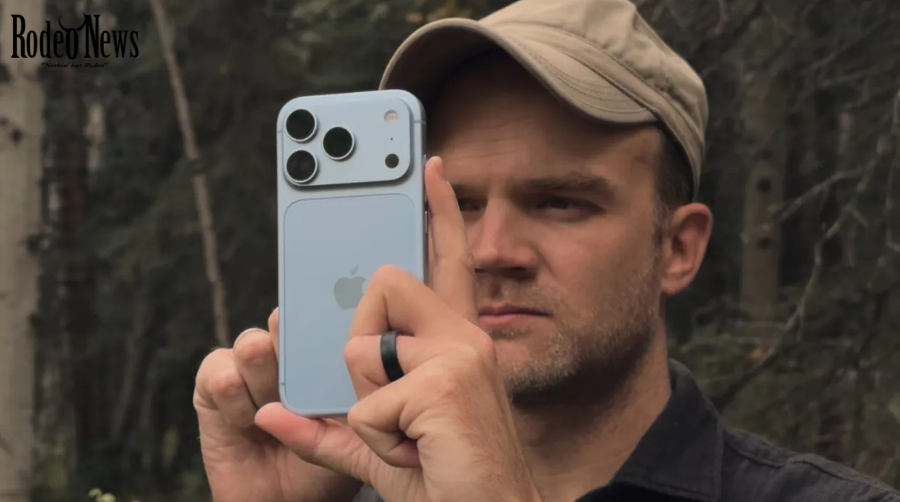
Published on September 17, 2026, 9to5Mac’s report highlights Mann’s hands-on experience with the latest iPhone camera system. His review includes photography examples and practical advice for users who want to understand how Apple’s newest camera features perform in real-world situations.
Unlike a traditional smartphone review that focuses primarily on specifications, Mann’s approach emphasizes photography workflows, creative decisions, and the results that users can achieve with the camera. His observations provide useful context for both experienced photographers and everyday iPhone owners.
iPhone 18 Pro Camera Review Highlights New Features
Austin Mann is known for publishing detailed reviews of Apple’s latest iPhone camera improvements. Each year, his work combines written observations with photographs captured using the new device, allowing readers to examine how new features influence the final image.
This year’s review focuses on the iPhone 18 Pro and Pro Max, which introduce changes to the main camera and the iOS Camera app.
According to 9to5Mac, Mann’s review covers several major features, including variable aperture, new professional controls, Photographic Styles 3, Focus Tracking, Apple Reference Image, and 4K time-lapse recording.
These additions reflect Apple’s continued effort to make the iPhone useful for photographers who want more flexibility without depending entirely on third-party camera applications.
The significance of these changes is not limited to the technical specifications. For photographers, the practical question is how easily they can control exposure, focus, depth, and the overall visual style of their images.
Mann’s review addresses those areas through examples and recommendations based on his experience using the iPhone 18 Pro.
Variable Aperture Gives Photographers More Control
One of the most notable additions discussed in the iPhone 18 Pro camera review is the variable aperture system.
Aperture controls the opening through which light enters a camera lens. It can influence exposure and depth of field, which affects how much of an image appears in focus. A wider aperture can be useful in low-light conditions, while a narrower aperture can help maintain greater depth of field.
Mann recommends allowing the iPhone to select the aperture automatically in most situations. His advice is based on the camera’s ability to choose an appropriate setting for the scene.
In his review, he explains that the camera automatically selects a wide aperture in indoor dinner settings, while it chooses a higher f-stop outdoors when more depth is needed.
This recommendation is particularly relevant for users who may not have extensive experience with manual photography settings. Rather than requiring users to adjust the aperture for every photograph, the automatic system can handle many everyday shooting situations.
However, photographers who want greater creative control can explore manual adjustments when a specific visual effect is desired.
iPhone 18 Pro Camera Review Explores Night Photography
Mann also shares examples of the iPhone 18 Pro’s wider aperture capturing the Colorado sky at night.
Night photography presents several challenges, including limited light, movement, and the need to preserve detail without introducing excessive image noise. Camera hardware and computational photography both play important roles in how a smartphone handles these conditions.
The examples in Mann’s review give readers an opportunity to see how the camera’s wider aperture can be used in a nighttime photography setting.
It is important to distinguish between an example photograph and a universal performance claim. A single image does not establish that every nighttime scene will produce the same result, since lighting conditions, composition, and shooting technique can all affect the outcome.
Nevertheless, night photography is a useful area for examining the practical benefits of camera improvements.
Manual Focus Becomes a Key Professional Tool
Another important feature highlighted by Mann is manual focus, which is included among the new professional controls on the iPhone 18 Pro and iPhone 18 Pro Max.
Focus determines which part of a scene appears sharp. In many everyday situations, autofocus works effectively. However, photographers sometimes need to choose the focus point themselves, particularly when working with complex compositions, low-light scenes, or subjects that can confuse automatic systems.
Mann is especially enthusiastic about the ability to separate focus and exposure.
According to his comments quoted by 9to5Mac, users can now set focus manually, use focus peaking, and then tap a location to determine exposure. This provides a more independent approach to controlling two essential aspects of photography.
Why Separating Focus and Exposure Matters
Exposure determines how bright or dark an image appears, while focus controls the area of sharpness. These decisions are often connected in automatic camera systems, but they do not always need to be identical.
For example, a photographer might want to focus on a specific subject while selecting exposure based on a different part of the scene. Separating these controls can make it easier to manage challenging lighting conditions and compositions.
Focus peaking is another useful feature for manual photography. It provides a visual indication of areas that are in focus, helping users judge sharpness while adjusting the focus point.
Mann’s positive comments suggest that manual focus is one of the features he considers particularly valuable for photographers who want more control over the image-making process.
The feature may be especially relevant to users transitioning from dedicated cameras to smartphones, although its usefulness will depend on individual shooting habits and preferences.
Photographic Styles 3 Brings a Film-Inspired Look
The iPhone 18 Pro camera review also discusses Photographic Styles 3, a feature designed to help users create a distinctive visual appearance in their photographs.
Photographic styles allow photographers to influence the look of images through adjustments to characteristics such as tone and color. These tools can be useful for people who want a consistent aesthetic without performing extensive editing after every photograph.
Mann discusses how users can create a film-like effect by combining several shooting and editing choices.
His recommendations include shooting with a darker exposure, using the wider aperture, selecting manual focus, and capturing images in HEIF format so Photographic Styles can be applied.
He also describes using the editing controls to reduce the tone-mapping effect associated with HDR processing. In addition, he recommends adjusting the film effect to control halation, an effect that can create a glow around bright areas.
Practical Tips From Austin Mann
Mann’s advice, as reported by 9to5Mac, includes several specific steps:
- Shoot darker, at approximately -1.0 exposure, and use the wide-open f/1.48 aperture.
- Experiment with manual focus for a slightly softer image.
- Use HEIF to enable Photographic Styles.
- Adjust the editing controls to reduce the HDR appearance.
- Reduce the film effect when halation becomes excessive.
These suggestions are intended for photographers who want to experiment with a particular visual style. They should not be interpreted as settings that are ideal for every subject or lighting condition.
For example, intentionally underexposing an image may help create a darker mood, but it can also reduce visible detail in shadow areas. The best settings depend on the photographer’s intended result.
The flexibility of these controls is more important than following a single fixed formula. Users can experiment with different combinations to determine which approach fits their photography style.
Focus Tracking Expands the Camera’s Capabilities
Focus Tracking is another feature included in Mann’s full review.
Tracking tools are designed to help cameras maintain focus on subjects as they move. This can be useful for photographing people, animals, sports, and other subjects that do not remain stationary.
The practical value of focus tracking depends on factors such as subject movement, lighting, background complexity, and the camera’s ability to recognize the intended subject.
Although the 9to5Mac report identifies Focus Tracking as one of the features covered in Mann’s review, the available article details do not provide a complete set of performance measurements or a comprehensive comparison with previous iPhone models.
Consequently, users interested in the feature should examine Mann’s original review and photographic examples for additional context.
For everyday photographers, tracking capabilities can potentially reduce the need to repeatedly adjust focus. For more advanced users, the feature may be worth examining alongside manual focus controls to understand when automatic and manual approaches are most useful.
Apple Reference Image Adds Another Photography Feature
Mann’s review also covers Apple Reference Image.
The feature is mentioned alongside Focus Tracking and 4K time-lapse in the list of topics included in his full review. However, the 9to5Mac report does not provide enough detailed explanation to establish its complete functionality or practical workflow.
When evaluating a new camera feature, it is important to understand what the tool actually does before making conclusions about its benefits.
Apple Reference Image should therefore be considered a feature requiring further examination through Apple’s documentation or Mann’s full review. The available report confirms its inclusion in the review but does not establish a complete technical description.
This distinction matters for readers who want to make purchasing decisions based on specific camera capabilities. A feature’s name alone is not sufficient to determine how it will affect their photography.
4K Time-Lapse and the iOS Camera App
The iPhone 18 Pro camera review also includes 4K time-lapse recording and changes to the iOS Camera app.
Time-lapse photography allows users to record scenes over an extended period and present the movement in a shorter video. It can be used for subjects such as changing skies, city activity, landscapes, and other scenes where gradual movement is visually interesting.
Recording in 4K can provide a higher-resolution output, although the final result also depends on factors such as lighting, stability, composition, and the intended viewing platform.
The updated Camera app is another important part of the overall experience. Camera software determines how users access shooting modes, adjust settings, and manage the image-making process.
For photographers, usability can be as important as hardware improvements. A feature that is difficult to locate or operate may be less useful in real-world situations, particularly when a subject is moving quickly or a moment is temporary.
Mann’s broader review provides an opportunity to examine these tools together rather than considering each feature in isolation.
What the iPhone 18 Pro Camera Review Means for Users
The features discussed in Austin Mann’s review point toward a camera system that offers a combination of automatic photography and more advanced manual controls.
For casual users, automatic aperture selection can reduce the need to understand every technical setting. The camera can make decisions based on the scene while users focus on composition and timing.
For photographers who want more control, manual focus and separate exposure adjustments offer additional options. These features can be useful when the automatic system does not produce the intended result or when a photographer wants to create a specific visual effect.
Photographic Styles 3 also provides an alternative approach to image styling. Instead of treating editing as a completely separate process, users can incorporate a preferred appearance into their shooting workflow.
However, the importance of each feature depends on the individual photographer. Someone who primarily takes casual snapshots may have different priorities from someone who photographs landscapes, portraits, or moving subjects.
The review is therefore most useful as a source of practical information about the camera’s capabilities, rather than as a universal assessment for every type of user.
Austin Mann’s Review Continues a Yearly Photography Tradition
Austin Mann’s annual iPhone camera reviews have become a recurring source of photography-focused coverage around Apple’s smartphone releases.
His reviews combine practical experience with photographic examples, making them different from specifications-focused product announcements.
The iPhone 18 Pro review continues that approach by examining variable aperture, professional controls, Photographic Styles 3, and additional camera features.
For readers who want to explore the new camera system, the review offers a way to examine how the technology can be used in actual photography situations. It also provides practical suggestions for photographers who are interested in experimenting with manual settings and film-inspired effects.
The full review remains the appropriate source for understanding the complete set of examples, recommendations, and observations.
Conclusion: iPhone 18 Pro Camera Review Offers Practical Insights
Austin Mann’s iPhone 18 Pro camera review highlights several changes introduced in Apple’s latest Pro smartphone camera system. Variable aperture, manual focus, separate exposure controls, Photographic Styles 3, Focus Tracking, Apple Reference Image, and 4K time-lapse are among the features discussed in the coverage.
The review’s practical emphasis is particularly relevant to photographers who want to understand how camera tools affect their shooting process. Mann’s recommendation to use automatic aperture in many situations also illustrates how advanced hardware can work alongside computational photography.
At the same time, users should evaluate individual features according to their own needs. Manual controls may appeal to experienced photographers, while automatic settings can remain convenient for everyday shooting.
Readers interested in the full set of photographic examples and recommendations can explore Austin Mann’s original review through the 9to5Mac report.
Source: 9to5Mac — Photographer Austin Mann reviews the iPhone 18 Pro camera