Israeli Airstrikes in Lebanon Kill Seven as Tensions Rise
Israeli airstrikes in Lebanon have killed at least seven people and wounded 20 others in a major escalation across southern Lebanon, according to Lebanese authorities and subsequent reporting. The attacks came despite a truce between Israel and Hezbollah and renewed international efforts to prevent the conflict from expanding.
The initial casualty figure reported by Al Jazeera on September 6 was at least four dead and 20 wounded. Two women were killed in an attack on Arab Salim, while two other people were reported killed in a strike on Nabatieh al-Fawqa. Later reporting from Reuters said the death toll had risen to seven. AAl Jazeera+1
The latest violence has increased concerns that the fragile ceasefire arrangement could face further strain. Lebanon’s leadership has also appealed for international intervention as Israeli military operations continue in parts of the country’s south.
Israeli airstrikes in Lebanon hit multiple areas
The attacks were reported across several locations in the southern Nabatieh region, an area that has repeatedly been affected by fighting between Israel and Hezbollah.
In Arab Salim, two women were killed and six people were wounded after an Israeli air attack struck a building following an evacuation warning, according to Lebanon’s National News Agency as cited by Al Jazeera. The incident has raised particular concern because residents were reportedly ordered to leave the targeted building before the attack. AAl Jazeera
Another Israeli strike hit Nabatieh al-Fawqa, where Lebanon’s Health Ministry reported additional deaths.
An attack in Nabatieh city also damaged several buildings and destroyed a historic structure belonging to the family of a Lebanese parliamentarian. In nearby Kfar Reman, an Israeli airstrike destroyed the home of the town’s former mayor.
The damage illustrates the broader impact of the continuing military campaign. Even when strikes are described as targeting military infrastructure, surrounding residential, historical and government-related structures can also be affected.
Israel says Hezbollah was the target
Israel has said its military operations in southern Lebanon are aimed at Hezbollah infrastructure.
According to Reuters, the Israeli military said the strikes were carried out in response to Hezbollah drone attacks and that it had targeted weapons facilities and command infrastructure belonging to the group. Israel also said it used precision weapons in an effort to limit civilian casualties. RReuters
Hezbollah and Lebanese officials have disputed Israel’s characterization of the attacks and have accused Israel of continuing to violate the truce.
The competing claims highlight the difficulty of maintaining a ceasefire while both sides continue to accuse the other of military activity.
For civilians in southern Lebanon, however, the immediate consequence is renewed insecurity. Repeated airstrikes have left communities facing the possibility of additional displacement, property destruction and interruptions to basic services.
A ceasefire under growing pressure
The latest Israeli airstrikes in Lebanon come against the backdrop of a US-brokered ceasefire framework.
The agreement was intended to reduce hostilities and create conditions for negotiations between Lebanon and Israel. However, the situation on the ground remains unstable, with Israeli forces continuing operations and Hezbollah maintaining its military capabilities.
Reuters reported that Israel has continued military activity inside a declared security zone in southern Lebanon. The two sides have also remained at odds over the future of strategic areas and Hezbollah’s weapons infrastructure. RReuters
The persistence of military operations has raised questions about whether the ceasefire can develop into a longer-term political settlement.
Lebanon has repeatedly called for international pressure to stop Israeli attacks. President Joseph Aoun has described the latest escalation as a serious threat to the country’s stability and called for help from the United States and the international community. RReuters
Lebanon calls for international intervention
Lebanese officials have sought greater international involvement as Israeli attacks continue.
President Aoun’s appeal reflects the increasingly difficult position facing the Lebanese government. Beirut must contend with Israeli military operations while also attempting to assert state authority over armed groups and maintain diplomatic engagement with international partners.
The United States has played an important role in efforts to mediate between Lebanon and Israel. Washington’s involvement has focused on maintaining the ceasefire framework and encouraging negotiations over unresolved security issues.
However, the latest violence demonstrates how quickly diplomatic progress can be undermined by events on the ground.
The attacks also come at a sensitive moment for Lebanon, where the government faces pressure to strengthen its control over national territory and address the role of Hezbollah’s armed wing.
Civilian areas face renewed danger
The human cost of the Israeli airstrikes in Lebanon extends beyond the reported death toll.
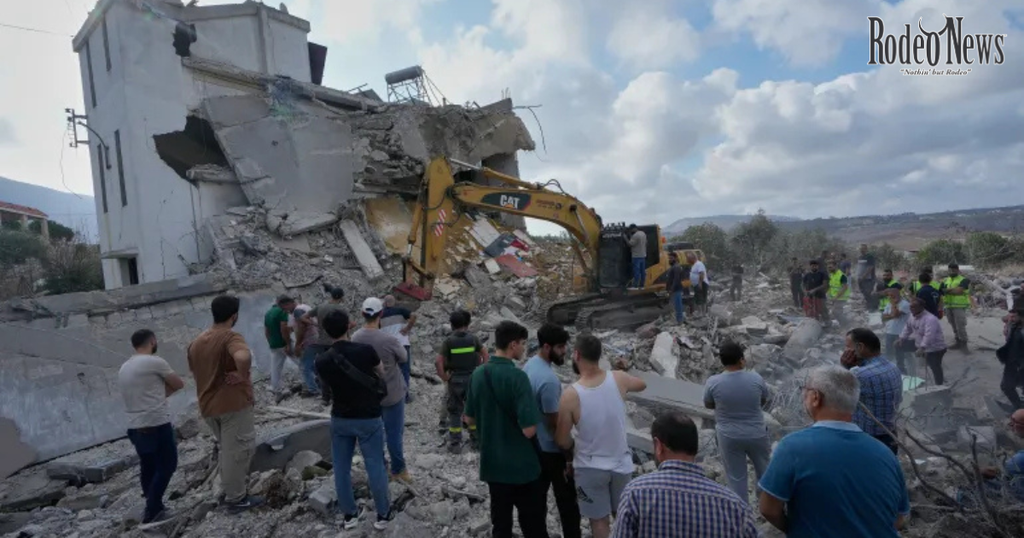
Al Jazeera reported that 20 people were wounded in the attacks, while several buildings were damaged or destroyed. In Arab Salim, emergency workers searched through the remains of a damaged home as residents gathered near the site. AAl Jazeera
The destruction of homes and other civilian structures can have consequences long after the immediate attack.
Families may be forced to leave damaged properties. Local authorities must assess structural damage. Hospitals and emergency services can also face additional pressure when multiple strikes occur within a short period.
Southern Lebanon has already experienced extensive destruction during the wider conflict. Continued attacks therefore risk deepening an existing humanitarian and economic crisis.
For residents, uncertainty can be as damaging as the physical destruction. Even when fighting temporarily subsides, communities may remain concerned about further strikes, evacuation orders and the possibility of renewed displacement.
Why southern Lebanon remains a flashpoint
Southern Lebanon has long been at the center of tensions between Israel and Hezbollah.
The region borders Israel and contains communities that have repeatedly been caught between military operations and retaliatory attacks.
Hezbollah maintains a significant presence in parts of southern Lebanon. Israel argues that the group’s military infrastructure poses a direct security threat to northern Israel. Hezbollah, meanwhile, has maintained that its armed capabilities are necessary to confront Israel.
That longstanding dispute has made the region particularly vulnerable to escalation.
Recent fighting has also centered on strategically important locations, including the Ali Taher ridge near Nabatieh. The area has been described as important because of its elevation and underground infrastructure. The Associated Press reported that fighting around the strategic hill has continued despite the ceasefire. AAP News
The continued contest over territory and military infrastructure makes a durable settlement more difficult.
The wider regional implications
The latest Israeli airstrikes in Lebanon could also have consequences beyond the country’s borders.
Any sustained escalation between Israel and Hezbollah risks drawing other regional actors into the conflict. Hezbollah has close ties with Iran, while Israel maintains strong military and diplomatic relationships with the United States and other Western countries.
That broader network of alliances means that developments in southern Lebanon are closely watched by governments throughout the Middle East.
A major escalation could also complicate diplomatic efforts elsewhere in the region.
For the United States, preventing the Lebanon front from developing into another prolonged war is an important diplomatic challenge. Washington has been involved in attempts to mediate between Israel and Lebanon, but the latest strikes show the limitations of diplomacy when military confrontation continues.
What happens next?
The immediate question is whether the latest attacks will trigger further retaliation.
Hezbollah has previously responded to Israeli strikes with drone or rocket attacks. Israel has then used those attacks to justify additional military operations, creating a cycle that can quickly intensify.
Diplomatic pressure may therefore become critical in the coming days.
Lebanese authorities are likely to continue pressing the United States and other international actors to intervene. At the same time, Israel is expected to maintain its position that military operations are necessary to prevent Hezbollah from rebuilding its capabilities.
The ability of mediators to separate these security concerns from broader political negotiations could determine whether the current ceasefire survives.
A fragile moment for Lebanon
The latest Israeli airstrikes in Lebanon underscore how fragile the country’s security situation remains.
Although a truce has reduced some of the intensity of the fighting, the continued presence of Israeli forces, Hezbollah’s military activity and unresolved territorial and security disputes leave southern Lebanon vulnerable to renewed violence.
The reported deaths of civilians and the destruction of homes and other structures have added further pressure on Lebanon’s government to seek international action.
At the same time, Israel maintains that its operations are directed against Hezbollah military infrastructure and are intended to protect Israeli communities from attacks.
For now, the competing positions remain far apart.
The latest escalation serves as another warning that a ceasefire alone may not be enough to produce lasting peace. Without progress on the underlying security and political disputes, southern Lebanon could remain a dangerous flashpoint.
The situation remains fluid, and casualty figures may change as Lebanese authorities continue assessing the damage and emergency teams search affected areas. AAl Jazeera+1
Related Reading
- Internal link: [Lebanon News and Updates]
- Internal link: [Israel-Hezbollah Conflict Explained]
- Internal link: [Middle East Breaking News]
For external verification and continued updates, readers can consult Al Jazeera’s original report and Reuters’ updated coverage.
Image ALT Text
Israeli airstrikes in Lebanon kill seven as rescue workers search damaged buildings in southern Lebanon
Image suggestion: Use the AP photograph published with the original Al Jazeera report, showing rescue workers searching the destroyed building in Arab Salim. AAl Jazeera
For the WordPress version, replace the three internal-link placeholders with actual URLs from your target website. Since no target domain was provided, I haven’t invented internal links.