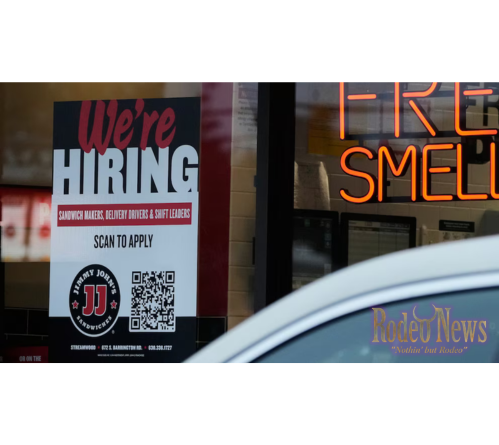
US Jobless Claims Stay Below 200,000 as Hiring Slows
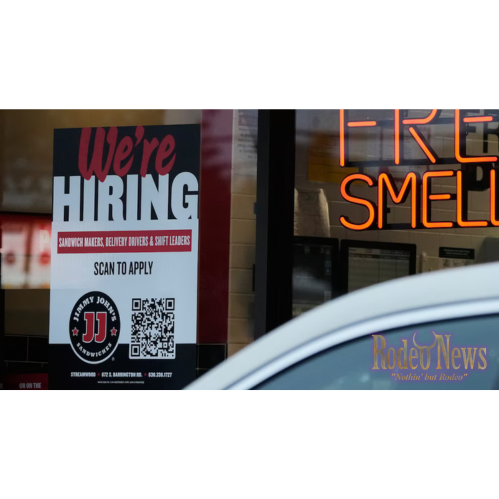
US jobless claims remained below 200,000 in the latest weekly report, highlighting the resilience of the American labor market even as employers become more cautious about hiring. Initial applications for unemployment benefits increased slightly to 199,000 for the week ending October 10, 2026, according to data released by the US Department of Labor.
Although the increase was modest, the latest figures reveal a complicated economic picture. Many businesses continue to retain their existing employees, keeping layoffs at historically low levels. However, the pace of new hiring has weakened, raising concerns about job seekers who need to enter the workforce or find new employment.
The latest figures suggest that the United States is experiencing a low-hire, low-fire labor market. Companies are generally reluctant to dismiss workers, but they are also creating fewer new opportunities than they did during stronger periods of economic growth.
For workers, this combination can provide some job security while making it harder to secure a new position. For policymakers and economists, it raises questions about whether the labor market can maintain its stability if economic pressures intensify.
US Jobless Claims Reach 199,000 in October 2026
Initial applications for unemployment benefits increased by 1,000 to 199,000 during the week ending October 10, according to the Labor Department’s latest report, published October 15.
The increase followed a revised figure of 198,000 applications for the previous week. Although claims moved slightly higher, they remained below the psychologically significant 200,000 threshold.
The four-week moving average of initial claims also edged upward, increasing by 250 to 198,500. Economists frequently monitor this measure because it smooths out weekly fluctuations and provides a clearer picture of underlying labor market conditions.
Weekly claims can fluctuate because of temporary layoffs, seasonal employment patterns, and changes in business activity. Consequently, a small increase does not necessarily indicate a major deterioration in employment conditions.
The broader trend remains important. According to the latest report, initial unemployment claims have stayed below 220,000 throughout 2026, indicating that employers have generally avoided widespread workforce reductions.
Nevertheless, the figures should not be interpreted as proof that every part of the economy is performing well. Initial claims primarily measure people applying for unemployment benefits after losing work. They do not directly measure how easily unemployed Americans can find another job.
Source: ABC News report on US unemployment claims.
Why US Jobless Claims Remain Historically Low
Several factors help explain why unemployment benefit applications have remained relatively low despite weaker hiring.
One important factor is employer behavior. Businesses that invested time and money in recruiting and training employees may prefer to retain their existing workforce rather than risk losing experienced workers.
Companies may also be waiting for clearer signals about consumer demand, operating costs, and future economic growth before making significant staffing decisions.
When businesses remain cautious, they can reduce recruitment without immediately resorting to layoffs. That approach helps explain the current combination of limited job losses and slower employment growth.
Another consideration is the size and composition of the available workforce. Slower population growth and reduced immigration can affect how many new jobs the economy needs to generate to maintain relatively stable unemployment rates.
If fewer people enter the labor force, employment growth may remain modest without producing a proportionate increase in the unemployment rate.
However, the relationship between workforce growth and unemployment is complex. Participation rates, retirement patterns, industry demand, and the number of people actively searching for work all influence the broader employment picture.
Low claims therefore represent one encouraging indicator, but they must be evaluated alongside hiring figures, wages, labor force participation, and the duration of unemployment.
A Low-Hire, Low-Fire Labor Market Creates New Challenges
The latest US jobless claims report reinforces a pattern that economists describe as a low-hire, low-fire labor market.
In this environment, employers are not dismissing large numbers of existing workers, but they are also reluctant to expand their payrolls.
For people who already have stable employment, this situation can provide reassurance. Workers may face a lower immediate risk of losing their jobs than they would during a period of widespread corporate layoffs.
For job seekers, however, the same conditions can create significant difficulties.
People entering the workforce may encounter fewer entry-level openings. Recent graduates may need to submit more applications before receiving an offer. Workers who lose their jobs may also find that suitable positions are harder to locate.
The problem can be particularly challenging for employees seeking to change careers, move to a different city, or obtain better pay.
When businesses slow recruitment, workers have fewer opportunities to negotiate higher salaries by moving to competing employers. As a result, a labor market with relatively few layoffs can still feel difficult for households that depend on finding new employment.
This distinction is essential when interpreting economic headlines. Low unemployment claims indicate that fewer people are entering unemployment through newly reported claims. They do not guarantee that unemployed people are finding work quickly.
The labor market’s overall health depends on both sides of the equation: how many workers lose jobs and how many can find new ones.
September Jobs Report Signals a Hiring Slowdown
The latest unemployment claims figures come as the broader US employment market shows signs of losing momentum.
Government data released earlier in October indicated that employers added just 29,000 jobs in September, down sharply from 133,000 in August.
September’s employment increase also fell short of economists’ expectations, highlighting the slowdown in recruitment.
The unemployment rate rose to 4.2% in September, according to the figures cited in the latest reports. Although that level remains relatively low by historical standards, the combination of slower hiring and a modest increase in unemployment has attracted attention.
Employers may be responding to uncertainty surrounding operating expenses, borrowing costs, consumer spending, and the economic outlook.
Businesses facing uncertain demand may delay expansion plans or leave vacant positions unfilled. Others may focus on improving productivity rather than increasing the number of employees.
These decisions can reduce hiring without producing an immediate wave of layoffs.
The difference between employment growth and unemployment claims is therefore particularly important. Initial claims provide information about newly reported job losses, while payroll figures measure changes in employment across businesses and other organizations.
When claims remain low but payroll growth weakens, the labor market may be stable for existing employees while becoming less accessible to new applicants.
That appears to be one of the central challenges facing the American economy in October 2026.
US Unemployment Benefits: What Continuing Claims Reveal
Initial unemployment claims are only one part of the employment picture. Continuing claims provide another useful measure by tracking people who remain on unemployment benefits after their initial applications.
According to the latest report, continuing claims for the week ending October 3 declined by 4,000 to approximately 1.71 million.
The decline suggests that the number of people continuing to receive unemployment benefits remained relatively stable.
However, continuing claims must also be interpreted carefully. Not every unemployed person qualifies for benefits, and not every eligible person receives them for the same length of time.
The figures therefore do not represent the total number of unemployed Americans.
Even so, economists monitor continuing claims because changes can provide clues about how workers are progressing after losing their jobs.
If initial claims remain low while continuing claims rise substantially, the pattern could suggest that fewer people are losing jobs but some unemployed workers are taking longer to find new positions.
Conversely, declining continuing claims can indicate that fewer people remain on benefits, although the figures alone cannot establish whether they found employment, exhausted their eligibility, or left the benefits system for another reason.
The latest decline offers a modestly encouraging signal, but the overall labor market still requires close monitoring.
For a broader understanding of the figures, readers can consult the US Department of Labor’s unemployment insurance statistics.
Inflation and Borrowing Costs Could Pressure Employers
Despite historically low US jobless claims, several economic risks could influence employment decisions in the coming months.
Higher borrowing costs can make it more expensive for businesses to finance expansion, purchase equipment, or maintain operations using credit.
When financing becomes more costly, companies may delay new projects or reduce recruitment plans. Businesses with narrow profit margins can be particularly sensitive to changes in interest expenses and operating costs.
Inflation presents another challenge. Persistent increases in prices can raise expenses for businesses while reducing the purchasing power of consumers.
Higher energy prices can be especially disruptive because fuel and transportation costs affect a wide range of industries.
If companies face rising expenses while customers become more cautious about spending, managers may attempt to protect profitability by limiting recruitment, reducing working hours, or cutting other expenses.
However, businesses do not necessarily respond to these pressures by immediately laying off workers. Many may first slow hiring or postpone plans to fill vacant positions.
That can reinforce the low-hire, low-fire pattern reflected in recent employment data.
The risk is that a prolonged slowdown could eventually affect existing workers if companies determine that cost reductions are no longer sufficient.
For now, the latest claims figures do not demonstrate that widespread layoffs are underway. Instead, they show a labor market in which job losses remain limited even as economic uncertainty weighs on hiring.
Corporate Layoffs Highlight Uneven Employment Conditions
Announcements from major employers illustrate why low national unemployment claims do not eliminate the risk of job losses in individual industries.
Grocery retailer Kroger recently announced plans to eliminate approximately 3,000 corporate positions over the next three years.
Meanwhile, rival supermarket operator Albertsons indicated that additional workforce reductions were expected after earlier cuts.
These announcements demonstrate that some employers are reassessing their staffing needs even while national initial unemployment claims remain relatively low.
Large companies can reduce headcounts for many reasons, including restructuring, efforts to lower costs, changes in business strategy, and investments in technology.
The impact on the overall labor market depends partly on the scale and timing of those reductions and whether other employers create enough positions to offset the losses.
A single company’s layoffs may have a limited effect on national claims. However, widespread reductions across multiple industries could eventually change the broader employment picture.
Corporate announcements also tend to attract attention because they provide visible examples of the pressures businesses face.
Still, it is important to distinguish announced future job cuts from layoffs that have already occurred. Plans covering several years do not necessarily translate into an immediate increase in unemployment claims.
The latest national figures continue to suggest that widespread job losses have not yet emerged, although individual workers and sectors may experience very different conditions.
What Low US Jobless Claims Mean for American Workers
For American households, the latest report offers both reassurance and reasons for caution.
Workers who already have stable jobs may benefit from employers’ reluctance to reduce headcounts. Businesses that want to preserve experienced employees can be more willing to maintain existing staffing levels even when economic growth slows.
That can help support household income and consumer spending.
However, workers looking for new opportunities may face a more challenging environment. When businesses advertise fewer positions, competition can increase, particularly in industries experiencing slower demand.
Applicants may need to broaden their searches, improve their qualifications, or consider different roles while waiting for hiring conditions to improve.
Employees who are considering changing jobs may also want to evaluate the stability of prospective employers rather than focusing exclusively on salary increases.
For households, financial flexibility can become more important when the labor market is changing. Maintaining emergency savings where possible and understanding workplace benefits can help reduce vulnerability to unexpected employment disruptions.
These considerations do not mean that a major employment crisis is imminent. Instead, they reflect the difference between a market with low layoffs and one offering abundant opportunities.
The latest report suggests that many employed Americans continue to benefit from job stability, but workers seeking employment may not experience the same degree of reassurance.
What Economists Will Watch in the Coming Weeks
Future labor market reports will help determine whether the current slowdown remains manageable or develops into a more serious concern.
One important indicator will be weekly initial unemployment claims. A sustained increase would suggest that more workers are losing jobs, particularly if claims rise consistently over several reporting periods.
Economists will also monitor the four-week average because it reduces the influence of temporary weekly fluctuations.
Monthly payroll figures will provide another essential measure. If job creation remains weak, analysts will examine whether employment growth is slowing across multiple industries or concentrated in a smaller number of sectors.
The unemployment rate and labor force participation will also matter. Together, these measures help explain whether workers are finding employment, remaining unemployed, or leaving the active labor force.
Continuing unemployment claims can offer additional information about the time workers spend receiving benefits.
Finally, wage growth, inflation, consumer spending, and business investment will help clarify whether employers are likely to increase recruitment or remain cautious.
No single indicator can provide a complete assessment of the economy. A combination of stable claims, stronger payroll growth, and sustained hiring would offer more convincing evidence of an improving labor market than low claims alone.
Likewise, rising claims combined with weak job creation and increasing unemployment would suggest that labor market conditions were deteriorating.
For now, the latest data indicate that layoffs remain limited, but the pace of employment growth deserves continued attention.
US Jobless Claims Outlook: Stability With Important Risks
The latest unemployment report presents a labor market that remains resilient but is showing signs of strain.
Initial claims increased by just 1,000 to 199,000 in the week ending October 10, keeping the figure below 200,000. The four-week average rose slightly to 198,500, while continuing claims declined to approximately 1.71 million.
These figures suggest that widespread layoffs remain limited. However, September’s modest payroll growth and the rise in the unemployment rate indicate that the employment market is not uniformly strong.
The distinction matters for businesses, policymakers, and households. Employers may be retaining existing workers while postponing new recruitment, leaving job seekers with fewer opportunities even as the number of new unemployment claims remains low.
Economic pressures, including borrowing costs and inflation, could influence hiring decisions in the months ahead. Corporate restructuring announcements also show that workforce reductions remain a possibility for some employers.
The next round of labor market data will help establish whether the current pattern continues or begins to change.
For now, the central message is clear: US jobless claims remain historically low, but limited layoffs do not necessarily mean a strong hiring market. The health of the American economy will depend not only on whether workers keep their jobs, but also on whether businesses continue creating opportunities for people who need them.