
SpaceX Starfall 2028 Mission Adds a Major Commercial Customer
The SpaceX Starfall 2028 program is gaining another important customer as Luxembourg-based Space Cargo Unlimited prepares to send a large-scale in-space manufacturing payload aboard a future Starship mission.
Space Cargo Unlimited has signed an agreement for a Starfall mission targeted for 2028, according to Aviation Week. The deal makes the company the first known European customer for SpaceX’s Starfall service, although it is not the program’s first customer overall.
The planned mission could mark an important step for commercial manufacturing in orbit. Space Cargo intends to use its BentoBox system to carry as much as 1 metric ton of customer payloads inside the Starfall reentry vehicle.
The mission is also significant for SpaceX because Space Cargo says it is expected to fly on what would be Starship’s first commercial mission, currently targeted for 2028. SpaceX itself had not previously publicly announced when Starship would begin commercial service.
SpaceX Starfall 2028 Mission Targets One-Ton Payload Capacity
The biggest feature of the agreement is the scale of the planned payload.
Space Cargo Unlimited currently works with smaller systems capable of handling hundreds of kilograms. The company’s Starfall mission is designed to increase that capacity to as much as one ton.
That represents a substantial increase in the amount of material that can be transported into microgravity, processed or researched there, and then returned to Earth.
Space Cargo CEO Nicolas Gaume told Reuters that the company’s existing systems can fly around 200 kilograms, while the combination of Starship and Starfall could allow it to move one ton or more of customer payloads.
The company’s own materials describe Starfall as a platform capable of supporting payloads with a mass of up to 1,000 kilograms and about 1,100 liters of volume.
That capacity is particularly relevant for companies that want to use microgravity without developing their own spacecraft.
Why One Ton Matters for Orbital Manufacturing
Microgravity research has traditionally been limited by launch costs, available volume and the amount of material that can be safely returned to Earth.
A larger reusable reentry system changes that equation.
Instead of sending small experimental packages into orbit, companies could potentially conduct multiple experiments during a single mission. Larger payloads could also support manufacturing processes that require more equipment, power or raw material.
For Space Cargo Unlimited, Starfall is therefore more than a transportation service.
The company is positioning itself as an intermediary between launch and reentry providers and commercial customers that want to manufacture or conduct research in orbit.
What Is SpaceX Starfall?
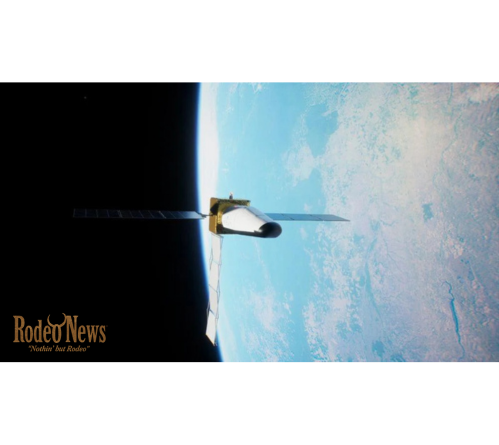
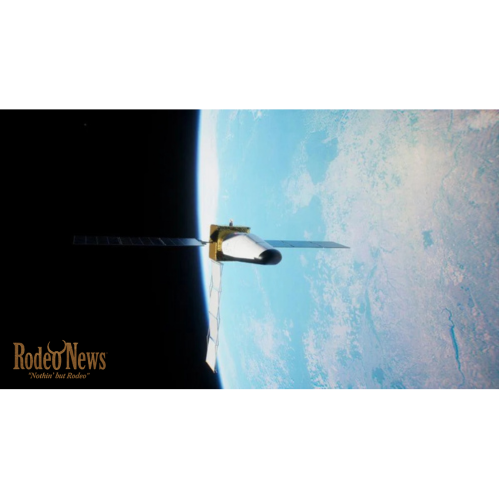
Starfall is SpaceX’s newer commercial reentry service designed to transport materials between Earth and low Earth orbit.
The system uses a relatively compact capsule protected by a heat shield. Reuters describes the vehicle as a disk-shaped capsule with an approximately 3-meter-wide heat shield designed to protect payloads during atmospheric reentry.
The concept draws on SpaceX’s experience with atmospheric reentry from its larger Dragon spacecraft.
However, Starfall is designed specifically for returning commercial materials and research payloads rather than transporting astronauts.
That opens the door to a different part of the space economy.
Drug companies, biotechnology researchers, materials manufacturers and other businesses can potentially use microgravity as an environment for research and production before bringing the resulting products or samples back to Earth.
Space Cargo Will Use Its BentoBox System
The SpaceX Starfall 2028 mission will carry Space Cargo Unlimited’s BentoBox system.
BentoBox is designed to organize and protect different customer payloads during their journey into orbit and back to Earth.
Space Cargo says the system can accommodate different types of experiments and products within the same mission. That makes the platform particularly useful for customers that do not need an entire spacecraft for themselves.
The company says nearly half of its potential customers for its first Starfall mission are involved in life sciences and biotechnology.
Those industries are among the sectors most interested in microgravity research because some biological and chemical processes behave differently away from Earth’s gravity.
Pharmaceuticals Could Benefit From Microgravity
One area of interest is pharmaceutical research.
Microgravity can affect the way proteins and other materials form crystals. Researchers have long investigated whether those differences can provide information that is difficult to obtain in terrestrial laboratories.
The value is not simply the ability to perform an experiment in space.
The objective is to return material to Earth in a form that researchers can study, potentially improving their understanding of biological structures or manufacturing processes.
Reuters noted that drugmakers are among the customers interested in returning products from space because some microgravity processes can produce higher-purity materials than those made under Earth’s gravity.
SpaceX Starfall 2028 Could Expand In-Space Manufacturing
The planned mission comes as the commercial space industry increasingly explores the idea of using orbit as a manufacturing environment.
For decades, most spacecraft have been designed to observe, communicate, navigate or conduct experiments.
Commercial companies are now exploring whether some products could actually be manufactured more efficiently in microgravity.
Potential areas include pharmaceuticals, biotechnology and advanced materials.
Space Cargo Unlimited is building its business around that possibility. Its long-term roadmap includes its own REV1 orbital vehicle, which the company describes as a reusable platform intended for microgravity manufacturing and high-mass cargo return.
The Starfall mission would therefore serve as a bridge between the company’s current smaller-scale operations and its planned future infrastructure.
Starship Provides the Scale Starfall Needs
The Starfall concept becomes particularly interesting when paired with Starship.
SpaceX’s next-generation rocket is designed to carry substantially more payload than Falcon 9. That additional capacity could allow multiple Starfall capsules or large commercial payloads to be transported on individual missions.
For Space Cargo Unlimited, the combination could provide both volume and flight frequency.
Gaume described those factors as central to the value of the agreement, according to Reuters.
The concept depends, however, on Starship achieving the reliability and launch cadence necessary for regular commercial operations.
Starship remains under development.
SpaceX is preparing for another major test flight in September 2026, with the company targeting an orbital mission that would deploy its first Starlink V3 satellites.
That means the path from development testing to routine commercial missions remains a major part of the story.
Starship’s Commercial Debut Is Now Pointing Toward 2028
The SpaceX Starfall 2028 agreement provides an important clue about SpaceX’s commercial Starship schedule.
According to Space Cargo Unlimited, its Starfall mission is planned for 2028 and would be part of Starship’s first commercial mission. Reuters reported that SpaceX had not previously disclosed when Starship would conduct its first commercial flight.
That does not mean every detail of the 2028 mission is finalized.
A launch date has not been announced. Mission pricing has also not been publicly disclosed.
The target depends on Starship completing its development program, demonstrating reliable orbital operations and establishing the infrastructure needed for commercial flights.
Still, the agreement gives potential customers a concrete timeframe around which they can begin planning.
Space Cargo Is Not the Only Starfall Customer
Space Cargo Unlimited is the first known European customer for Starfall, but it is not the first customer to sign a contract for the service.
Aviation Week reported that Space Cargo is the second customer to disclose a Starfall contract.
The growing customer list indicates that companies are already preparing for a commercial market based on reusable orbital reentry.
That market is still young.
However, competition is emerging.
California-based Varda Space Industries, for example, has developed its own commercial reentry system and has already flown multiple missions. Reuters reported that Varda’s capsule has completed six missions and returns to Earth in Australia.
SpaceX therefore enters a market where competitors have already demonstrated elements of the business model.
Competition Could Accelerate the Space Manufacturing Market
The emergence of multiple reentry providers could be important for the development of in-space manufacturing.
Companies need reliable access to orbit if manufacturing in microgravity is going to move beyond occasional demonstrations.
Launch frequency is one part of the equation.
Return capability is another.
A manufacturing company may be able to launch an experiment into orbit, but it needs a dependable way to recover the resulting material. A reusable reentry capsule provides that missing link.
More frequent missions could also reduce the waiting time between experiments.
That could make space-based research more practical for commercial companies operating on conventional product-development timelines.
SpaceX Starfall 2028 Could Bring Larger Payloads Back to Earth
The ability to return up to one ton of material is particularly notable.
Many commercial reentry vehicles are considerably smaller. Starfall’s planned scale could allow Space Cargo to combine payloads from multiple customers on the same mission.
That could lower the logistical barriers for businesses that need only a portion of the available capacity.
It also creates opportunities for more ambitious manufacturing experiments.
Instead of testing a small quantity of material, companies could potentially return much larger production batches for analysis or further processing.
Space Cargo’s public roadmap identifies Starfall as a major increase in capacity, moving from approximately 100-kilogram missions toward one-tonne-scale manufacturing.
The Road to 2028 Still Has Major Challenges
Despite the new contract, the SpaceX Starfall 2028 mission remains a future target.
Starship must first establish reliable orbital flight operations.
The rocket’s development program has included multiple test flights, and SpaceX is now targeting its first orbital test as it moves toward more ambitious operations. Reuters reported that the next test is intended to place Starship into orbit and deploy Starlink V3 satellites.
Commercial service will require an additional level of reliability.
Customers shipping pharmaceutical research or valuable materials need predictable launch and return schedules.
The Starfall capsule itself must also demonstrate consistent reentry performance.
Its first demonstration mission took place in June 2026, according to Aviation Week and Reuters reporting.
That gives SpaceX time to develop the system before the targeted 2028 commercial mission.
What the SpaceX Starfall 2028 Deal Means for Space Manufacturing
The significance of the agreement extends beyond a single launch.
It represents a growing effort to build a commercial supply chain around microgravity.
Launch providers supply transportation.
Reentry companies provide the path back to Earth.
Mission integrators such as Space Cargo Unlimited connect those systems with businesses that want to conduct manufacturing and research.
The result is an emerging ecosystem in which companies may eventually be able to purchase space-based manufacturing capacity much like they purchase specialized laboratory services today.
That model could become increasingly important if microgravity production proves commercially useful.
Space Cargo Is Building a Broader Orbital Manufacturing Network
Space Cargo Unlimited is not relying exclusively on SpaceX.
The company says its BentoBox system is also planned for other vehicles, including ATMOS Space Cargo’s Phoenix and the European Space Agency’s Space Rider.
That strategy could reduce dependence on any single launch or reentry provider.
It also means customers could eventually select different vehicles depending on payload size, mission duration and return requirements.
Space Cargo’s future REV1 vehicle is intended to expand that capability further.
The company says REV1 will be designed to transport up to one tonne of cargo and provide a reusable platform for microgravity research and manufacturing.
A New Phase for Commercial Space
The SpaceX Starfall 2028 agreement comes at a time when the commercial space industry is moving beyond the traditional launch business.
SpaceX has already demonstrated that reusable rockets can dramatically increase launch frequency. The next question is whether similar economics can emerge for orbital manufacturing and cargo return.
Starfall is part of that experiment.
If Starship achieves regular flights and Starfall demonstrates reliable recovery, companies could gain access to a larger and more flexible orbital manufacturing platform.
Space Cargo Unlimited’s one-ton payload plan illustrates how quickly the scale could increase.
What once required specialized government or large institutional missions could increasingly become a service available to commercial businesses.
What Happens Next
The immediate focus remains on Starship development and Starfall operations.
SpaceX needs to demonstrate successful orbital missions before commercial customers can depend on the vehicle for regular transportation.
Meanwhile, Space Cargo Unlimited will continue preparing customer payloads and developing its BentoBox platform.
The company is also advancing REV1, its planned reusable manufacturing and return vehicle.
If the current schedule holds, the 2028 Starfall mission could become an important milestone for commercial in-space manufacturing.
It would combine three major developments: Starship’s high-capacity launch capability, Starfall’s reusable cargo-return system and Space Cargo Unlimited’s ability to aggregate customer payloads.
For companies interested in pharmaceuticals, biotechnology and advanced materials, that combination could provide access to substantially more microgravity capacity than earlier commercial missions.
The SpaceX Starfall 2028 agreement does not guarantee that the commercial space manufacturing market will reach large-scale production. But it provides a concrete example of companies preparing for that possibility.
As Starship moves through its next phase of testing, the commercial commitments already being made around the vehicle show that customers are planning for a future in which orbit is not only a destination for satellites, but also a place to make, process and study valuable products.