SpaceX CRS-35: Major Cargo Mission Brings New Science to the ISS
SpaceX CRS-35 is delivering more than 6,300 pounds (2,860 kilograms) of supplies, scientific experiments and critical hardware to the International Space Station (ISS), supporting research and operations aboard the orbiting laboratory. The mission launched aboard a Falcon 9 rocket from Florida on October 13, 2026, and its Dragon cargo spacecraft is scheduled to dock with the station on October 15.
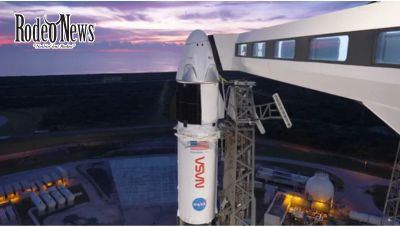
The mission marks another important step in the partnership between SpaceX and NASA, which relies on commercial spacecraft to transport equipment, food, research materials and other essential supplies to astronauts living in orbit. Beyond routine deliveries, CRS-35 carries technology designed to improve the station’s electrical power system and experiments that could contribute to advances in medicine and materials science.
According to NASA, the payload includes the final pair of International Space Station Roll-Out Solar Arrays, alongside equipment for artificial-retina manufacturing research, three-dimensional heart tissue models and other scientific investigations. These deliveries will help researchers continue experiments that take advantage of the microgravity environment. (NASA mission announcement)
SpaceX CRS-35 Launches Successfully From Florida
The CRS-35 mission lifted off from Space Launch Complex 40 at Cape Canaveral Space Force Station in Florida on the morning of October 13. A SpaceX Falcon 9 rocket carried the Dragon cargo spacecraft into orbit, beginning a journey to the International Space Station.
NASA listed the launch time as approximately 6:33 a.m. Eastern Daylight Time, while SpaceX’s mission page recorded the launch at 10:33 GMT. The successful flight placed the spacecraft on course to rendezvous with the station after roughly 52 hours in orbit.
The launch was also notable for a striking visual effect known as a “space jellyfish.” Because the rocket ascended around sunrise, sunlight illuminated its expanding exhaust plume against the darker sky. The result created a luminous shape that observers across parts of the eastern United States could see.
Although the display attracted attention, the mission’s primary objective was practical: delivering a large collection of supplies and scientific equipment to the crew and laboratories aboard the station.
After the rocket’s two stages separated, the Falcon 9’s upper stage continued accelerating Dragon toward orbit. The spacecraft then separated from the rocket and began the orbital maneuvers needed to catch up with the ISS.
SpaceX designed the mission around an autonomous rendezvous and docking procedure, allowing Dragon to approach and connect with the station without astronauts manually piloting the spacecraft through the entire process.
When Will the Dragon Spacecraft Dock With the ISS?
The Dragon spacecraft is scheduled to arrive at the International Space Station on Thursday, October 15, at approximately 11 a.m. EDT, or 1500 GMT.
NASA’s planned coverage begins at 9:15 a.m. EDT, allowing viewers to follow the rendezvous and docking sequence. The broadcast is expected to show the spacecraft’s final approach and its connection to the station’s Harmony module.
Readers can check the official NASA live coverage page for streaming access and schedule updates.
During its approach, Dragon must carefully adjust its position and speed relative to the station. The spacecraft performs a series of orbital maneuvers before entering the final approach corridor. It then uses navigation systems and communications with the ISS to guide itself toward the designated docking port.
Once the spacecraft is securely attached, the station crew and ground controllers will follow established procedures to confirm the connection, pressurize the area between the vehicles and prepare the hatches for opening.
The cargo can then be transferred into the station.
The docking time is a scheduled milestone rather than a guarantee of an exact arrival. Spaceflight operations can change because of technical considerations, orbital conditions or other mission requirements.
More Than 6,300 Pounds of Essential Supplies
One of the central goals of SpaceX CRS-35 is to replenish the International Space Station’s inventory.
Astronauts aboard the station depend on regular cargo deliveries for food, clothing, replacement parts, maintenance equipment and supplies needed for daily life. Research operations also require specialized hardware and materials that cannot always be manufactured aboard the station.
The approximately 6,300-pound payload provides a combination of operational supplies and equipment for experiments. This mixture reflects the station’s dual role as both a working habitat and a scientific laboratory.
Maintaining a reliable supply chain is especially important because astronauts cannot simply travel to a nearby warehouse when a component fails or an experiment requires additional materials.
Cargo missions therefore help NASA and its international partners keep the station functioning while supporting research schedules.
Dragon’s ability to return to Earth is another important part of the arrangement. After spending several weeks attached to the station, the spacecraft is expected to bring selected research materials and other cargo back for examination on the ground.
That return capability allows scientists to analyze samples using laboratory equipment unavailable in orbit. It also supports investigations that require researchers to compare conditions before, during and after exposure to microgravity.
Final Solar Arrays Will Strengthen the Station’s Power System
A major feature of the CRS-35 payload is the final pair of International Space Station Roll-Out Solar Arrays, commonly known as iROSAs.
These compact solar arrays are designed to expand the station’s capacity to generate electricity. The arrays use a roll-out design that allows them to be transported in a relatively compact configuration before being deployed in orbit.
The station depends on solar power for many essential activities, including scientific experiments, communications, environmental controls and equipment operation. A dependable electricity supply is therefore central to the laboratory’s long-term usefulness.
NASA has been augmenting the station’s existing power system with the newer arrays. According to the agency, the final pair delivered by CRS-35 will complete this planned augmentation.
The additional generating capacity will help support research and routine operations while contributing to the station’s overall electrical resilience.
Installation will require work by astronauts during planned spacewalks. Spacewalks are complex operations that demand extensive preparation, coordinated procedures and careful management of crew time.
The delivery of the arrays is consequently only one part of the process. After the equipment arrives, the station’s crew and ground teams must complete the installation and associated checks before the hardware can contribute fully to the power system.
The arrays also have significance for the station’s longer-term operational planning, including its eventual controlled deorbit. A reliable electrical system supports the equipment needed to maintain the station and carry out its remaining mission objectives.
Artificial Retina Research Could Advance Vision Technology
CRS-35 is also carrying equipment to support research into manufacturing artificial retinas in microgravity.
The retina is a light-sensitive layer at the back of the eye that converts incoming light into signals the brain can interpret. Damage to retinal cells can lead to serious vision problems, making new approaches to retinal repair and replacement an important area of medical research.
Scientists are investigating whether the microgravity environment aboard the ISS can help improve the production of biological materials or structures relevant to artificial-retina technology.
On Earth, gravity can influence how cells and other materials settle, organize and develop. Microgravity offers researchers a different environment in which to examine these processes.
The experiment does not mean that a finished artificial retina will immediately become available for patients. Instead, it provides an opportunity to investigate manufacturing methods and material properties that could inform future medical development.
Results from such research must be evaluated carefully, replicated where necessary and tested through appropriate stages before any potential treatment can be established as safe and effective.
Nevertheless, space-based research can provide valuable insights into biological processes that are difficult to study under ordinary laboratory conditions.
The CRS-35 delivery will help researchers continue exploring whether these unusual conditions can contribute to future advances in vision science.
Three-Dimensional Heart Tissue Models Support Drug Research
Another scientific payload involves three-dimensional heart tissue models intended to advance research into drug testing.
Cardiovascular research frequently relies on laboratory models to investigate how tissues respond to different substances and environmental conditions. Three-dimensional models can offer additional information compared with simpler experimental systems because they can reproduce certain aspects of tissue organization more effectively.
The CRS-35 experiment will allow researchers to study heart tissue models in microgravity and examine how they behave in the space environment.
Such investigations could contribute to a better understanding of biological changes during spaceflight. They may also help scientists assess methods for developing more useful models for testing medicines.
NASA’s broader research program uses the station to investigate how living systems respond to conditions that are difficult to reproduce on Earth. The resulting data can support future experiments in medicine, biology and human spaceflight.
However, the value of any particular experiment depends on its findings. A promising laboratory result does not automatically establish that a treatment will work in people or that a model can replace existing testing methods.
Researchers will need to analyze the data and determine how the findings can be applied to future studies.
More Experiments Will Examine Glass and Brain Organoids
The Dragon spacecraft is carrying additional research materials to investigate glass formation in microgravity and the behavior of brain organoids.
Glass manufacturing involves complex processes influenced by temperature, material composition and the movement of substances as they cool. Studying glass formation in microgravity can help scientists examine how the absence of ordinary gravitational effects changes the process.
The findings may improve understanding of material properties and the conditions required to produce particular types of glass.
The mission also includes brain organoids, which are small laboratory-grown structures that reproduce selected features of brain tissue. Researchers use them to investigate biological processes and study potential approaches to understanding neurological disorders.
NASA has identified the experiment as part of research that could reveal possible treatment targets for conditions such as Alzheimer’s disease, Parkinson’s disease and multiple sclerosis.
These investigations remain part of a broader scientific effort. Brain organoids do not reproduce the full complexity of a human brain, and research findings require careful interpretation. Even so, they can provide useful experimental models for studying selected cellular processes.
By transporting different research platforms on one mission, CRS-35 allows multiple scientific teams to continue their work using the same cargo delivery opportunity.
Why Commercial Resupply Missions Matter
The CRS-35 flight illustrates the importance of commercial partnerships in maintaining the International Space Station.
Under NASA’s Commercial Resupply Services program, private companies transport cargo to the orbiting laboratory. These agreements give the agency access to commercial spacecraft while allowing companies to develop and operate transportation systems for government missions.
SpaceX uses its Falcon 9 rocket and Dragon spacecraft for these deliveries. The company has developed reusable rocket technology and a cargo spacecraft capable of carrying equipment to the station and returning selected materials to Earth.
For NASA, dependable resupply services help keep astronauts supplied while supporting a continuous schedule of scientific investigations.
The station also serves as an international research platform. Its experiments involve different scientific disciplines and can require coordination among astronauts, engineers, laboratories and mission-control teams across multiple countries.
Cargo missions must therefore deliver more than basic provisions. They also transport carefully prepared experiments, replacement equipment and hardware that supports the station’s future capabilities.
The combination of operational cargo and advanced research makes each resupply flight an important part of the station’s ongoing work.
What Happens After CRS-35 Arrives?
Following docking, the crew will begin the process of unloading Dragon and moving the delivered supplies into the station.
Some cargo will support daily operations, while other items will be prepared for scientific investigations or future installation work. The solar arrays will require additional planning and astronaut activity before they can be fully integrated into the station’s power system.
Dragon is expected to remain attached to the ISS for about a month. During that period, astronauts and ground teams will manage cargo transfers and prepare the spacecraft for its return journey.
Before departure, the capsule will be loaded with selected equipment, completed experiments and other materials designated for return to Earth.
After undocking, Dragon will conduct the maneuvers required to leave the station safely. Its return sequence will eventually lead to atmospheric reentry and a parachute-assisted splashdown, with recovery operations arranged to retrieve the spacecraft and its contents.
The returned research can then undergo further examination on the ground, helping scientists compare observations from orbit with laboratory analysis.
SpaceX CRS-35 Combines Logistics With Scientific Progress
SpaceX CRS-35 is more than a routine delivery flight. Its cargo supports the everyday needs of astronauts while providing equipment for research into vision technology, cardiovascular science, neurological conditions and advanced materials.
The mission’s final pair of roll-out solar arrays is also a significant addition to the station’s electrical infrastructure. Once installed, the hardware will complete the planned solar-array augmentation described by NASA.
With Dragon scheduled to dock on October 15, attention will turn from launch operations to cargo transfer, scientific preparation and the work required to integrate the new equipment.
The results of the experiments will take time to emerge, and their ultimate impact will depend on the evidence researchers collect. Still, the mission demonstrates how access to a laboratory in orbit can support investigations that complement research on Earth.
As NASA and its commercial partners continue operating the station, cargo flights such as CRS-35 remain essential to sustaining the research program and preparing the facility for its remaining years