Greek F-4 Jet Crash Kills Two Pilots at Athens Air Show
A Greek F-4 jet crash at the Athens Flying Week air show has killed two Greek Air Force pilots, turning a major aviation event north of Athens into a scene of mourning. The twin-seat Phantom F-4 fighter crashed during a low-altitude maneuver at Tanagra Air Force Base on Saturday, September 5, 2026, as thousands of spectators watched the display. AAP News+1
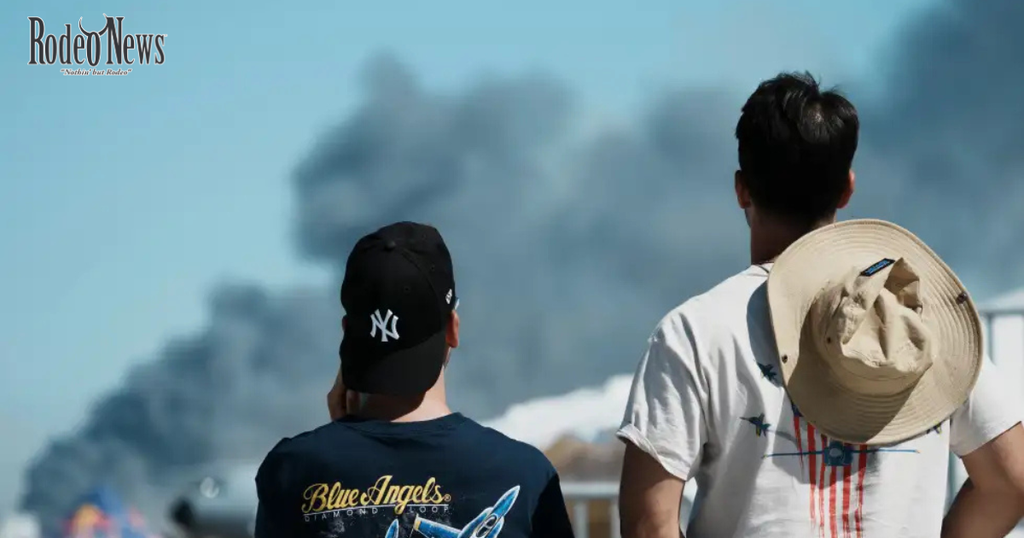
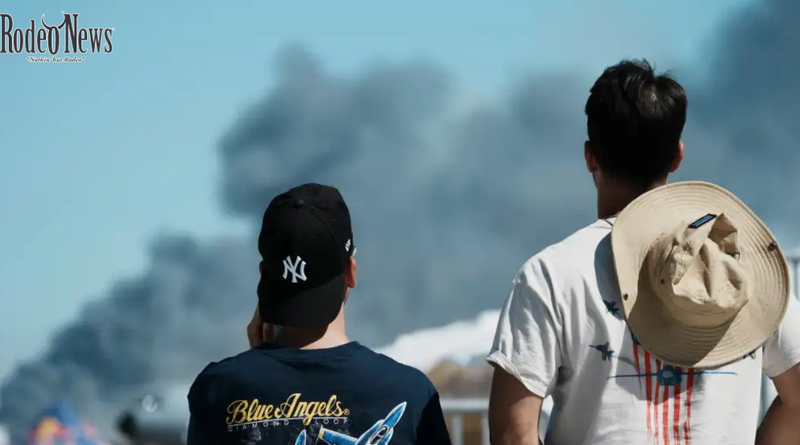
The aircraft went down near the military air base, producing a large fire and thick black smoke that could be seen by spectators. Although the crash happened during a public aviation event, authorities reported no injuries among people attending the air show.
The deaths of the two airmen were later confirmed by officials. Greek Prime Minister Kyriakos Mitsotakis expressed condolences to the families, while the Greek Air Force declared a three-day period of mourning. RReuters+1
The incident also forced organizers to cancel the remaining flying-display program at Athens Flying Week.
What Happened in the Greek F-4 Jet Crash?
The Greek Air Force Phantom F-4 was performing a low-altitude maneuver when it crashed during the air show at Tanagra, approximately 60 kilometers north of Athens.
Video footage reviewed by news organizations showed the aircraft making a low right-hand turn shortly before it struck the ground and erupted into flames. Reuters reported that the aircraft had been airborne for less than three minutes, according to an eyewitness quoted by Greece’s public broadcaster ERT. RReuters
The crash occurred roughly two kilometers from the airport, according to officials cited by Reuters. The aircraft’s impact started a fire that spread toward nearby vegetation, prompting a significant emergency response.
The precise cause of the accident has not been established. Authorities are expected to investigate the aircraft, the flight maneuver, weather conditions, pilot actions and other possible contributing factors before reaching a conclusion.
That investigation will be particularly important because the aircraft was operating at very low altitude, leaving the crew with limited time and space to respond to any sudden problem.
Two Greek Air Force Pilots Were Killed
Both pilots aboard the twin-seat Phantom F-4 died in the crash.
Their identities were not immediately central to the first reports as emergency crews focused on controlling the fire and reaching the crash site. The loss quickly became the dominant story surrounding an event that had attracted aviation enthusiasts and families to Tanagra.
Prime Minister Mitsotakis described the incident as a source of widespread grief and expressed sympathy for the families of the two pilots. He also highlighted the risks faced by Greek military aviators as they carry out their duties. WWPLG
The Greek Air Force subsequently announced three days of mourning, underscoring the seriousness of the tragedy for Greece’s military aviation community.
The crash also prompted condolences from officials in neighboring Cyprus, reflecting the broader regional reaction to the deaths. AAP News
Thousands Witnessed the Athens Air Show Crash
The Greek F-4 jet crash happened in front of thousands of spectators attending Athens Flying Week, one of Greece’s prominent aviation events.
The annual event brings together military and civilian aviation teams and attracts aviation enthusiasts from Greece and abroad. The 2026 edition was scheduled for September 5 and 6 at Tanagra Air Force Base. AAthens Flying Week
The atmosphere changed dramatically after the fighter went down.
Witnesses saw the aircraft crash and a large plume of smoke rise from the area. Emergency crews moved quickly to contain the resulting fire while authorities dealt with the crash site.
Despite the dramatic nature of the accident, there were no reports of injuries among spectators or nearby residents. Reuters reported that the crash site was outside the main viewing area, helping prevent additional casualties. RReuters
Authorities nevertheless instructed people in the area to leave as emergency teams worked to control the fire.
Firefighters Battled the Blaze
The crash did more than destroy the aircraft. It also started a ground fire, creating an additional challenge for emergency personnel.
According to reports, approximately 85 firefighters and 11 water-dropping aircraft and helicopters were involved in efforts to contain the flames. The fire remained separated from the main spectator viewing area. AABC News+1
The response was complicated by the terrain and the conditions around the crash site. Rescue personnel had to operate while dealing with fire and debris from the destroyed aircraft.
Large amounts of black smoke rose into the sky, making the incident visible from a considerable distance.
The emergency operation continued as authorities secured the area and began dealing with the aftermath of the crash.
Athens Flying Week Canceled After the Accident
Following the accident, organizers canceled the remaining flying-display program.
The official Athens Flying Week website confirmed that the remainder of the flying display program was canceled after the crash involving the Hellenic Air Force Phantom aircraft. AAthens Flying Week
The decision was understandable given the circumstances. Air shows require extensive coordination between pilots, ground crews, emergency services and event organizers. Continuing normal flying operations immediately after a fatal military aviation accident would have created additional operational and emotional concerns.
The cancellation also gave emergency personnel and authorities the necessary space to manage the crash site and begin the investigation.
What Is the F-4 Phantom?
The aircraft involved was a twin-seat F-4 Phantom, a Cold War-era fighter aircraft that has served with several air forces around the world.
The F-4 Phantom became one of the most recognizable American-designed combat aircraft of the 20th century. It was originally developed by McDonnell Aircraft and became known for its speed, versatility and ability to perform multiple military roles.
Greece has operated F-4 Phantom aircraft for decades, making the type a familiar part of the country’s military aviation history.
Although the aircraft is an older design, upgraded F-4s have remained in service with Greece because of modernization programs and the platform’s continued utility.
The age of an aircraft, however, does not by itself establish a connection to an accident. Investigators must examine the specific aircraft’s maintenance history, systems, flight profile and other evidence before determining what caused the crash.
Investigation Will Determine the Cause
The cause of the Greek F-4 jet crash remains under investigation.
Authorities will likely examine several categories of evidence, including the aircraft’s maintenance records, mechanical systems, flight data, communications, weather conditions and video recordings from the air show.
Spectator footage could also prove useful. Multiple videos reportedly captured the final moments of the aircraft’s flight, providing investigators with visual evidence of its trajectory and maneuver before impact.
However, footage alone cannot establish why the aircraft crashed.
Investigators will need to determine whether the aircraft experienced a mechanical or technical failure, whether the flight maneuver contributed to the accident, or whether another factor was involved.
It is also important to avoid drawing conclusions before the official investigation is complete.
Early reports can change as investigators recover wreckage, examine aircraft components and interview witnesses.
Safety Questions After the Fighter Jet Crash
Fatal accidents at air shows inevitably raise questions about aviation safety.
Military demonstration flights are carefully planned because aircraft can operate at high speed and, in some cases, at extremely low altitude. Pilots performing demonstrations must maintain strict flight paths and remain within defined safety parameters.
The challenge is particularly significant when a maneuver is conducted close to the ground.
At higher altitude, a pilot may have more time to identify a problem and attempt recovery. During a low-level maneuver, however, the available reaction time can be dramatically reduced.
That does not mean the low altitude maneuver itself caused the accident. Only the official investigation can determine the precise sequence of events.
The Greek authorities will therefore face pressure to establish what happened and whether any safety measures need to be reviewed before similar military demonstrations take place.
A Tragedy for Greek Military Aviation
The accident has cast a shadow over Athens Flying Week and the wider Greek aviation community.
What was intended to be a celebration of aviation became a memorial for two military personnel who lost their lives while participating in a demonstration.
For spectators, the incident was particularly shocking because the aircraft was part of a public display designed to showcase military aviation.
For fellow service members, the loss carries an even deeper significance. Military pilots routinely operate in demanding environments where training, discipline and precision are essential.
The deaths of the two pilots serve as a reminder that aviation demonstrations, despite their carefully controlled nature, involve real operational risks.
Greek officials and the military are now expected to focus on supporting the families of the deceased while investigators work to establish the circumstances behind the crash.
What Happens Next?
The immediate priority is securing the crash site, completing the emergency response and preserving evidence for investigators.
Authorities will also need to review the circumstances surrounding the flight and determine whether the aircraft experienced any technical problem or whether other factors contributed to the accident.
The findings could influence future Greek Air Force demonstration flights and potentially affect procedures for public aviation events.
For now, however, the focus remains on the two pilots who died.
Athens Flying Week has been halted, the Greek Air Force is observing a period of mourning, and the families of the two airmen are facing the aftermath of a devastating loss.
The Greek F-4 jet crash is therefore more than an aviation accident. It is a tragedy that has affected Greece’s military community, the organizers and participants of Athens Flying Week, and thousands of people who witnessed the incident.
As the investigation continues, officials will work to determine exactly what went wrong during the fighter’s final moments.
Until those findings are released, questions surrounding the cause of the crash remain unanswered.
Key Facts at a Glance
- Aircraft: Twin-seat F-4 Phantom fighter jet
- Country: Greece
- Location: Tanagra Air Force Base, north of Athens
- Event: Athens Flying Week
- Date: September 5, 2026
- Fatalities: Two Greek Air Force pilots
- Spectator injuries: None reported
- Cause: Under investigation
- Fire response: About 85 firefighters and 11 firefighting aircraft and helicopters
- Event status: Remaining flying-display program canceled
Sources and Further Reading
For additional official information, readers can follow updates from the Athens Flying Week official website.
Reporting on the crash was also published by Associated Press and Reuters. RReuters
Suggested Internal Links
- [Latest World News]
- [Aviation News]
- [Military News]
- [International Breaking News]
- [Previous Aircraft Accident Reports]
These internal links should be replaced with the corresponding URLs from your website before publishing.
SEO note: Because you didn’t provide a target domain, I left the internal-link destinations as placeholders rather than inventing URLs. The focus keyword is deliberately specific enough to target the breaking-news search intent without repeatedly stuffing the article.