Cleaner Ants Revealed: A Rare Desert Partnership That Defies Nature
In a groundbreaking discovery, cleaner ants have been observed in the Arizona desert exhibiting a rare and fascinating form of cooperation with larger ant species. This unexpected behavior challenges long-standing assumptions about insect interactions, offering a glimpse into a more complex and cooperative side of nature.
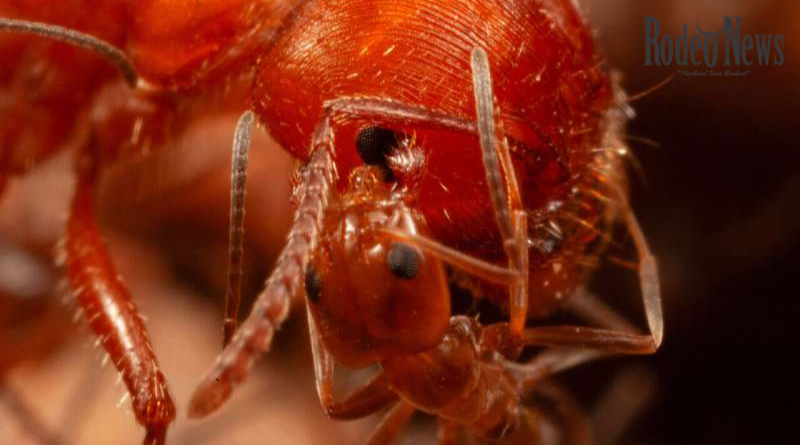
The study, recently published in the journal Ecology and Evolution, highlights how tiny cone ants interact with much larger harvester ants in a way that mirrors cleaning symbiosis typically seen in marine ecosystems.
A Surprising Discovery in the Arizona Desert
The story begins in 2006, when entomologist Mark Moffett made an unusual observation while studying ants in the Arizona desert. Over a short five-day period, he documented dozens of interactions between two distinct species: small cone ants and larger harvester ants.
What he witnessed was astonishing. The larger ants would approach the nests of the smaller ants and adopt a rigid posture. They would stand still, often with their jaws wide open, as if inviting something to happen.
Soon after, the cone ants would swarm over the larger ants’ bodies. They carefully explored their surfaces, eventually climbing into their open mandibles—an action that initially appears risky but is, in fact, highly controlled and cooperative.
This behavior led researchers to identify these insects as cleaner ants, a term inspired by similar relationships in ocean ecosystems.
How Cleaner Ants Perform Their Role
The cleaning process follows a consistent and deliberate pattern. Once the harvester ants position themselves, the smaller cone ants begin their work:
- They lick and nibble on the surface of the larger ants
- They inspect sensitive areas such as joints and head regions
- Most notably, they enter the open mandibles to clean inside
Remarkably, during these interactions, the larger ants remain completely passive. They do not attack or resist, even though ants are typically known for their aggressive and territorial nature.
This level of trust suggests a highly evolved interaction between the species—one that likely provides mutual benefits.
Why Do Cleaner Ants Exist?
Scientists believe this relationship is not random but serves important biological functions for both species.
Benefits for Harvester Ants
For the larger ants, the cleaning behavior may provide several advantages:
- Removal of harmful pathogens and debris
- Cleaning of hard-to-reach areas, especially inside mandibles
- Possible application of antimicrobial substances
Researchers suggest that the cone ants might transfer antibacterial or antifungal compounds during the cleaning process, helping protect the larger ants from disease.
Benefits for Cone (Cleaner) Ants
The smaller ants also gain from this interaction:
- Access to nutritional resources such as oils on the harvester ants’ bodies
- Reduced risk of attack due to chemical signal transfer
- Possible protection through association with a stronger species
In essence, the cleaner ants may “borrow” chemical cues from the larger ants, making them less likely to be attacked in future encounters.
A Behavior Triggered Only by Living Ants
To better understand this phenomenon, Moffett conducted a simple but revealing experiment. He placed dead harvester ants near cone ant nests to observe whether the same cleaning behavior would occur.
The result was clear: the cone ants showed little interest in cleaning dead ants. They briefly inspected them but did not engage in the detailed cleaning behavior observed with living ants.
This suggests that the interaction depends on signals from living ants—possibly chemical cues or behavioral triggers—rather than being driven purely by scavenging instincts.
A Rare Example of Insect Cooperation
Ants are typically associated with competition, aggression, and survival-driven behavior. Colonies often fight over territory, resources, and dominance.
However, the discovery of cleaner ants reveals a different side of insect life—one that involves cooperation and mutual benefit.
This behavior is especially significant because similar cleaning relationships are well-documented in marine environments. For example, cleaner fish remove parasites from larger fish, even entering their mouths without being eaten.
Seeing a comparable system in ants suggests that such mutualistic relationships may be more widespread across ecosystems than previously thought.
Why This Discovery Matters
The identification of cleaner ants has broader implications for science and ecology.
1. Expanding Understanding of Symbiosis
This discovery adds a new category to known symbiotic relationships among insects. It demonstrates that cooperation can evolve even in highly competitive environments.
2. Insights Into Chemical Communication
The interaction likely relies on complex chemical signaling between species. Studying this could provide deeper insights into how insects communicate and recognize allies.
3. Potential Applications in Science
Understanding how ants manage hygiene and disease prevention could inspire innovations in:
- Robotics (self-cleaning systems)
- Medicine (antimicrobial strategies)
- Artificial intelligence (cooperative behavior models)
A Discovery Two Decades in the Making
Interestingly, this research is based on observations made nearly 20 years ago. Moffett was unable to return to the site for further study, and no similar behavior had been documented by others in the meantime.
Despite the limited observation window, he recorded at least 90 interactions, providing strong evidence for the existence of cleaner ants.
The delayed publication highlights how some scientific discoveries can take years—or even decades—to be fully recognized and understood.
The Mystery That Still Remains
While the discovery is groundbreaking, many questions remain unanswered:
- How widespread is this behavior among ant species?
- What exact chemical signals trigger the cleaning process?
- Are there other “cleaner” insects yet to be discovered?
Scientists hope that future research will uncover more examples of similar interactions, helping to build a clearer picture of cooperation in the insect world.
A New Perspective on Ant Behavior
The discovery of cleaner ants challenges the traditional view of ants as purely competitive and aggressive creatures. Instead, it reveals a hidden layer of complexity—one where cooperation and mutual benefit play a crucial role.
As researchers continue to explore these interactions, we may find that nature is far more collaborative than we once believed.
In a world often defined by competition, even the smallest creatures remind us that cooperation can be just as powerful.