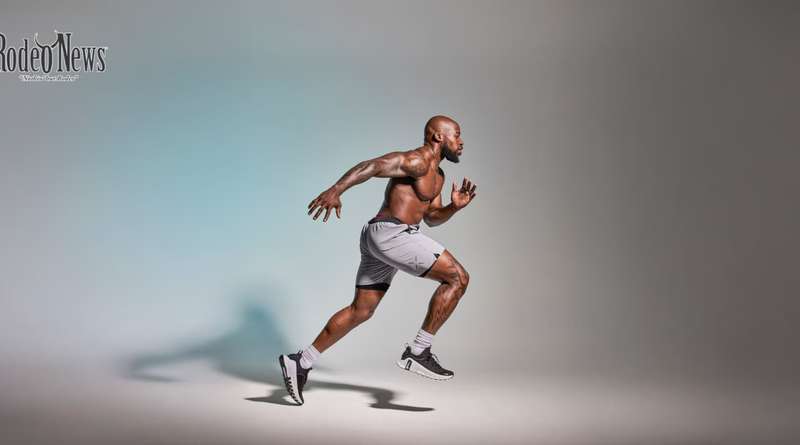
Athleticism Training: 5 Powerful Ways to Move Better
Athleticism training is changing how people approach fitness. Instead of focusing exclusively on building bigger muscles or lifting heavier weights, more gym-goers are looking to develop speed, explosive power, agility, balance, and coordination.

The shift reflects a broader idea about physical fitness: looking strong is one thing, but being able to use that strength effectively is another. Whether you want to jump higher, move faster, improve your recreational sports performance, or simply feel more capable in everyday life, training like an athlete can offer a fresh approach.
Social media has helped popularize this trend. Videos featuring powerful jumps, fast sprints, medicine ball throws, and impressive changes of direction often attract attention because they demonstrate what the human body can do.
However, athleticism involves more than performing eye-catching exercises. Effective training requires a clear goal, sound technique, gradual progression, and sufficient recovery.
Here are five practical ways to incorporate athleticism training into your fitness routine, along with advice on getting started safely.
What Is Athleticism Training?
Athleticism training is an approach to exercise that develops several physical qualities together. These typically include strength, speed, power, agility, coordination, mobility, and body control.
Traditional bodybuilding programs often prioritize muscle growth, while powerlifting focuses heavily on maximal strength. Athletic training can incorporate both qualities while adding movements that challenge how quickly and efficiently you use your strength.
For example, a person may be able to lift a heavy weight but struggle to accelerate quickly, balance on one leg, or change direction under control. Athleticism training addresses these different demands through a broader selection of exercises.
The approach is not entirely new. Sports teams have used strength and conditioning programs for decades. What has changed is the growing interest among recreational gym-goers who want to develop athletic abilities even when they do not compete in organized sports.
The key is to identify what athleticism means for you. A basketball player may want to improve jumping ability, while a tennis player may prioritize lateral movement. Someone who simply wants to stay active may focus on balance, coordination, and general physical capacity.
Why Athleticism Training Is Becoming a Fitness Trend
Fitness Goals Are Moving Beyond Appearance
Building muscle remains a popular fitness goal. However, many people are becoming interested in what their bodies can accomplish, rather than focusing exclusively on how they look.
This shift encourages people to measure progress in different ways. Instead of tracking only body weight or muscle size, they may monitor sprint times, jump distance, movement quality, or the ability to complete demanding activities.
These goals can make training feel more purposeful. They also provide practical benchmarks for assessing improvement over time.
Social Media Makes Athletic Movement More Visible
Short-form videos have created a platform for coaches and athletes to demonstrate explosive movements and coordination drills.
A powerful jump or fast sprint can be visually impressive, making athletic exercises especially suited to social media. Consequently, more people are experimenting with training methods traditionally associated with competitive sports.
However, an impressive video does not necessarily demonstrate an effective workout. Some advanced drills require years of practice, and copying them without appropriate preparation can increase the risk of injury.
The best approach is to learn the fundamentals before progressing to complicated movements.
Fitness Competitions Offer New Goals
Events such as HYROX and other hybrid fitness competitions combine running, strength exercises, and demanding conditioning challenges. These formats give participants measurable objectives beyond traditional gym milestones.
Rather than training only to increase muscle size, participants can prepare to complete specific tasks, maintain performance under fatigue, and improve overall conditioning.
You do not need to enter a competition to benefit from this approach. Setting a personal goal, such as improving your broad jump or becoming more comfortable with lateral movement, can provide a similar sense of direction.
1. Build Explosive Power With Jumping Exercises
Jumping is one of the most recognizable elements of athleticism training. It challenges the body to generate force quickly while coordinating the movement of the hips, knees, ankles, and upper body.
This ability, commonly called explosive power, contributes to movements such as sprinting, jumping for a rebound, and accelerating during sports.
Start With Basic Jumping Drills
Beginners can start with low-impact movements before attempting advanced plyometric exercises.
Jump rope: Skipping develops rhythm, timing, and repeated coordination. Begin with short intervals and use a comfortable pace.
Pogo hops: Stand upright with your knees slightly bent and perform small, controlled hops on both feet. Focus on a quiet landing and consistent rhythm.
Squat jumps: Lower into a comfortable squat, jump upward, and land softly with your knees slightly bent. Reset between repetitions instead of rushing.
Standing broad jumps: From a stable stance, swing your arms and jump forward, landing with control. Begin with a short distance and focus on balance.
Choose one exercise to start with rather than attempting every variation in one session.
For example, you might perform two sets of five controlled squat jumps after a thorough warm-up. Rest between sets and stop if your landing technique deteriorates.
Why Jumping Technique Matters
The goal is not simply to jump as high or as far as possible. You also need to control the landing.
Land with your feet stable and your knees tracking comfortably in line with your toes. Avoid repeatedly jumping when your muscles are exhausted or your coordination begins to decline.
If you have joint pain, a history of significant injury, or limited experience with impact exercise, consider starting with lower-impact alternatives and seeking professional guidance where appropriate.
2. Train Power With Medicine Ball Throws
Throwing exercises provide another way to develop explosive movement. They allow you to practice generating force rapidly without relying exclusively on heavy barbell lifts.
Medicine ball throws are particularly useful because they can involve the upper body, trunk, and hips working together.
Try These Medicine Ball Exercises
Overhead throw: Hold a suitable medicine ball with both hands. Raise it overhead and throw it forward or downward into an appropriate open space, following the exercise variation you have learned.
Chest pass: Hold the ball at chest height and throw it forward with both hands. Focus on a quick, controlled movement.
Rotational throw: Stand sideways to a suitable wall or throwing area. Rotate through your hips and trunk to throw the ball laterally, then switch sides.
Choose a ball light enough to move quickly while maintaining control. Heavier is not always better when the goal is explosive movement.
Start with two or three sets of three to five repetitions, allowing adequate rest between efforts. Use a safe throwing area and avoid movements that cause discomfort.
As your technique improves, you can adjust the exercise selection or training volume gradually.
3. Improve Agility With Lateral Movement
Many gym routines emphasize forward-and-backward movements. Squats, deadlifts, running, and cycling all have important benefits, but sports frequently require movement in several directions.
Basketball players shuffle defensively. Tennis players move rapidly across the court. Football and soccer players accelerate, decelerate, and change direction in response to other players.
Lateral training helps develop familiarity with these movement patterns.
Three Lateral Drills to Practice
Lateral shuffles: Stand with your knees slightly bent and take quick steps sideways. Keep your body controlled instead of crossing your feet carelessly.
Start with two or three short intervals of 10–20 seconds, resting between efforts.
Lateral lunges: Stand with your feet apart and shift your weight toward one side, bending that knee while keeping the other leg relatively straight. Push back to the starting position and alternate sides.
Begin with a comfortable range of motion and increase it gradually.
Cone shuffles: Place two cones several steps apart. Shuffle from one cone to the other, pause under control, and return. Begin slowly before increasing speed.
For beginners, the priority is learning to stop and change direction without losing balance. Speed should come after control.
Perform lateral drills on a stable, unobstructed surface with appropriate footwear. Avoid adding aggressive changes of direction when you are already fatigued.
4. Develop Speed With Short, Controlled Sprints
Speed training is another useful component of athleticism training. Sprinting requires coordination between the upper and lower body, rapid force production, and the ability to accelerate efficiently.
However, sprinting places considerable demands on the muscles and connective tissues. It is not an exercise that every beginner should immediately perform at maximum intensity.
How to Start Sprint Training
First, establish a foundation of general fitness and comfortable running. Warm up with several minutes of easy movement, followed by dynamic exercises such as marching, controlled leg swings, and gradual running accelerations.
Once prepared, more experienced runners can begin with short efforts at a controlled intensity.
For example, run for 10–15 seconds at a comfortably fast pace, then walk until you feel ready for the next repetition. Start with a small number of efforts and increase the workload gradually.
Avoid treating every repetition as an all-out sprint. Maximum-speed running requires more preparation and should be introduced cautiously.
If your primary goal is general fitness rather than competitive speed, brisk uphill walking, controlled running intervals, or cycling intervals may provide a more suitable starting point.
Sprint training should complement your existing exercise program rather than interfere with recovery from demanding strength sessions.
5. Combine Strength, Mobility, and Coordination
Explosive movements are only one part of athleticism. General strength, joint mobility, and coordination help support a wider range of physical activities.
A well-rounded program combines these qualities instead of concentrating exclusively on advanced drills.
Prioritize Foundational Strength
Exercises such as squats, deadlifts, lunges, rows, and push-ups develop strength across major muscle groups.
You do not need to lift extremely heavy weights to get started. Choose resistance that allows controlled repetitions and gradually increase the challenge as your technique improves.
For many healthy adults, two weekly strength sessions can provide a practical starting point. Your ideal schedule will depend on your experience, goals, and other physical activities.
Improve Useful Mobility
Mobility is the ability to move joints through a useful range of motion with control. It can be important for squatting, lunging, reaching, and changing direction.
Include movements that address the ranges required for your goals. For example, controlled ankle mobility drills may help you practice comfortable squat positions, while hip mobility exercises may support lunges and rotational movements.
Mobility work should not become a competition to achieve extreme flexibility. Aim for comfortable, controlled movement rather than forcing a joint beyond its current capacity.
Practice Coordination and Balance
Coordination helps you organize different body movements efficiently. Balance helps you maintain control when your position changes.
Useful exercises include single-leg stands, controlled step-ups, marching drills, and simple movement sequences that combine different directions.
Start with predictable movements before introducing complicated patterns. You can gradually increase difficulty by changing the movement speed, direction, or task once you can perform the basics consistently.
A Simple Weekly Athleticism Training Plan
You do not need to completely replace your current workout routine to become more athletic. Start by adding a few targeted exercises to a manageable weekly schedule.
Here is an example for someone who already exercises regularly and has no limitations that would make these activities unsuitable.
Monday — Strength and power
- Squats: 3 sets of 8 repetitions
- Push-ups: 3 sets of 8–12 repetitions
- Low-volume squat jumps: 2 sets of 5 repetitions
- Plank: 2 controlled sets
Tuesday — Easy cardio and mobility
- 20–30 minutes of comfortable walking, cycling, or running
- Gentle ankle and hip mobility exercises
Wednesday — Athletic movement
- Lateral shuffles: 3 short intervals
- Step-ups: 2 sets of 8 repetitions per leg
- Medicine ball chest passes: 3 sets of 5 repetitions, if suitable equipment is available
- Balance practice: 2 short sets per side
Thursday — Recovery
- Rest or perform gentle activity
Friday — Strength and coordination
- Deadlift variation: 3 sets of 6–8 repetitions
- Lunges: 2 sets of 8 repetitions per leg
- Rows: 3 sets of 8–12 repetitions
- Jump rope: short, comfortable intervals if appropriate
Saturday — Recreational activity
- Play a sport, go for a comfortable bike ride, or participate in another enjoyable activity.
Sunday — Rest
This schedule is an example, not a universal prescription. Beginners should start with fewer exercises and lower workloads. People with demanding sports schedules may need a different balance of training and recovery.
Common Athleticism Training Mistakes to Avoid
Copying Advanced Exercises Too Soon
Viral videos often feature high jumps, complicated coordination drills, and maximum-effort sprints. These movements may look exciting, but they are not necessarily suitable for beginners.
Learn the basic movement patterns first, then progress when your strength, coordination, and technique are ready.
Confusing Fatigue With Progress
A workout does not need to leave you exhausted to be effective. Athletic training often benefits from maintaining movement quality, especially during explosive exercises.
If your jumps become lower, your landings become unstable, or your sprinting technique deteriorates, reduce the workload or end the session.
Ignoring Recovery
Strength training, sprinting, and jumping all create physical demands. Adding too much work too quickly can undermine your ability to recover between sessions.
Maintain a sensible schedule, get adequate sleep, and adjust your training when fatigue persists.
Training Without a Clear Goal
Athleticism is a broad concept. Without a specific objective, you may end up performing random exercises without a clear way to assess progress.
Choose one or two priorities. You might want to improve your balance, become more comfortable changing direction, increase general strength, or prepare for a recreational sport.
Track your progress using simple measures that match those goals.
The Bottom Line
Athleticism training offers a practical way to expand your fitness beyond muscle size and traditional gym milestones. By combining jumping, throwing, lateral movement, speed work, strength, and coordination, you can develop a broader range of physical abilities.
The most effective starting point is not the most impressive exercise on social media. It is the movement you can perform safely, consistently, and with a clear purpose.
Begin with manageable challenges, build your technique, and increase difficulty gradually. Above all, tailor your workouts to what you want your body to do.
You do not have to compete professionally to train like an athlete. You simply need a goal, a sensible plan, and the patience to improve over time.
Disclaimer: This article provides general fitness education and is not a substitute for individualized medical advice or professional coaching. Consult an appropriate healthcare professional before beginning strenuous training if you have a relevant medical condition or injury.