Andy Burnham Trump Test: 5 Key UNGA Takeaways
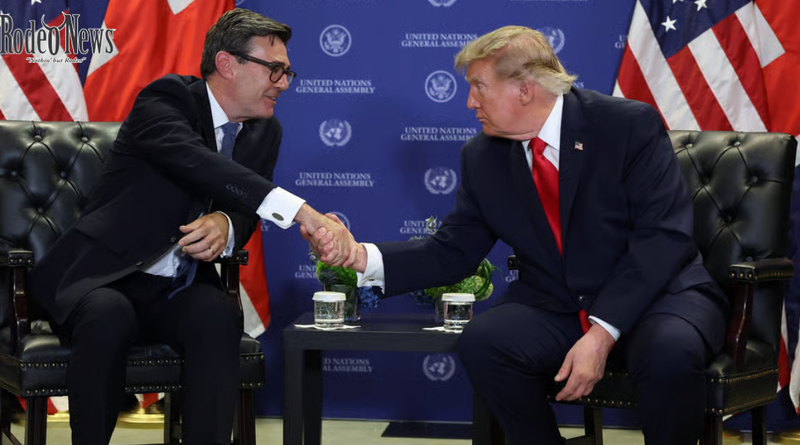
The Andy Burnham Trump test produced a cautiously positive first encounter between the new British prime minister and U.S. President Donald Trump at the United Nations General Assembly in New York. Trump praised Burnham as a “natural business person” and said the relationship between Washington and London was stronger than it had been under former Prime Minister Keir Starmer. RReuters+1
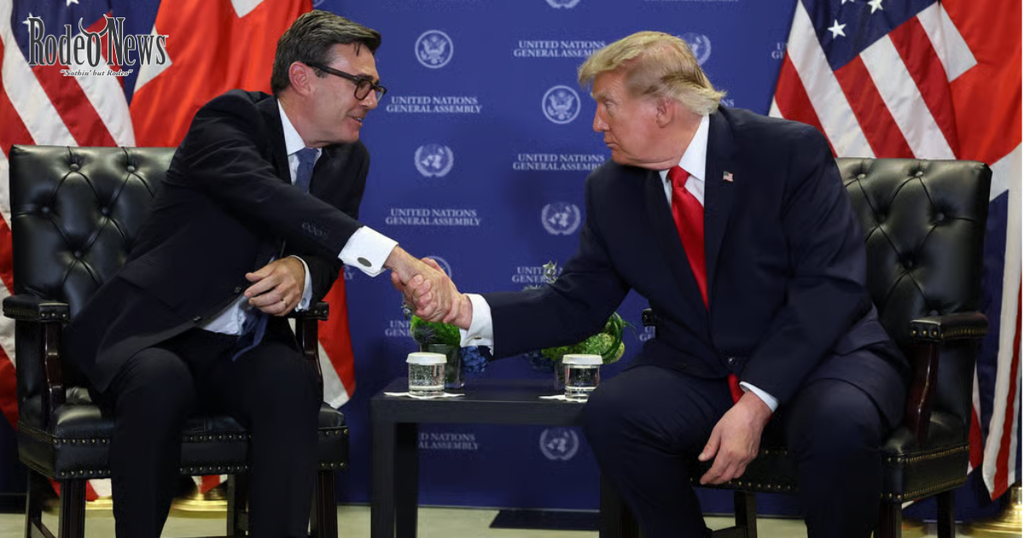
But the warm public exchanges did not erase significant differences between the two governments. The meeting exposed disagreements over the Chagos Islands, artificial intelligence regulation, trade, Iran and other foreign-policy questions.
The encounter was Burnham’s first face-to-face meeting with Trump since becoming British prime minister. It also came during his first appearance at the UN General Assembly, giving the meeting particular importance for his new government’s international agenda. TThe Guardian+1
Here are five key takeaways from the Andy Burnham Trump test.
1. Andy Burnham Trump test begins with warm public remarks
The most immediate result of the meeting was the positive tone struck by Trump.
During their meeting at the United Nations, Trump praised Burnham and said he expected him to be a successful prime minister. He also highlighted discussions involving major British companies, energy and immigration. RRoll Call+1
Trump separately said that relations between Britain and the United States were “more up” than they had been with the previous British prime minister.
Burnham responded by saying the two leaders had established a good connection during earlier conversations and had developed that relationship further during their meeting. TThe Guardian
The exchange gave Downing Street an opportunity to present the meeting as constructive. Reuters reported that Burnham’s team described the encounter as smooth, while Trump publicly emphasized the positive aspects of the bilateral relationship. RReuters
However, the public friendliness was accompanied by several unresolved policy differences.
That distinction is important when assessing the Andy Burnham Trump test. A cordial meeting can improve diplomatic communication without necessarily producing agreement on individual policies.
2. The Chagos Islands remained a major point of disagreement
One of the clearest disagreements concerned the Chagos Islands.
Trump strongly criticized the British government’s agreement involving the transfer of sovereignty of the Chagos Islands to Mauritius while retaining arrangements around the strategically important Diego Garcia military base.
Trump described the agreement in sharply negative terms and indicated that he expected Burnham to reconsider aspects of it. Reuters reported that this was the principal issue on which Trump openly challenged the British position during the meeting. RReuters
The issue matters beyond the sovereignty question itself.
Diego Garcia hosts a major U.S.-UK military facility in the Indian Ocean, giving the Chagos Islands significance for American and British strategic planning.
Burnham did not simply dismiss Trump’s concerns. According to reporting on the meeting, he indicated that the British government would look at the issue, leaving room for further discussion.The Washington Post+1
That creates a diplomatic challenge for London.
The UK has to balance its agreement with Mauritius against its strategic relationship with the United States. At the same time, any substantial change to the existing arrangement could have consequences for Britain’s relationship with Mauritius and its wider position in the Indian Ocean.
The Chagos disagreement therefore illustrates why the Andy Burnham Trump test cannot be measured solely by Trump’s compliments.
The leaders were able to maintain a constructive tone while still disagreeing on a significant foreign-policy matter.
3. Ukraine was another important part of Burnham’s agenda
Ukraine also featured prominently in Burnham’s diplomatic activity at the UN.
Before and during the General Assembly, the British prime minister sought continued international support for Kyiv. His government has emphasized the importance of air defense and continued pressure on Russia.
After meeting Trump, Burnham also met Ukrainian President Volodymyr Zelenskyy at the UN.
According to the British government’s account, Burnham and Zelenskyy discussed the difficult winter ahead and the possibility of an energy ceasefire. Burnham also reiterated Britain’s support for Ukraine and the need for meaningful negotiations involving Russia. GOV.UK
The issue is particularly significant because Trump has taken a different approach to the Ukraine conflict, repeatedly emphasizing the need for negotiations.
At the UN, Trump said he expected peace between Ukraine and Russia to come sooner than many people expected. Meanwhile, British officials have continued to emphasize support for Ukraine and pressure on Russia. TThe Guardian+1
Burnham’s reported appeal for an energy ceasefire therefore represents another example of the British government attempting to use its relationship with Washington while maintaining its own policy priorities.
For London, continued American involvement remains a central element of the broader security picture in Europe.
4. AI exposed a different kind of UK-US policy gap
Artificial intelligence emerged as another area where the British and American approaches appeared to diverge.
During his UN visit, Burnham promoted Britain as a potential international broker on AI policy and argued for cooperation around standards for rapidly developing technology.
He also announced plans for a new National Centre for Information Defence aimed at detecting, attributing and disrupting hostile information attacks. The British government’s official transcript confirms that Burnham presented the initiative as part of a wider effort to respond to the changing information environment. GGOV.UK
The initiative reflects growing concern among governments about artificial intelligence being used to produce disinformation, deepfakes and other forms of manipulated content.
At the same time, Trump has expressed opposition to international regulatory approaches that he believes could constrain technological development.
That creates a complicated policy landscape for Britain.
The UK wants to position itself as a major player in AI while also developing safeguards around the technology. Washington, meanwhile, has emphasized American technological leadership and questioned some international regulatory initiatives.
The difference did not appear to dominate the Burnham-Trump meeting itself. Reporting indicated that Downing Street did not provide confirmation that AI regulation was a major subject of their private discussion. IInternationly
That leaves an important question for future UK-US cooperation: how closely can the two countries coordinate on AI security while maintaining different approaches to regulation?
5. Trade and tariffs remain a practical concern
Economic issues also formed part of Burnham’s discussions with Trump.
The British prime minister raised the impact of U.S. tariffs on British industry, including the effect on a specific factory in northeast England, according to reporting on the meeting. IInternationly
The issue is important because Britain remains closely integrated with the American economy.
Trump’s tariff policies have affected international trade and created challenges for companies operating across borders. For the UK government, maintaining access to the U.S. market is therefore closely connected to jobs, investment and industrial policy.
Trump’s comments about British companies such as Rolls-Royce also demonstrated the economic dimension of the relationship. The president specifically referred to British business during his opening remarks with Burnham. RRoll Call
The exchange suggests that the relationship is not simply about traditional diplomacy.
Energy, manufacturing, technology and trade are increasingly intertwined with national-security and foreign-policy decisions.
Burnham’s UN speech widened the agenda
The Andy Burnham Trump test took place alongside another major event: Burnham’s first address to the UN General Assembly as British prime minister.
In his speech, Burnham presented Britain as a country seeking a more active international role after a decade marked by Brexit and political disruption.
The British government’s official transcript shows that Burnham emphasized economic stability, international trade and cooperation on global challenges. GGOV.UK
He also highlighted the UK’s approach to artificial intelligence and announced the planned National Centre for Information Defence.
The speech was broader than the bilateral meeting with Trump.
While the Trump meeting focused heavily on the practical relationship between London and Washington, the UN address allowed Burnham to set out a wider foreign-policy message.
That included Britain’s relationship with Europe, its support for Ukraine and its approach to emerging technologies.
What the meeting means for UK-US relations
The first Burnham-Trump meeting did not resolve the major policy differences between Britain and the United States.
Instead, it established an initial working relationship.
Trump’s public praise of Burnham is significant because the two leaders entered the meeting with several potential areas of friction. Those included the Chagos Islands, Iran, AI policy, tariffs and Britain’s approach to international affairs.
The British government will now have to translate the positive personal interaction into practical cooperation.
That could be particularly important on Ukraine and trade.
Britain also faces the challenge of maintaining its own policy positions when they differ from Washington’s preferences.
The Chagos dispute provides a clear example. Trump made his opposition public, while Burnham left open the possibility of further consideration. TThe Washington Post+1
The relationship will therefore likely depend less on the tone of one meeting than on what happens during subsequent negotiations.
A diplomatic opening, rather than a final result
The first Andy Burnham Trump test produced several positive signals but also exposed clear disagreements.
Trump described Burnham warmly and said U.S.-UK relations were in better shape under the new British prime minister than under his predecessor. Burnham, for his part, emphasized the importance of maintaining a strong relationship with Washington. TThe Guardian+1
Yet the Chagos Islands dispute showed that major strategic disagreements remain.
Ukraine demonstrated another area where London is seeking American engagement while pursuing its own diplomatic objectives. AI policy revealed a potentially significant difference over regulation and technological governance. Tariffs remain an economic concern for British industry.
The meeting at the UN should therefore be viewed as the beginning of a new phase in the relationship rather than a definitive settlement of these issues.
For Burnham, the immediate task is to turn the cordial first encounter into sustained cooperation while preserving Britain’s positions on issues where London and Washington disagree.
For Trump, the meeting provided an opportunity to establish a relationship with Britain’s new prime minister and reinforce U.S.-UK ties.
The coming months will show whether the positive atmosphere in New York can translate into concrete agreements on trade, security, Ukraine, technology and other shared interests.