EU Parliament Calls for Social Media Ban on Under-16s, Citing ‘Tsunami of Big Tech’ Harms
🇪🇺 EU Parliament Calls for Social Media Ban on Under-16s, Citing ‘Tsunami of Big Tech’ Harms
BRUSSELS — The European Parliament on Wednesday passed a sweeping, non-binding resolution calling for a default ban on social media access for children under the age of 16 unless their parents provide explicit consent.
The measure, adopted by a large majority of MEPs, significantly raises the political temperature for the European Commission to legislate against the growing alarm over the mental health risks posed by “addictive internet platforms.”
The move marks a major escalation in the EU’s battle against Big Tech, framing the debate not just around content, but around the manipulative design of the platforms themselves.The Experiment Ends Here: Protecting a Generation
The push for a continent-wide digital age limit is driven by rising concerns among parents, educators, and politicians who argue that the business models of platforms like TikTok, Instagram, and Snapchat are inherently harmful to minors.
Christel Schaldemose, the Danish Social Democrat MEP who drafted the resolution, stressed the need for society to act. “It is not just parents. Society also needs to step up and make sure that platforms are a safe place for minors to be, but only if they are above a certain age,” Schaldemose told reporters after the vote.
The report specifically targets features designed to maximise screen time, calling for the default disabling of addictive elements for minors. These include:
- Infinite scrolling: Endless content that prevents users from reaching a natural stopping point.
- Auto-play videos: Content that immediately begins playing without user initiation.
- Excessive push notifications and reward loops that encourage repeated site use.
The resolution cited studies showing that up to one in four children and young people exhibit “problematic” or “dysfunctional” smartphone use, with behavioural patterns that mirror addiction.
Commission President Warns of Tech Tsunami
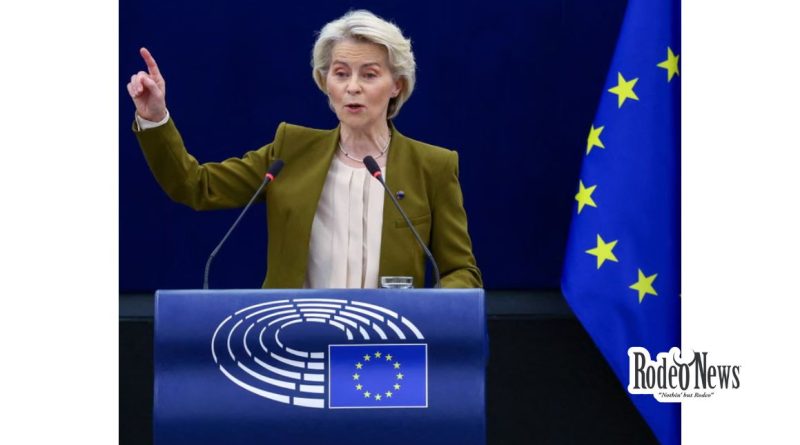
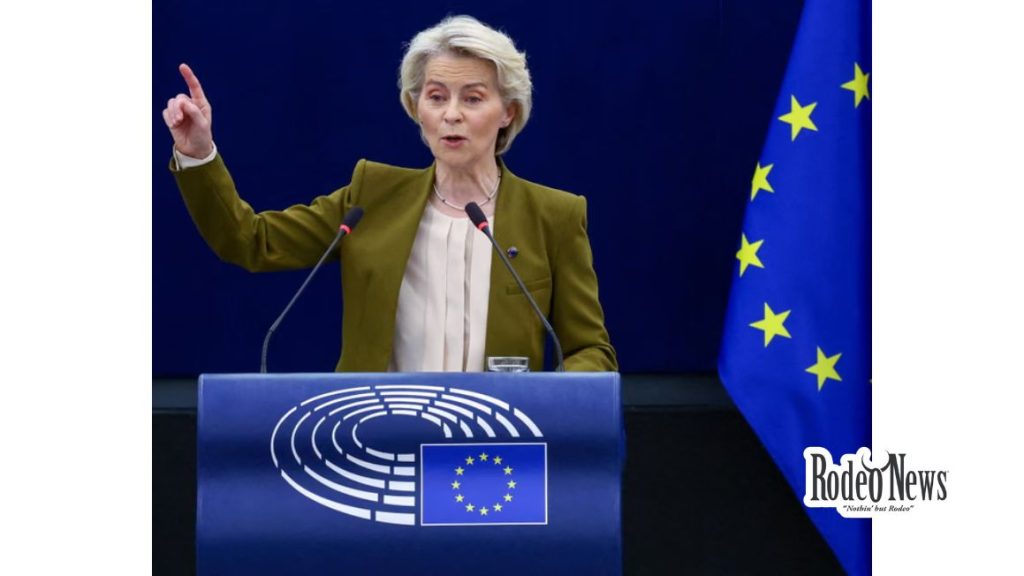
The Parliament’s vote aligns with the strong rhetoric from European Commission President Ursula von der Leyen. In a recent address, she warned against “algorithms that prey on children’s vulnerabilities with the explicit purpose of creating addictions.” She described parents as feeling powerless against “the tsunami of big tech flooding their homes.”
The Commission, the EU’s executive body responsible for initiating law, has already committed to setting up an expert panel to advise on the best legislative approach and is closely monitoring international precedents. The most notable of these is Australia’s world-first ban, which is set to take effect next month and prohibits under-16s from holding social media accounts without any parental opt-out.
France has also been at the forefront of the debate, with a recent expert report commissioned by President Emmanuel Macron recommending that children should be restricted from using smartphones until age 13 and social media until age 18.
⚔️ A Digital Sovereignty Fight with Washington
The vote also highlighted a broader geopolitical tension between the European Union and the United States regarding digital regulation. The Parliament’s decision comes just days after the US Commerce Secretary, Howard Lutnick, visited Brussels, urging the EU to be more “balanced” in its tech rules, reportedly linking the issue to trade negotiations over steel and aluminium tariffs.
MEPs swiftly rejected the suggestion that the EU’s digital rules were up for negotiation. Stéphanie Yon-Courtin, a French MEP, issued a sharp rebuttal, stating, “Our digital laws are not for sale. We will not back down on children’s protections because a foreign billionaire or big tech tells us to.”
The resolution calls for stricter enforcement of the existing Digital Services Act (DSA), which already aims to police online harms like cyberbullying and illegal content. However, the Parliament argues the DSA has “gaps,” especially in protecting children from pervasive online exploitation and the use of “dark patterns”—deceptive design features used to influence user decision-making (like countdown timers or nagging requests for location data).
🏛️ Dissent and the Road Ahead
Despite the strong mandate (483 votes in favour, 92 opposed), the resolution is not legally binding. Any future law must be proposed by the European Commission and subsequently agreed upon by the Council of the European Union (member state governments) and the Parliament.
Eurosceptic MEPs voiced opposition, arguing that such a decision constitutes overreach by Brussels into family matters. Kosma Złotowski, a Polish MEP, stated that decisions about children’s access “must be taken as close to families as possible – in the member states, not in Brussels.”
The debate also arrives only a week after the Commission announced delays to other digital laws, citing a need to “lighten regulation on companies.” However, Schaldemose dismissed concerns that the child protection initiative would be slowed down. “There is a willingness to do more when it comes to kids and protection of our children in the EU,” she affirmed.
For now, the resolution serves as a powerful signal that Europe is preparing to draw a clear line in the digital sand, demanding that social media platforms fundamentally redesign their services to prioritise child safety over engagement and profit.