Tesla Unveils Next-Generation Roadster That Can Fly, Drive Upside Down and Accelerate in Under a Second
Tesla has finally unveiled its long-awaited next-generation Roadster, delivering a dramatic demonstration that pushed the boundaries of what an electric sports car can do. At an event in Texas, the vehicle drove upside down, briefly lifted into the air and demonstrated acceleration from zero to 60 miles per hour in less than one second.
The reveal marks a major milestone for a project that has remained in development for nearly nine years. First announced in 2017, the second-generation Roadster has faced repeated delays, leaving enthusiasts waiting for Tesla to deliver on its ambitious performance promises.
Led by CEO Elon Musk, the unveiling focused heavily on spectacle and experimental engineering. However, important questions remain about the vehicle’s final specifications, road legality, pricing and production schedule.
Tesla Roadster Demonstrates Rocket-Inspired Capabilities
The most striking part of the presentation was the Roadster’s ability to perform maneuvers rarely associated with conventional passenger vehicles.
During the demonstration, the electric sports car climbed a tall, curved ramp and traveled upside down before using specialized propulsion technology to maneuver back toward the ground. The vehicle also briefly lifted into the air and performed an aerial maneuver over several vehicles in Tesla’s lineup.
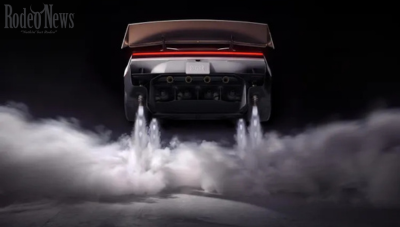
These demonstrations relied on a combination of aerodynamic downforce, a fan-powered suction system and compressed-gas thrusters developed with technology associated with Musk’s aerospace company, SpaceX.
According to Tesla’s engineering presentation, the Roadster uses a system of high-pressure air tanks connected to multiple nozzles. The compressed air provides thrust for specialized maneuvers, allowing the prototype to perform movements that would be impossible for an ordinary electric car.
The system reportedly includes two high-pressure tanks with a combined capacity of approximately 600 liters and 10 thruster nozzles. Tesla also demonstrated a fan-based suction system designed to help the vehicle maintain contact with a vertical driving surface.
Although the technology produced an extraordinary demonstration, it remains unclear how much of the system will be available in the final production vehicle.
Acceleration Could Set a New Benchmark for Electric Cars
Tesla also highlighted the Roadster’s acceleration, claiming the vehicle can travel from zero to 60 mph in less than one second.
If independently verified in a production-ready vehicle, that performance would place the Roadster among the most extreme acceleration-focused cars ever proposed for consumers.
The achievement would depend on more than electric motors alone. The vehicle’s rocket-inspired propulsion system could provide additional thrust during acceleration, helping it reach speeds beyond what conventional tire-driven propulsion might otherwise allow.
However, the demonstration should not be confused with independently verified production-car performance. Tesla has not yet established that ordinary customers will be able to reproduce the same results in a commercially available vehicle.
The company has also discussed a top speed exceeding 230 mph and a driving range of more than 300 miles per charge. Those figures remain manufacturer claims until they can be confirmed through appropriate testing.
For buyers interested in high-performance electric vehicles, the Roadster’s ultimate appeal will depend on whether Tesla can translate its dramatic demonstrations into reliable everyday performance.
A New Design Inspired by Aerospace Engineering
The next-generation Roadster features a redesigned exterior that reflects Tesla’s evolving design language.
The angular bodywork draws inspiration from advanced aircraft, including the SR-71 reconnaissance aircraft. The revised styling gives the electric supercar a sharper appearance than the concept Tesla introduced in 2017.
Inside, the Roadster is designed as a two-seat performance vehicle, with seating integrated into the chassis. Its controls include steer-by-wire technology, which electronically translates steering inputs into vehicle movement rather than relying on a conventional mechanical steering connection.
The car also features a retractable rear wing intended to increase downforce at high speeds. Its rear section accommodates propulsion equipment and fans associated with the experimental performance system.
These elements illustrate Tesla’s ambition to combine electric-car engineering with aerospace-inspired technology. Nevertheless, the final production design could change as the company works toward manufacturing and regulatory approval.
Three Roadster Versions Target Different Buyers
Tesla has outlined three versions of the next-generation Roadster, with each configuration aimed at a different level of performance and experimental capability.
The Performance version is intended to be the road-focused model. It retains the vehicle’s high-performance electric-car character while emphasizing usability on public roads and tracks.
The Thrust version is designed for more aggressive performance, incorporating rear-mounted cold-gas thrusters intended to deliver exceptionally rapid acceleration.
At the top of the range, the Rocket version is described as an experimental configuration with multiple thrusters positioned around the vehicle. This version is intended to demonstrate the Roadster’s most unusual capabilities, including brief airborne maneuvers.
Tesla has indicated that the configurations will differ in seating arrangements and propulsion equipment. The Rocket version is expected to be a single-seat model, while the Performance and Thrust versions are designed for two occupants.
The company has also discussed a driving range exceeding 300 miles across the lineup, although final specifications will need to be confirmed as production approaches.
Road Legality and Safety Remain Major Questions
Despite the excitement surrounding the reveal, the Roadster’s experimental capabilities raise substantial safety and regulatory concerns.
A vehicle capable of lifting off the ground or using powerful compressed-gas thrusters would face challenges beyond those associated with conventional electric cars. Regulators would need to consider how such systems affect occupants, pedestrians, surrounding vehicles and other road users.
The demonstrated configuration is not approved for unrestricted public-road use, and Tesla has acknowledged limitations surrounding the legality of its experimental features.
The distinction matters because a successful demonstration does not automatically establish that a vehicle can safely operate in ordinary traffic.
The Roadster’s performance ambitions also create practical questions about reliability, maintenance, operating conditions and how the propulsion system would function outside a controlled testing environment.
Musk has presented the vehicle as a celebration of human-driven performance at a time when Tesla is increasingly emphasizing autonomous driving technology and robotics. However, the company must still demonstrate that the Roadster can meet the requirements expected of a production vehicle.
Production Timeline Remains Uncertain After Years of Delays
Tesla is targeting 2028 for Roadster production, but the vehicle’s history gives prospective buyers reason to remain cautious.
When the second-generation model was unveiled in 2017, Tesla outlined ambitious performance targets and expected the car to reach customers much earlier. The company subsequently postponed its plans multiple times as other vehicle programs and engineering priorities took precedence.
Those delays have left some early reservation holders waiting for years. They have also made it difficult to determine when the Roadster will become a commercially available product.
The latest demonstration represents progress in showing Tesla’s engineering ambitions, but it does not establish that production is ready to begin.
Tesla has not provided a definitive delivery schedule or confirmed final pricing for the newly revealed vehicle. Prospective buyers will need to wait for additional information about production specifications, reservation terms and the availability of each version.
What the New Tesla Roadster Means for Electric Cars
The next-generation Roadster demonstrates how electric propulsion can serve as a foundation for increasingly experimental vehicle designs.
Its combination of rapid acceleration, advanced aerodynamic systems and compressed-gas propulsion separates it from conventional electric sports cars. It also reflects Musk’s long-standing interest in bringing aerospace technology into consumer products.
However, the Roadster’s significance will ultimately depend on what Tesla can deliver beyond the demonstration stage.
Performance claims must be verified, safety requirements must be addressed, and production plans must become concrete before the vehicle can be judged as a commercial success.
For now, the Roadster is one of Tesla’s most ambitious projects and an unusually dramatic entry in the electric-supercar market. Its unveiling has renewed interest in a vehicle that spent years waiting for its moment in the spotlight.
Whether the Roadster becomes a practical production car or remains best known for its extraordinary demonstrations will depend on Tesla’s ability to turn its experimental technology into a reliable, road-legal