Artemis II Animation Reveals Just How Crowded Earth Orbit Has Become
A newly released Artemis II animation is giving the public a dramatic look at a growing problem surrounding Earth: low Earth orbit is becoming dangerously crowded.
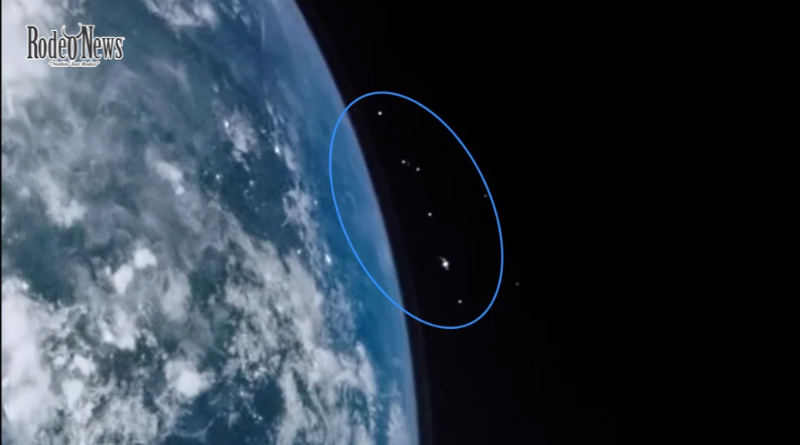
The visualization, highlighted by Gizmodo and based on NASA orbital data, shows the trajectory of NASA’s Artemis II mission while revealing the astonishing amount of satellites, spacecraft, and orbital debris currently circling the planet. What initially appears to be a beautiful scientific animation quickly transforms into something more alarming — a dense shell of human-made objects surrounding Earth.
The animation has reignited concerns among scientists and aerospace experts about the long-term sustainability of low Earth orbit, especially as governments and private companies continue launching satellites at record pace.
For many viewers, the footage delivers a shocking realization: Earth’s orbital environment is far more crowded than most people imagined.
What the Artemis II Animation Shows
The Artemis II animation was originally designed to visualize NASA’s historic crewed lunar mission trajectory. Artemis II became the first crewed lunar flyby mission since the Apollo era, sending four astronauts around the Moon and safely back to Earth in April 2026.
NASA’s visualization tracks Orion spacecraft maneuvers from launch through Earth orbit, translunar injection, lunar flyby, and eventual return trajectory.
However, one unexpected detail captured public attention more than the spacecraft itself: the overwhelming number of objects packed around Earth.
As the animation zooms outward, countless satellites and debris fragments appear clustered around the planet in a dense orbital cloud. The visual effect resembles a glowing digital cocoon wrapped around Earth.
Although space is unimaginably vast, the usable orbital lanes around Earth are comparatively narrow. Most satellites occupy specific altitude ranges in low Earth orbit, creating heavy congestion in some regions.
The result is a visualization that many online users described as both “beautiful” and “terrifying.”
Why Low Earth Orbit Is Becoming So Crowded
Low Earth orbit, commonly called LEO, extends from roughly 100 miles to about 1,200 miles above Earth’s surface. This region is especially valuable because satellites placed there can provide fast communications, Earth imaging, navigation support, and scientific research capabilities.
Over the past decade, launches into LEO have accelerated dramatically.
Private aerospace companies have deployed massive satellite constellations for global internet coverage, while governments continue expanding military and scientific infrastructure in orbit. Thousands of additional satellites are expected to launch over the next several years.
According to experts, orbital traffic has now reached levels that would have been difficult to imagine during the Apollo era.
The Artemis II mission itself highlighted how modern human spaceflight must navigate a far more crowded orbital environment than astronauts faced in the 1960s and 1970s.
NASA’s Orion spacecraft first entered temporary Earth orbit before performing a translunar injection burn that sent the crew toward the Moon.
During that phase, Orion traveled through regions already occupied by satellites, upper-stage rocket components, and debris fragments.
The Growing Threat of Space Junk
One of the biggest concerns raised by the Artemis II animation is the expanding threat posed by orbital debris, often called “space junk.”
Space junk includes:
- Defunct satellites
- Broken spacecraft parts
- Discarded rocket stages
- Tiny collision fragments
- Paint flecks and metal shards
Even extremely small debris can become deadly in orbit because objects travel at speeds exceeding 17,000 miles per hour.
At those velocities, a tiny metal fragment can damage spacecraft windows, destroy satellites, or threaten astronaut safety.
NASA and international space agencies constantly monitor tens of thousands of tracked objects orbiting Earth. However, millions of smaller pieces remain too tiny to track effectively.
Scientists fear a scenario known as the Kessler Syndrome, where cascading collisions create ever-growing clouds of debris that make parts of orbit unusable for decades.
The latest Artemis visualizations provide a rare public illustration of how serious the issue may already be becoming.
Artemis II Marks a Historic Return Beyond Earth Orbit
Beyond concerns over orbital congestion, Artemis II itself represented a historic milestone for space exploration.
NASA astronauts Reid Wiseman, Victor Glover, Christina Koch, and Canadian astronaut Jeremy Hansen launched aboard Orion on April 1, 2026, becoming the first humans to travel beyond low Earth orbit since Apollo 17 in 1972.
The roughly 10-day mission tested life support systems, deep-space navigation, communications, and crew operations ahead of future lunar landing missions.
NASA’s flight path visualizations show Orion completing Earth orbits before entering a free-return trajectory around the Moon.
Unlike later Artemis missions expected to include lunar landings, Artemis II focused on validating spacecraft performance and astronaut safety in deep space.
The mission ultimately splashed down safely in the Pacific Ocean after successfully completing its lunar flyby objectives.
Online Reactions to the Animation
The Artemis II animation quickly spread across social media and Reddit, where users debated both the mission’s significance and the growing orbital traffic problem.
Many viewers expressed amazement at how crowded Earth’s orbital shell appeared.
One Reddit user summarized the public reaction perfectly, writing that the mission marked humanity’s first journey beyond low Earth orbit in decades.
Others focused on the risks posed by orbital congestion and the increasingly complex navigation challenges facing future spacecraft.
•
r/space
›
Real-world orbit data and predictions based on information available from JPL/NASA HORIZONS interface
•
r/spaceflight
›
It’s the first time out in a new craft, so they’re being cautious.
•
r/nasa
›
View orbit in Earth-Moon relative reference frame
Give feedback
The online discussion reflects growing public awareness that humanity’s future in space may depend heavily on solving orbital sustainability problems before congestion becomes unmanageable.
Why Artemis Missions Matter for the Future
NASA’s Artemis program is designed to establish long-term lunar exploration capabilities while preparing for eventual human missions to Mars.
Unlike the Apollo missions, Artemis aims to create sustainable infrastructure rather than short-term visits.
Future Artemis missions are expected to include:
- Permanent lunar orbit stations
- Repeated Moon landings
- International cooperation projects
- Commercial lunar cargo missions
- Deep-space technology testing
However, all of those ambitions rely on safe passage through Earth’s increasingly crowded orbital environment.
The Artemis II mission demonstrated that modern spacecraft must operate in a far more complex space traffic environment than previous generations ever encountered.
As more nations and companies enter the space industry, orbital coordination and debris mitigation may become just as important as rocket technology itself.
Can the Space Junk Problem Be Solved?
Space agencies and private companies are already working on potential solutions to the orbital debris crisis.
Several proposals currently under development include:
Active Debris Removal
Engineers are designing spacecraft capable of capturing and deorbiting dead satellites and debris fragments.
Controlled Satellite Deorbiting
Many modern satellites are now designed to intentionally burn up in Earth’s atmosphere after completing missions.
Improved Space Traffic Management
International agencies are expanding orbital tracking systems to help prevent collisions between satellites and spacecraft.
Debris Reduction Rules
Governments may eventually require stricter disposal standards for satellites and rocket stages.
Still, experts warn that solving the problem will require unprecedented international cooperation.
Unlike pollution confined to one country, orbital debris threatens every spacecraft and nation operating in space.
Artemis II Offered a Rare Perspective
The widespread fascination with the Artemis II animation highlights the power of visualization in explaining scientific problems.
For years, experts have warned about orbital congestion using statistics and technical reports. Yet many people only fully grasped the issue after seeing Earth surrounded by swarms of orbiting objects.
The animation transformed an abstract engineering concern into something visually immediate and emotionally powerful.
At the same time, it also reminded viewers how remarkable modern space exploration has become.
The same crowded orbital environment that now raises sustainability fears also reflects humanity’s extraordinary technological expansion beyond Earth.
Thousands of satellites now support communications, navigation, weather forecasting, defense systems, scientific research, and global internet connectivity.
The challenge moving forward will be balancing that growth with responsible orbital stewardship.
A Critical Moment for Space Exploration
NASA’s Artemis II mission successfully reopened humanity’s pathway toward deep-space exploration. But the mission also revealed a growing obstacle orbiting directly above our heads.
The Artemis II animation unintentionally became one of the clearest visual warnings yet about the future of Earth orbit.
Without stronger debris controls and global coordination, experts fear orbital congestion could eventually threaten scientific missions, commercial satellites, and future crewed exploration efforts alike.
For now, Artemis II stands as both a triumph of exploration and a reminder that humanity’s future in space depends not only on reaching new worlds — but also on managing the crowded space surrounding our own planet.