
Nepal Floods Climate Change Link Emerges
The devastating Nepal floods that followed a massive mountain collapse in August were shaped by several factors, with human-driven climate change helping create conditions that made the disaster more likely, according to a new analysis by international scientists.
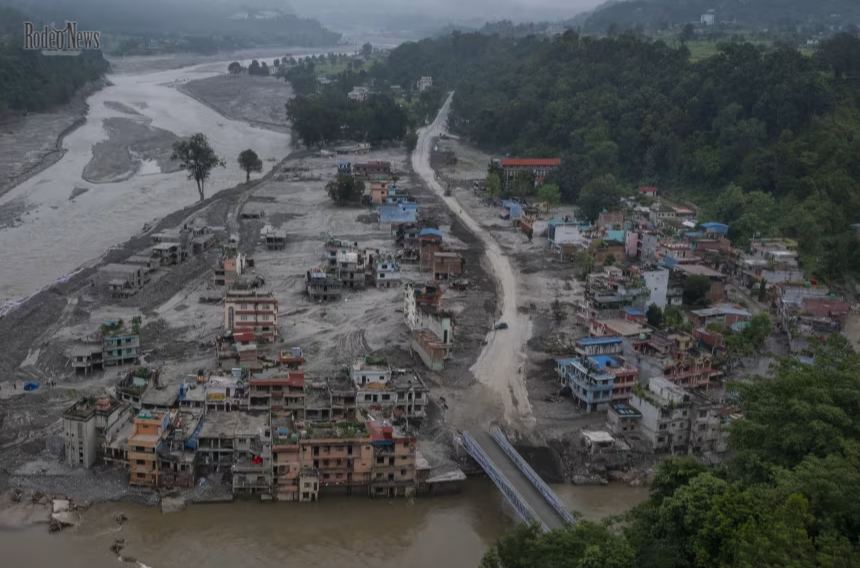
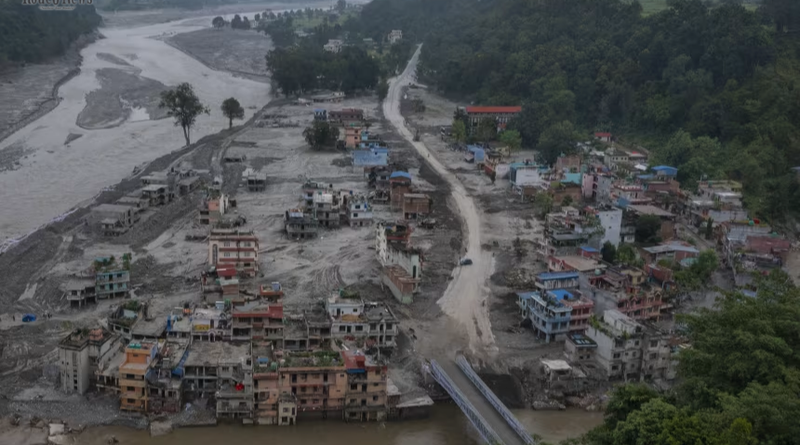
The catastrophe began on August 26, when a huge section of rock and glacier collapsed near Nepal’s border with China. The resulting avalanche sent enormous quantities of ice, rock and debris into mountain valleys, triggering destructive flood waves that swept through communities in Nepal and Tibet.
More than 1,300 people have been confirmed dead, while thousands remain missing. The scale of the disaster has made it one of the most severe Himalayan catastrophes in recent years.
Scientists say, however, that the event cannot be explained by climate change alone. Instead, a combination of geological instability, glacier changes, warming temperatures and other environmental factors contributed to the collapse.
How the Mountain Collapse Started
Researchers studying the disaster found evidence that the mountain slope may have been weakened years before the August collapse.
A magnitude 7.8 earthquake struck Nepal in April 2015, causing widespread destruction and triggering landslides and rockfalls across the Himalayas. Scientists investigating the latest disaster believe that the earthquake may have weakened parts of the mountain and contributed to increased instability over subsequent years.
The collapse involved an enormous section of rock and glacier ice on Langtang Lirung. When the material broke away, it moved rapidly downhill and entered waterways below.
That sudden injection of debris and water helped produce a powerful flood wave capable of travelling through narrow valleys and damaging infrastructure far downstream.
Nepal Floods Climate Change Factors
Climate change appears to have influenced several of the conditions that preceded the collapse.
Scientists say rising temperatures are causing glaciers across the Himalayas to thin and retreat. At the same time, permafrost — permanently frozen ground containing ice, soil and rock — is becoming less stable as temperatures increase.
Permafrost can effectively bind mountain slopes together. When frozen material thaws, the rock and soil around it can become more vulnerable to movement.
Researchers also found that the altitude at which temperatures reach the freezing point has been rising rapidly in the Himalayas. The World Weather Attribution analysis estimated an increase of more than 320 feet per decade.
These changes can affect whether precipitation falls as snow or rain, influence the amount of meltwater entering mountain systems and alter the stability of glaciers and surrounding slopes.
A Complex Chain of Events
Scientists have stressed that the Nepal disaster was not caused by one isolated weather event.
Instead, the evidence points toward a chain of interacting processes. Long-term warming weakened glaciers and mountain permafrost, while geological instability may have been influenced by the 2015 earthquake.
The resulting conditions created a landscape that was increasingly vulnerable to a major collapse.
Friederike Otto, a climatologist at Imperial College London involved in the research, said human-caused climate change played a role in preparing the conditions for the disaster through permafrost thaw, glacier thinning and changes in precipitation.
The findings are particularly significant because they show how climate change can increase disaster risks even when a catastrophe is not directly caused by an extreme heatwave, storm or rainfall event.
Thousands Remain Missing
The immediate humanitarian consequences remain severe.
Weeks after the flooding, thousands of people were still unaccounted for. Nepalese authorities have been working to identify recovered bodies and match them with missing relatives, while rescue teams continue searching heavily damaged areas.
Reuters reported that around 5,200 people remained unaccounted for as of September 16, including hundreds of foreign nationals. Authorities had collected DNA samples from unidentified bodies and relatives in an effort to establish identities.
Search operations have been complicated by the mountainous terrain, extensive debris and damaged infrastructure. Rescue teams have used helicopters, drones and specialized personnel to reach affected locations.
The disaster has also damaged roads, bridges and other critical infrastructure, making transportation and communication more difficult.
Warning for the Himalayan Region
The scientific findings have implications far beyond the communities directly affected by the August disaster.
The Himalayas contain enormous stores of snow and ice and are home to millions of people living in mountain valleys and downstream areas. As temperatures rise, glaciers and frozen mountain environments are undergoing rapid changes.
Researchers warn that existing disaster-preparedness systems may struggle to deal with increasingly complex combinations of geological and climate-related hazards.
The Nepal disaster demonstrates how a mountain collapse can quickly become a wider flooding emergency, particularly when large quantities of ice and rock enter river systems.
Climate Change Raises Future Risks
The scientists behind the analysis say the disaster should not be viewed as evidence that every Himalayan mountain collapse is directly caused by climate change. Geological conditions remain important, and individual events can have multiple triggers.
However, long-term warming is changing the environment in which these events occur.
Thinning glaciers, thawing permafrost and shifting precipitation patterns can weaken high-altitude landscapes and potentially increase the likelihood of dangerous collapses.
For Nepal and other Himalayan countries, the challenge is therefore both scientific and practical. Better monitoring of glaciers, mountain slopes and permafrost could help authorities identify dangerous changes earlier.
The August disaster has shown the devastating consequences when multiple hazards converge. As the region continues to warm, scientists say understanding those connections will become increasingly important for prote