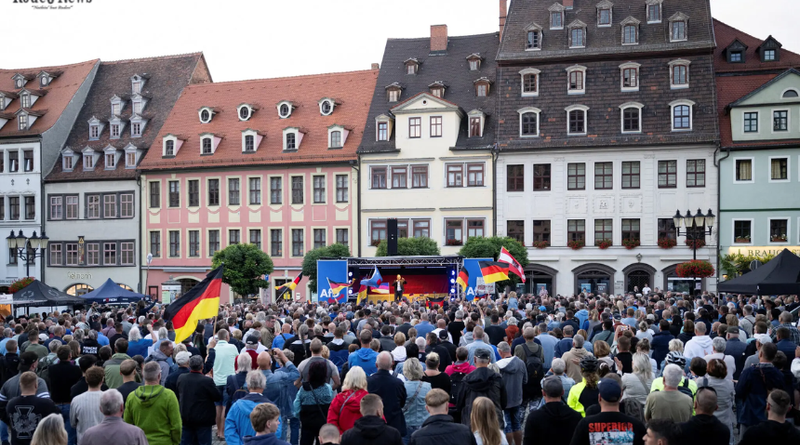
AfD Leads Germany Vote: 5 Key Election Facts
The AfD Saxony-Anhalt election has emerged as one of Germany’s most closely watched political contests, with the far-right Alternative for Germany entering the September 6 vote well ahead of Chancellor Friedrich Merz’s Christian Democratic Union in opinion polls. The election could become a historic moment if the AfD secures enough seats to form a state government without relying on another party.
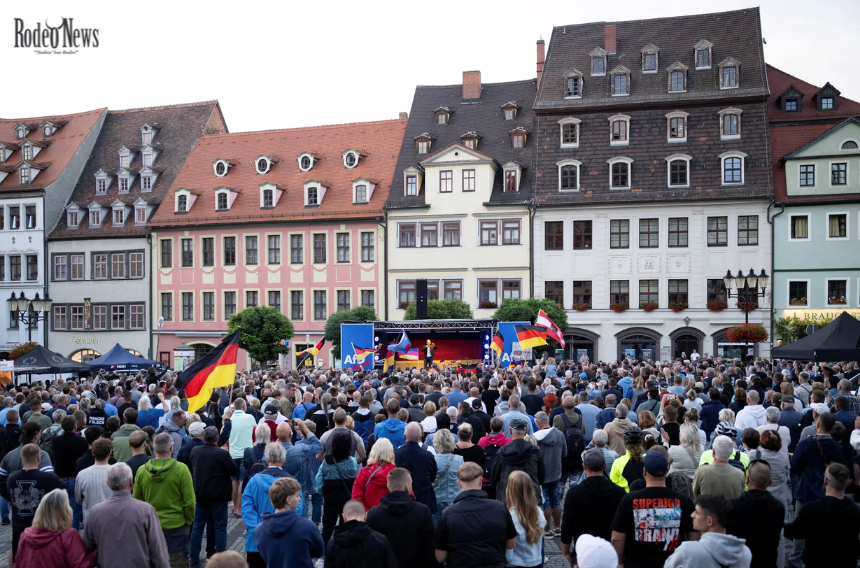
Polling stations opened across Saxony-Anhalt on Sunday morning, with roughly 1.7 million eligible voters able to cast ballots for the state parliament. Voting was scheduled to continue until 6 p.m. local time before counting began. LLandesportal Sachsen-Anhalt+1
The stakes extend far beyond the eastern German state. A strong AfD performance could increase pressure on Merz’s federal government, challenge the long-standing refusal of mainstream German parties to cooperate with the AfD and influence the political debate ahead of Germany’s next federal election.
1. AfD enters the Saxony-Anhalt election as the clear frontrunner
The most striking feature of the AfD Saxony-Anhalt election is the scale of the party’s lead.
Recent surveys have placed the AfD at around 40% or slightly above, while the CDU has been polling in the low 20s. Other parties are significantly further behind. RReuters+1
That advantage has transformed what would normally be a regional parliamentary election into a national political test.
The AfD, led in the state campaign by 35-year-old Ulrich Siegmund, has made an outright majority its central objective. Siegmund has said he would only seek to govern if the party wins enough seats to control the parliament on its own.
That condition is important because Germany’s mainstream parties have maintained a political firewall against cooperation with the AfD.
If the AfD falls short of a majority, its path to government becomes considerably more complicated.
2. Why an AfD majority would be historic
A successful AfD bid for outright control of Saxony-Anhalt would mark a major breakthrough for Germany’s far right.
The party has become a powerful force in eastern Germany, but it has never previously led a German state government. A majority in Saxony-Anhalt would therefore give the party its biggest institutional prize since its creation in 2013. AAP News+1
The significance is also rooted in Germany’s postwar political history.
Mainstream parties have traditionally avoided governing with the AfD because of its positions on immigration, national identity and other contentious issues. German domestic intelligence authorities have also classified the AfD organization in Saxony-Anhalt as confirmed right-wing extremist, a designation the party rejects. CCBS News
An outright AfD majority could therefore force Germany’s political establishment to confront a new reality: a party excluded from coalition politics could nevertheless gain direct control of a state government through the ballot box.
That would likely trigger an intense national debate over how democratic parties should respond.
3. The CDU faces a major test
The election is also a serious challenge for the CDU, the party of Chancellor Friedrich Merz.
Saxony-Anhalt has been governed by the CDU for years, and incumbent state premier Sven Schulze is seeking another term. But the party faces a substantial polling deficit against the AfD.
Schulze has ruled out cooperation with the AfD. At the same time, the CDU has also adopted an incompatibility position toward the Left party, narrowing the potential coalition combinations available after the election. Eeuronews+1
That could create a difficult political puzzle if no party wins an outright majority.
Germany’s parliamentary system frequently requires parties to negotiate coalition agreements. However, the stronger the AfD becomes, the harder those traditional arrangements can become to construct.
For the CDU, the immediate objective is therefore not simply to defeat the AfD at the polls. It is also to preserve a viable governing alternative.
4. Why the AfD is so strong in eastern Germany
The AfD’s strength in Saxony-Anhalt cannot be explained by a single issue.
Economic dissatisfaction, demographic decline, concerns about migration and frustration with national politics have all contributed to the party’s support in parts of eastern Germany. The region also has a political history distinct from that of western Germany because of its decades under communist East German rule. DDW News
For many AfD supporters, the election is less about ideology than dissatisfaction with established political parties.
The party has successfully connected concerns about immigration and public security with broader complaints about government performance and economic prospects.
Its campaign has also focused heavily on traditional values and opposition to policies associated with Germany’s political establishment.
Critics, meanwhile, argue that the party’s rise presents a serious challenge to Germany’s democratic institutions and political norms.
The disagreement reflects a wider divide over what the AfD represents: a protest movement against established parties or a far-right political force seeking fundamental changes to Germany’s political system.
5. The election could put Friedrich Merz under pressure
Although the AfD Saxony-Anhalt election concerns a state parliament, its consequences could reach Berlin.
Merz became Germany’s chancellor after the 2025 federal election and has faced pressure over economic performance, migration and the popularity of his governing coalition.
A major AfD victory in Saxony-Anhalt would provide the opposition with a powerful argument that the federal government has failed to win back voters who have moved toward the far right.
Merz has already attempted to address some of the issues that have helped the AfD, including migration and security. However, the strategy has not eliminated the party’s appeal.
A large AfD victory could therefore intensify questions inside the CDU about whether the party should move further right, maintain its current course or focus on rebuilding support through economic and social policies.
The debate could become particularly important as Germany approaches the next federal election.
What happens if the AfD does not win a majority?
An AfD plurality would not automatically mean that the party forms the state government.
This is one of the most important points to understand about the AfD Saxony-Anhalt election.
Germany’s parliamentary system requires a governing majority in the state legislature. If the AfD wins the most votes but falls short of a majority, it would normally need coalition partners or some other parliamentary arrangement.
Yet the CDU and other mainstream parties have ruled out forming a coalition with the AfD.
That creates the possibility of complicated negotiations involving several smaller parties.
The five-percent electoral threshold could also prove decisive. The more parties that enter the state parliament, the more fragmented the legislature could become and the more difficult it may be for the AfD to obtain an outright majority of seats. Eeuronews
As a result, the final parliamentary balance could matter almost as much as the AfD’s headline vote share.
Voters are watching more than migration
Migration is one of the AfD’s signature issues, but the election is not solely about immigration.
Voters in Saxony-Anhalt are also concerned about jobs, wages, public services, education, infrastructure and the broader economic outlook.
The state has experienced many of the demographic and economic challenges common to parts of eastern Germany.
That has created fertile ground for political parties promising a major change in direction.
The AfD has sought to capitalize on this dissatisfaction by presenting itself as an alternative to the established parties.
Its opponents argue that many of the party’s proposed solutions would create new problems, particularly in areas involving social cohesion, immigration and democratic institutions.
The election therefore represents a clash not only between parties but also between competing visions of Germany’s future.
A test for Germany’s political firewall
Perhaps the biggest question surrounding the election is whether Germany’s political firewall can survive an AfD breakthrough.
For years, mainstream parties have argued that cooperation with the AfD is unacceptable. That position has allowed them to prevent the party from entering state governments despite its growing electoral support.
But an outright AfD majority would change the circumstances dramatically.
If the party controls enough seats to govern alone, other parties would have no coalition decision to make.
That possibility explains why the election has attracted such intense national attention.
The result could demonstrate whether voters are willing to give the AfD direct governing responsibility or whether the party’s strong polling ultimately falls short of the majority required to take power.
Why the result matters beyond Saxony-Anhalt
Saxony-Anhalt is one of Germany’s smaller states, with a population of roughly 2.1 million.
Nevertheless, its election could have an impact far beyond its borders.
Germany is scheduled to hold additional state elections later in September, including votes in Berlin and Mecklenburg-Vorpommern. The performance of the AfD in Saxony-Anhalt could influence those campaigns by providing momentum — or exposing limits — for the party’s strategy. EElectioMap
A major AfD victory could encourage the party to argue that it is on an unstoppable path toward national power.
A weaker-than-expected result, on the other hand, could give the CDU and other mainstream parties an opportunity to argue that polling numbers do not necessarily translate into governing majorities.
Either outcome would provide valuable information about Germany’s political direction.
What to watch after the polls close
The first major indicator will be the AfD’s final vote share.
A result above 40% would represent a substantial level of support and could place the party within reach of an outright parliamentary majority, depending on how many smaller parties clear the five-percent threshold.
The CDU’s result will be equally important.
If the CDU performs better than expected, Schulze could have a stronger negotiating position when attempting to build another coalition. If the party performs poorly, pressure on Merz and the state leadership could increase.
The smaller parties will also play an outsized role.
The Left, SPD, Greens, FDP and other parties are competing for seats, and small differences in their vote shares could determine whether coalition negotiations are possible.
For that reason, the election night story will not be simply “AfD wins” or “CDU loses.”
The crucial question will be whether the final seat distribution produces a workable government.
A pivotal moment for Germany
The AfD Saxony-Anhalt election is being watched as a potential turning point in German politics.
The AfD has spent years expanding its support, particularly in eastern Germany. Now it has entered a state election with a realistic possibility of becoming the strongest political force by a wide margin.
Whether that translates into government remains uncertain.
The party needs enough seats for an outright majority if it is to avoid the coalition barrier created by the mainstream parties’ refusal to work with it. Meanwhile, the CDU must find a way to remain competitive while defending its political position against a rapidly growing rival.
The result could influence not only Saxony-Anhalt but also the national conversation about immigration, economic policy, democratic institutions and the future of Germany’s political center.
For Chancellor Friedrich Merz, the election is another test of whether the CDU can contain the AfD while governing from the center-right.
For the AfD, it is an opportunity to demonstrate that its growing electoral support can become political power.
And for Germany as a whole, the vote offers a revealing snapshot of how dramatically the country’s political landscape has changed.
The final result will determine whether the AfD has achieved its long-sought breakthrough — or whether Germany’s political firewall remains intact.
Suggested image
Use a licensed news photograph of the Saxony-Anhalt election, AfD campaign, voters, or polling station from a legitimate image provider. Do not use an NYT screenshot or reproduce the NYT website/headline as the article image.