Trump Ties Greenland Push to Nobel Peace Prize Snub, Escalating Arctic Tensions
President Donald Trump has linked his renewed push to acquire Greenland to his failure to win the Nobel Peace Prize, injecting fresh controversy into an already tense geopolitical dispute involving Denmark, Greenland, and several European allies.
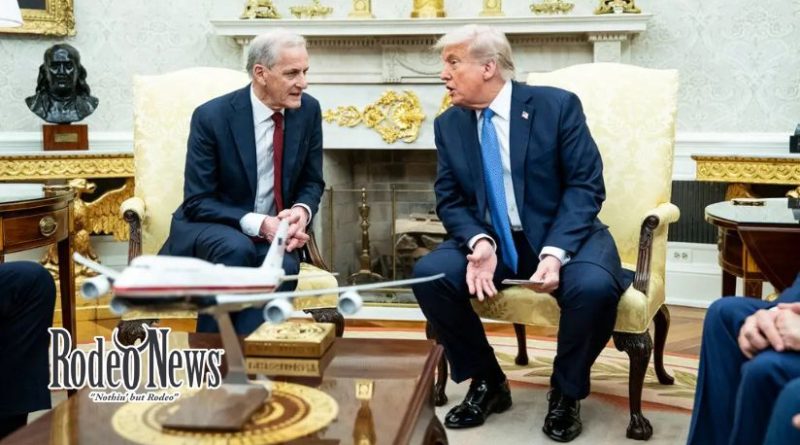
In a text message sent over the weekend to Norwegian Prime Minister Jonas Gahr Støre, Mr. Trump suggested that Norway’s Nobel decision had altered his approach to global diplomacy, including his stance on Greenland, the strategically vital Arctic territory controlled by Denmark.
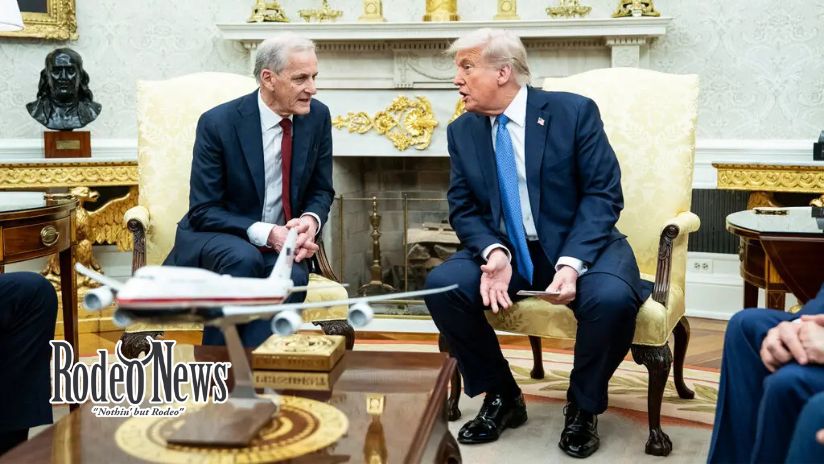
According to Norwegian officials, the message was received on Sunday and later confirmed by the prime minister’s office. The contents were first reported publicly by PBS.
“Considering your Country decided not to give me the Nobel Peace Prize for having stopped 8 Wars PLUS, I no longer feel an obligation to think purely of Peace,” Mr. Trump wrote, adding that U.S. interests would now take precedence. “The World is not secure unless we have Complete and Total Control of Greenland.”
The message has intensified concerns across Europe, where leaders have already been alarmed by Mr. Trump’s increasingly forceful rhetoric and his refusal to rule out economic pressure to gain control of the island.
European Leaders Seek De-escalation
Mr. Trump’s text was sent in response to a joint outreach from Prime Minister Støre and Finnish President Alexander Stubb, a leader known to have a cordial relationship with the former U.S. president. The European leaders had urged calm and requested a direct conversation to reduce tensions surrounding Greenland.
“We believe we all should work to take this down and de-escalate,” the leaders wrote, according to copies of the correspondence released by the Norwegian government. “So much is happening around us where we need to stand together.”
Instead, Mr. Trump’s response raised new doubts about his intentions, particularly his suggestion that Denmark’s sovereignty over Greenland lacks firm legal grounding.
“There are no written documents,” he wrote, disputing Denmark’s longstanding claim to the territory.
Prime Minister Støre later clarified Norway’s position, noting that the Nobel Peace Prize is awarded by an independent committee, not by the Norwegian government. “This is well known,” he said, adding that the matter had been explained to Mr. Trump on multiple occasions.
The White House did not respond to requests for comment.
Greenland’s Strategic Importance
Greenland, the world’s largest island, has become increasingly important in global security discussions as melting Arctic ice opens new shipping routes and exposes valuable natural resources. The United States already maintains significant military access on the island under long-standing defense agreements with Denmark.
However, legal documents directly contradict Mr. Trump’s claim that Denmark’s control lacks legitimacy. A 2004 amendment to a U.S.-Denmark defense pact explicitly recognizes Greenland as “an equal part of the Kingdom of Denmark.” Earlier treaties, including a 1916 agreement related to the sale of the U.S. Virgin Islands, also affirm Danish sovereignty over Greenland.
Despite this, Mr. Trump has repeatedly argued that Greenland is essential to American security and has vowed to “get” the island, statements that have been met with widespread rejection in Europe.
Growing Resistance in Greenland
Denmark has consistently rejected any suggestion that Greenland is for sale, emphasizing that the territory is self-governing and that its 57,000 residents have the right to determine their own future.
Public opinion in Greenland has been overwhelmingly opposed to becoming part of the United States. Over the weekend, hundreds of residents marched through the streets of Nuuk, Greenland’s capital, in one of the largest protests in recent months.
Chanting slogans such as “No means no,” “Greenland is already great,” and “Yankee, go home,” demonstrators voiced frustration over what they see as an existential threat to their autonomy.
In response to rising tensions, Denmark and other European nations have increased their military presence on the island. Danish soldiers have been seen patrolling Nuuk, while a large ice-capable Danish warship has been deployed along the coast.
Diplomatic Efforts Falter
Last week, a highly anticipated three-way meeting involving the United States, Denmark, and Greenland was hosted in Washington by Vice President JD Vance. The talks were intended to ease tensions but instead appeared to deepen misunderstandings.
Greenlandic and Danish officials left the meeting believing that a working group would explore cooperative solutions. Shortly afterward, however, the Trump administration released a statement referring to “technical talks on the acquisition of Greenland,” language that triggered alarm in Copenhagen, Nuuk, and other European capitals.
For Greenland’s leaders, the phrasing reinforced fears that Washington views the island less as a partner and more as a strategic asset to be acquired.
Nobel Prize Grievance Resurfaces
Mr. Trump has long expressed frustration over not receiving the Nobel Peace Prize, often citing diplomatic efforts in the Middle East and elsewhere. His decision to link that grievance to a major territorial dispute has unsettled allies who worry it reflects a more transactional and unpredictable approach to foreign policy.
As tensions rise, European leaders continue to urge dialogue and restraint, while Greenland’s population remains firmly opposed to any change in sovereignty. Whether diplomatic efforts can cool the situation remains uncertain, but for now, the Arctic island has become the center of an escalating transatlantic dispute.