Thailand’s Dangerous Dance Between US and China: Cambodia Caught in the Crossfire
In recent months, Thailand has found itself walking a perilous tightrope in its relations with both the United States and China. While maneuvering between these global powers, the Southeast Asian nation’s political and military actions have raised alarm not just internationally, but also for its neighbors, particularly Cambodia. For the Thai government, Cambodia has increasingly become a pawn in a high-stakes geopolitical game, while for the Cambodian people, these shifting alliances have brought uncertainty and unrest.
Strained Relations with the United States
Thailand’s longstanding alliance with the United States has been tested as of late. Amid growing pressure from Washington, which has been urging Thailand to broker a peace deal with Cambodia, Bangkok has pushed back. The U.S. has been particularly focused on securing a rare earth minerals deal in exchange for alleviating trade tariffs, but Thailand perceives this as an opportunistic move designed to further American interests in the region.
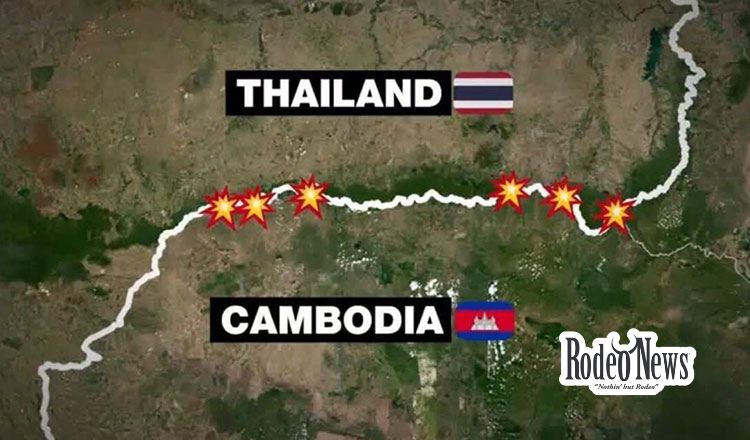
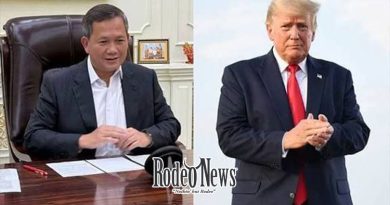
On October 28, Thailand made it clear that the U.S.-Thailand Memorandum of Understanding (MOU) on rare earths was non-binding—a symbolic gesture signaling their resistance to further U.S. demands. Just two weeks later, on November 12, Thai Prime Minister Anutin Charnvirakul delivered a striking announcement. In the wake of a deadly landmine blast on November 10, he declared that Thailand would no longer honor the peace deal brokered by U.S. President Donald Trump. Additionally, Thailand suspended the release of 18 Cambodian soldiers previously captured along the border, despite American pressure to adhere to the terms.
This move came just a day before Thailand’s King Maha Vajiralongkorn was set to begin a state visit to China, underscoring the country’s growing tilt toward Beijing. These developments have raised concerns among American think tanks, with the Council for Foreign Relations (CFR) publishing an article titled “Thailand: Slip Sliding Away From the United States” on October 28. CFR’s analysis emphasized how the rift between Thailand and the U.S. had deepened since the 2014 military coup and pointed to Thailand’s increasing military procurement from China, which has now surpassed that of the U.S.
Thailand’s Shifting Allegiances to China
Thailand’s growing alignment with China has been evident not only in military cooperation but also in joint training exercises and defense deals. One notable example was the Falcon Strike-2025 joint air force training, held in September, just months after the violent skirmish between Cambodia and Thailand. The timing of the exercise sent a clear message: Thailand was strengthening its ties with China, a major regional power.
For Cambodia, this alliance is particularly painful, as the country has long been an ally of Beijing. Cambodia’s people, who continue to suffer from Thailand’s border incursions, view these military maneuvers with deep suspicion. Thai forces have repeatedly violated Cambodian territory, and there are reports of Thai soldiers setting landmines along the border—an act known in Khmer as “yutasas sach kam,” or self-mutilation, a strategy that risks their own soldiers’ safety while causing civilian casualties across the border.
On November 12, mere hours after announcing that Thailand would suspend the release of Cambodian soldiers, Thai military forces renewed hostilities with unprovoked gunfire in a Cambodian village, killing one civilian and injuring three others. While the motives behind these attacks remain unclear, it is evident that Thailand’s maneuvers are not only destabilizing the region but also raising suspicions that Cambodia is being used as a pawn in a larger geopolitical contest between the U.S. and China.
Thailand’s Complex Political Landscape
Thailand’s actions over the past few months have raised more questions than answers. Is Prime Minister Anutin Charnvirakul acting out of political opportunism, attempting to solidify his power with the military and royal establishment by stoking nationalist sentiment? Or is Thailand’s behavior driven by broader internal political dynamics, where ultra-nationalist factions push for escalating hostilities with Cambodia in order to divert attention from domestic issues, such as the country’s deadly floods?
Moreover, Thailand’s erratic behavior in its foreign policy could suggest that its leaders are playing a dangerous game, hoping to manipulate both the U.S. and China. This poses a significant question for Washington: will the U.S. tolerate Thailand’s increasingly defiant stance, or will it recalibrate its approach to its long-time ally in the face of such blatant disobedience?
Cambodia’s Dilemma: Caught Between Powers
For Cambodia, the situation is dire. As Thailand strengthens its military and political ties with China, Cambodia finds itself caught between the conflicting interests of two powerful neighbors. Though Cambodia has long been aligned with China, it also remains economically and politically vulnerable to the West, particularly the U.S. With Thailand escalating tensions along the border, Cambodia risks being caught in a larger geopolitical struggle.
To make matters worse, Thailand’s flip-flopping stance on the Cambodia-Thailand border conflict—shifting from peace deals to military aggression—has made it difficult for the Cambodian people to trust in the promises of Thai leaders. While Thailand seeks to maintain an image of cooperation with both the U.S. and China, its behavior on the ground suggests a more duplicitous approach, often using Cambodia as a scapegoat for its own political and military ambitions.
Conclusion: A Dangerous Game
Thailand’s actions in recent months have raised alarms among regional experts and international observers alike. The country’s efforts to manipulate both the U.S. and China, using Cambodia as a pawn in a larger geopolitical game, have created an environment of instability and distrust. While Thailand may see short-term gains from playing both sides, its long-term strategy could backfire, with potentially disastrous consequences for the region.
As the world watches, the key question remains: will Thailand’s dangerous diplomatic maneuvering push the U.S. and China into a more confrontational stance, or will Thailand continue to deceive both powers, hoping to emerge as a victor in this high-stakes game?
Ultimately, Thailand’s political and military decisions will shape its future, as well as its relationship with both the U.S. and China. As one Khmer saying goes, *“phout chreun chanh atmar”—*too many lies will lead to self-defeat. The truth may not be far behind.