G20 Adopts Declaration Despite US Boycott
Johannesburg, South Africa — In a historic move at the G20 summit in South Africa, world leaders adopted a declaration addressing global challenges, despite the absence of the United States delegation. The decision to adopt the declaration at the start of the summit broke from tradition, as G20 declarations are typically presented at the end of the summit.
The summit, which took place on Saturday, had been overshadowed by the US’s decision not to send a delegation, a move that caused tensions among global leaders. South African officials confirmed that the United States had pressured them to refrain from adopting the declaration in Washington’s absence.
South African President Cyril Ramaphosa, in his opening remarks, emphasized the importance of not allowing the absence of a key member to undermine the significance of the summit. “We should not allow anything to diminish the value, the stature, and the impact of the first African G20 presidency,” Ramaphosa said.
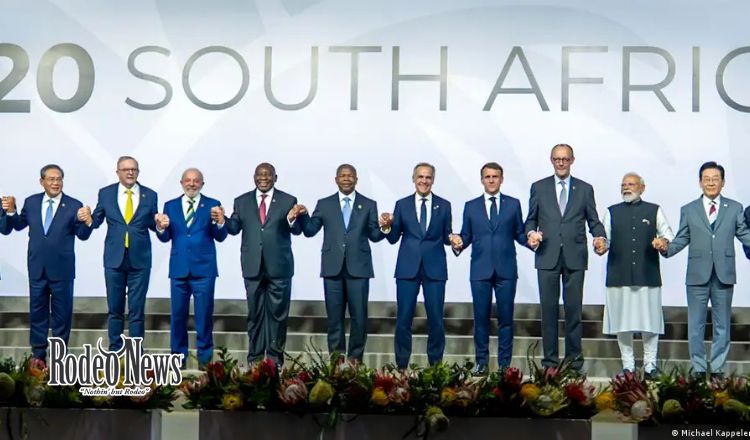
Despite the US boycott, Ramaphosa defended the role of the G20, stressing its ongoing relevance in addressing global issues. “The G20 underscores the value of multilateralism,” he said. “The challenges we face can only be resolved through cooperation, collaboration, and partnership.”
A Geopolitical Crisis at the G20
This year’s summit was not only marked by the US’s decision to boycott but also by the broader geopolitical tensions affecting the global order. French President Emmanuel Macron expressed concern that the G20 may be at a turning point. “We are living in a moment of geopolitics where we are struggling to resolve major crises together,” he noted. “The G20 may be coming to the end of a cycle.”
British Prime Minister Keir Starmer echoed Macron’s sentiment, acknowledging the road ahead would be challenging. “There’s no doubt, the road ahead is tough,” Starmer said. “We need to find ways to play a constructive role again today in the face of the world challenges.”
Meanwhile, Chinese Premier Li Qiang, attending the summit in place of President Xi Jinping, raised concerns about rising nationalism and protectionism. “Unilateralism and protectionism are rampant,” Li said. “Many people are pondering what exactly is happening to global solidarity.”
G20 Declaration Addresses Climate Change, Global Cooperation
Despite the political challenges, the summit’s leaders managed to agree on a 122-point declaration, which focused on several pressing global issues. At the heart of the agreement was a call for enhanced action to tackle climate change. Leaders agreed that investment in climate finance must increase “from billions to trillions globally from all sources.”
This call came as the COP30 climate talks were concluding in Brazil, underlining the urgency of addressing climate change. The G20 declaration stressed the importance of scaling up efforts to combat climate-related disasters, with a particular focus on low-income countries and vulnerable communities.
The declaration also addressed the need for reform in international financial systems to help poorer nations manage their growing debt burdens.
However, the declaration’s language on taxing the ultra-wealthy was notably weaker than in previous G20 statements. In Rio de Janeiro, the G20 had agreed to make strides toward ensuring that ultra-high-net-worth individuals are properly taxed, but the new declaration saw a watering down of that commitment, leaving some critics questioning the impact of the summit’s financial reforms.
Focus on Global Peace and Conflict Resolution
In addition to climate action, the G20 declaration called for a “just, comprehensive, and lasting peace” in conflict zones around the world, including Ukraine, Sudan, the Democratic Republic of Congo, and the Palestinian territories, in line with the principles of the UN Charter.
Although the conflict in Ukraine was only mentioned once in the 30-page declaration, Western leaders were seen scrambling on the sidelines to address a proposed peace plan from the United States aimed at ending the war in Ukraine. The plan, which aims to broker a peace deal favorable to Russia, has sparked considerable debate within the summit. Some leaders have expressed concern that the plan could undermine Ukraine’s sovereignty and the broader international effort to hold Russia accountable for its aggression.
Conclusion: A Divided G20
While the G20 summit in South Africa saw the adoption of a landmark declaration, it also highlighted the growing divides within the international community. The absence of the United States, a key player in the global economy, and the tensions over the proposed peace plan for Ukraine, underscore the complexities facing multilateral cooperation in the 21st century.
As geopolitical crises continue to challenge the global order, the G20 summit in South Africa was a reminder that, despite its flaws, the forum remains a critical platform for addressing the world’s most pressing issues. However, the road ahead appears uncertain, as countries must find ways to navigate growing divisions while tackling shared challenges like climate change, economic inequality, and international conflict.