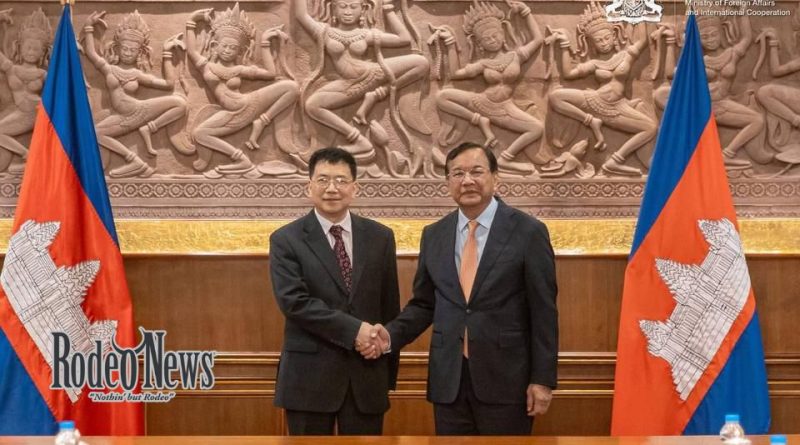
Chinese Special Envoy Meets Cambodian Foreign Minister Amid Border Tensions
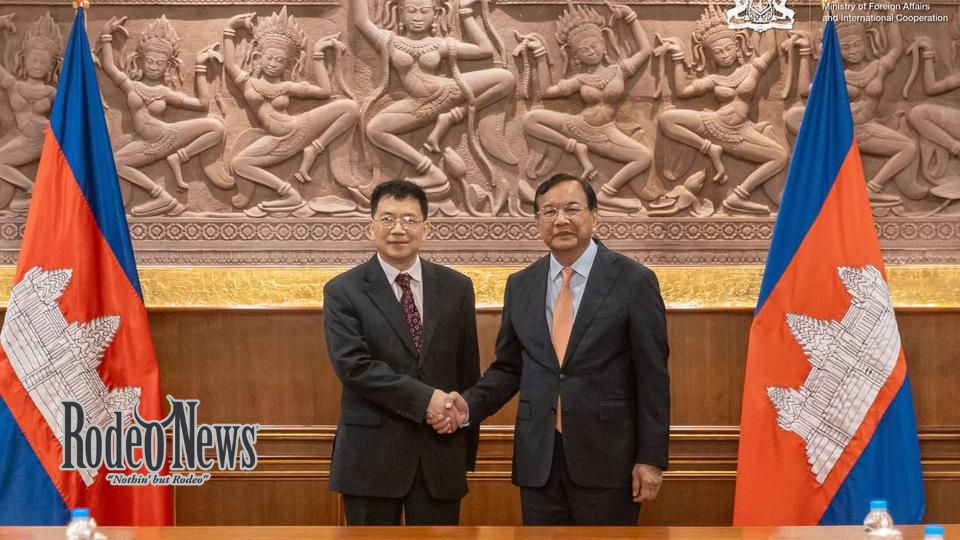
Phnom Penh, Cambodia – A significant diplomatic meeting took place in Phnom Penh on Friday, December 19, 2025, as the Special Envoy for Asian Affairs from the People’s Republic of China, Deng Xijun, met with Cambodia’s Deputy Prime Minister and Foreign Minister Prak Sokhonn. The visit came at a time of escalating tensions between Cambodia and Thailand, particularly along their shared border, where military incidents have become increasingly frequent.
According to a statement from Cambodia’s Ministry of Foreign Affairs and International Cooperation, the meeting focused on efforts to de-escalate the ongoing conflict between the two Southeast Asian neighbors. The discussions were also aimed at finding a peaceful resolution to the mounting hostilities.
Diplomatic Dialogue Amid Rising Tensions
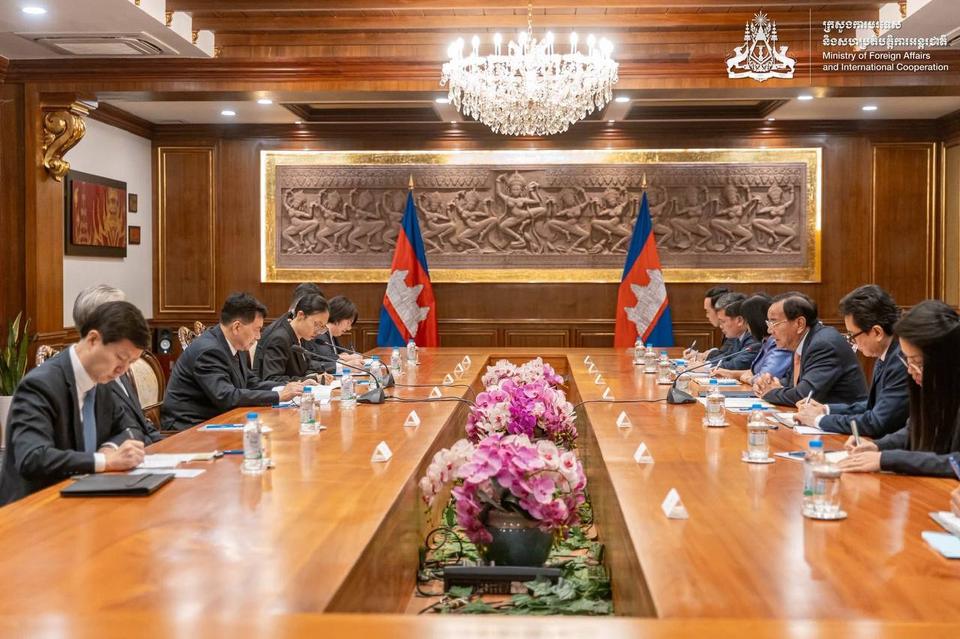
The Cambodian government’s official statement highlighted the importance of dialogue and diplomacy in managing the border tensions, noting that both parties expressed a shared commitment to a peaceful resolution. During the visit, Deng Xijun met not only with Foreign Minister Prak Sokhonn but also with Cambodia’s Prime Minister Hun Manet, Defence Minister Tea Seiha, and senior military official Mao Sophan.
“The situation along the Cambodia-Thailand border remains critical,” said the statement, referring to the urgency of an immediate ceasefire. Both sides emphasized that peaceful dialogue was the only viable solution to the conflict, with the hope that tensions would de-escalate swiftly through mutual respect for international law and existing bilateral frameworks.
Prime Minister Hun Manet took the opportunity to express Cambodia’s gratitude to China for its continued support in efforts to maintain peace and regional stability. He also reiterated Cambodia’s commitment to adhering to ceasefire agreements and upholding the principles of non-use of force and peaceful dispute resolution.
“The ceasefire will continue to be the guiding principle for Cambodia in addressing its border situation with Thailand,” Manet affirmed. “We strongly believe that diplomacy is the path forward for lasting peace.”
Escalating Conflict Along the Border
The diplomatic meeting came on the heels of concerning reports from the Cambodian Ministry of National Defence regarding an airstrike carried out by the Thai military. On December 20, 2025, Thai F-16 fighter jets reportedly dropped two bombs in Cambodia’s 5th Military Region, specifically in Thmar Da commune, Veal Veng district, Pursat province.
The attack took place between 11:01 a.m. and 11:16 a.m. local time, with one of the bombs landing near a primary school. Cambodia’s Ministry of Defence did not immediately release information on casualties or damage caused by the attack, but the timing and location of the bombings have raised serious concerns.
Cambodia’s Interior Ministry, in a separate report, noted the heavy human toll the conflict has already taken. As of December 2025, at least 18 civilians have lost their lives, with 79 others injured. In addition, the Ministry confirmed that over 512,000 people have been displaced by the fighting, including more than 267,000 women and 162,000 children. These displaced individuals have been relocated to safety shelters across the country.
China’s Role in the Peace Process
As the conflict deepens, China’s involvement in the diplomatic process has become increasingly significant. The Chinese government has long been a key regional player in Southeast Asia, with strong diplomatic ties to both Cambodia and Thailand. Deng Xijun’s visit to Phnom Penh underscores China’s ongoing commitment to promoting stability in the region, offering both political and strategic support in resolving the conflict.
Experts suggest that China’s unique position as a regional power gives it significant leverage in encouraging both Cambodia and Thailand to return to the negotiating table. The Chinese government has consistently called for the peaceful resolution of disputes in the region, and its influence could play a critical role in facilitating dialogue between the two nations.
However, while diplomatic efforts continue, the situation on the ground remains volatile. Both countries have faced mounting pressure to resolve the conflict, not only for the sake of their own populations but also for the stability of the broader Southeast Asian region.
The Path to Peace
The recent military incidents have served as a stark reminder of the fragility of peace in the region. Cambodian authorities are urging Thailand to cease its military actions and abide by the ceasefire, calling for respect for Cambodia’s sovereignty and territorial integrity.
At the same time, Thailand’s government has maintained that its military operations are necessary to defend its borders and protect its national security interests. The escalating situation is a reflection of the complex nature of the border conflict, with deep historical, political, and security issues at play.
As Cambodia and Thailand continue to grapple with these tensions, the role of international actors, including China, will likely remain critical in pushing both sides toward a lasting resolution. For now, Cambodia’s government has vowed to continue its efforts to de-escalate the situation, with the hope that peace will prevail and the conflict will soon be resolved.
Conclusion:
The recent meeting between Chinese Special Envoy Deng Xijun and Cambodian Foreign Minister Prak Sokhonn highlights the increasing urgency to resolve the Cambodia-Thailand border tensions. While diplomatic efforts continue, military incidents—such as the recent airstrike—remain a stark reminder of the volatile nature of the conflict. As the situation unfolds, international support and dialogue will be key in ensuring a peaceful resolution to this crisis.