Cambodia Urged to Pursue Legal Action Over Alleged Thai Border Encroachment
Cambodia should file formal complaints with international legal and human rights institutions over alleged encroachment by Thai military forces along the shared border, a Cambodian policy analyst said, warning that affected residents remain unable to return to their homes and that diplomatic solutions alone are unlikely to succeed.
Seun Sam, an expert in international policy analysis, told Khmer Times on Thursday that Thai forces have moved into areas that Cambodia considers its sovereign territory, describing the actions as part of a broader and deliberate strategy to assert control over disputed border zones.
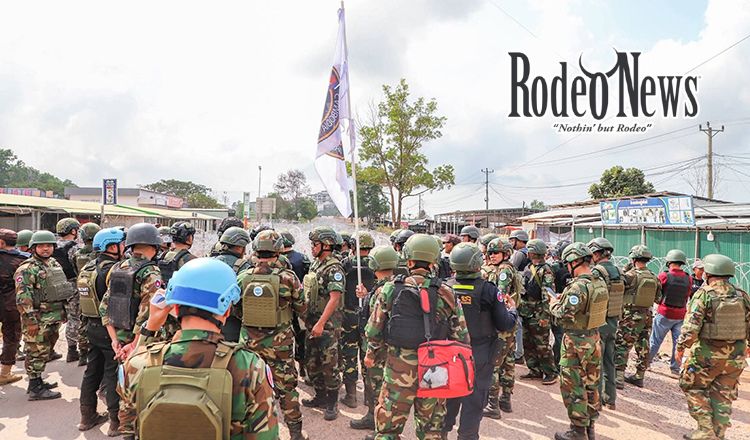
“The current situation reflects a long-planned and systematically organised policy,” Sam said, arguing that the alleged encroachment has had direct humanitarian consequences by preventing local communities from resuming normal life in affected areas.
Push for international intervention
Sam said Cambodia should submit formal complaints to international bodies including the United Nations High Commissioner, international human rights organisations and the International Court of Justice (ICJ), with the aim of compelling Thailand to withdraw from territory Cambodia claims has been illegally occupied.
According to the analyst, legal action is essential to protect Cambodia’s territorial integrity and to ensure the dispute is addressed through internationally recognised mechanisms.
“Without legal action, the return of the territory will be extremely difficult,” he said, adding that international pressure could help shift the balance in what has long been a politically sensitive and unresolved border issue.
Domestic politics in Thailand cited
Sam also linked the alleged encroachment to Thailand’s internal political dynamics, suggesting that border disputes are sometimes used to mobilise nationalist sentiment, particularly ahead of elections scheduled for February.
He said that even a change in Thailand’s political leadership would not necessarily lead to the return of disputed territory, noting that any government perceived as making concessions to Cambodia would likely face strong resistance.
“Opposition parties, the military and ultranationalist groups would oppose such a move,” Sam said, warning that protests and political instability could follow any attempt by a Thai government to negotiate a territorial rollback.
Call for long-term strategy
Given these constraints, Sam urged Cambodia to adopt a long-term strategy that combines international legal action with sustained diplomatic and political engagement.
He said preparing legal cases, documenting alleged violations and engaging global institutions would strengthen Cambodia’s position while signalling its commitment to resolving disputes through peaceful and lawful means.
Provinces affected by alleged encroachment
Sam’s comments come after Cambodia’s Ministry of Interior released a report on Wednesday detailing the impact of alleged Thai encroachment on several provinces along the border.
According to the report, areas affected include Preah Vihear, Oddar Meanchey, Banteay Meanchey, Battambang, Pursat, Koh Kong and Siem Reap. The ministry said the activities have undermined Cambodia’s sovereignty and territorial integrity, while disrupting the livelihoods of residents living near the frontier.
Border disputes between Cambodia and Thailand have persisted for decades, particularly in areas where demarcation remains incomplete or contested. While Thailand has previously maintained that its actions are consistent with its interpretation of the border, tensions periodically resurface, drawing renewed calls for international mediation.
As Cambodia weighs its next steps, analysts say the decision to escalate the matter through international legal channels could mark a significant shift in how the long-running dispute is pursued.