Cambodia Rejects Thai Allegations on “New Landmines,” Urges Evidence-Based Dialogue
Phnom Penh, Cambodia – Cambodia has strongly rejected recent accusations by Thailand’s Foreign Minister, Sihasak Phuangketkeow, who claimed in a Nikkei Asia article that Phnom Penh is responsible for “newly laid landmines” along their shared border. The Cambodian government dismissed these allegations as “baseless,” and called for evidence-based discussions and transparency in addressing issues related to landmine contamination.
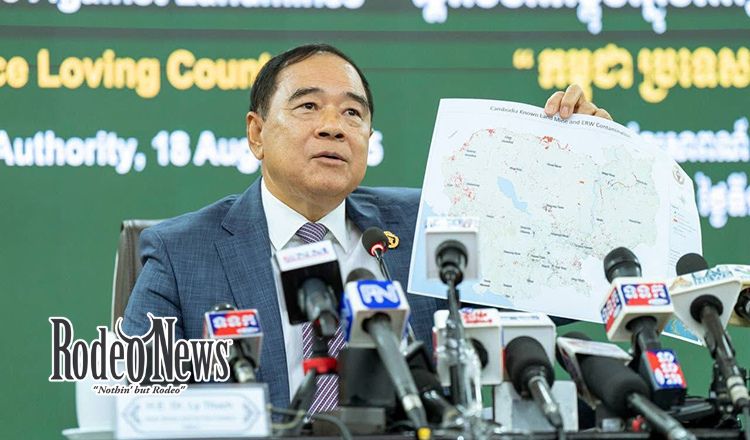
In a formal statement issued by the Cambodian Mine Action and Victim Assistance Authority (CMAA), the allegations were labelled as “unilateral” and “contrary to verified facts.” The CMAA reiterated that Cambodia has not laid anti-personnel mines for over three decades, underscoring the nation’s full compliance with the Ottawa Mine Ban Convention.
“We have not deployed anti-personnel mines since becoming a State Party to the Ottawa Convention,” the CMAA’s statement asserted. “Our armed forces operate under both national and international obligations, and there is no record of any authorization for such activities.”
Cambodia’s Long-Standing Commitment to Mine Action
Cambodia’s authorities have emphasized the nation’s strong record in mine clearance, underscoring that landmine contamination along the Thai-Cambodian border is a historical issue dating back to conflicts between the 1970s and the 1990s. The Cambodian government highlighted the complexities surrounding mine contamination, which was the result of military actions from various factions during the turbulent years of the Khmer Rouge regime and subsequent civil unrest.
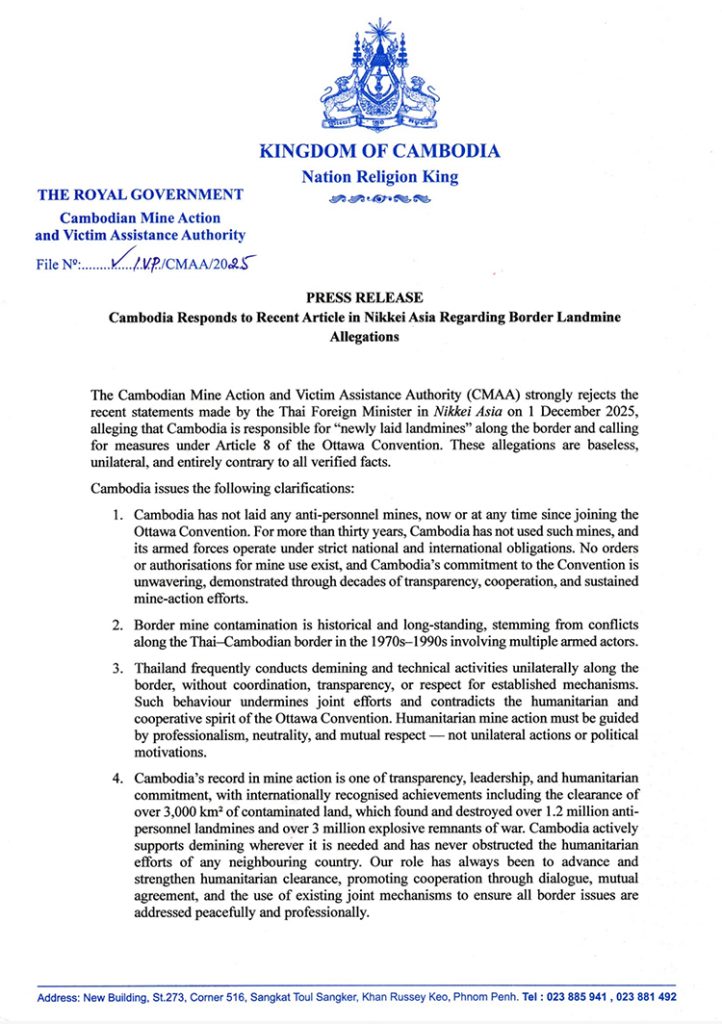
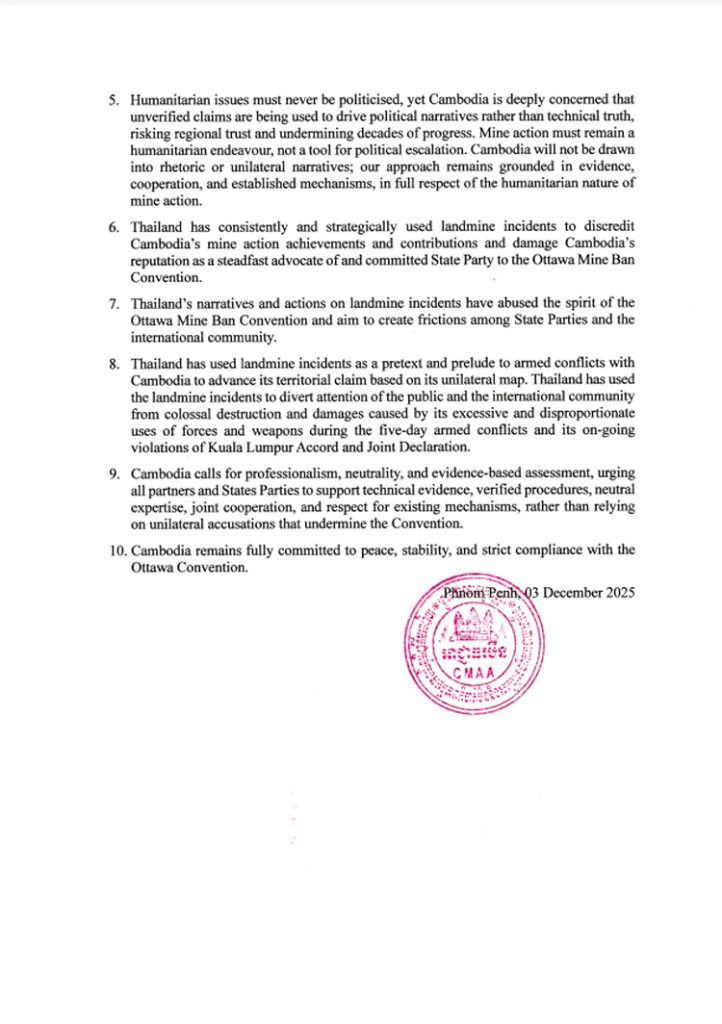
Since joining the Ottawa Convention in 1999, Cambodia has remained dedicated to the humanitarian principles of mine action. According to CMAA, Cambodia has removed over 1.2 million anti-personnel mines and over 3 million explosive remnants of war (ERWs), clearing more than 3,000 square kilometers of contaminated land. These efforts are widely recognized on the international stage.
The Cambodian government also addressed concerns over Thailand’s unilateral demining activities. According to the CMAA, Thailand has carried out mine clearance operations without coordination with Cambodian authorities, potentially undermining established regional mechanisms. This lack of transparency, Cambodia argues, is contrary to the cooperative spirit that the Ottawa Convention advocates.
“We believe that demining operations should be coordinated across borders to ensure the safety and effectiveness of these efforts,” the statement read. “Unilateral actions not only complicate clearance activities but also jeopardize the overall humanitarian objectives of the Ottawa Convention.”
Calls for Neutrality and Professionalism in Addressing Mine Issues
While Cambodia has consistently expressed support for demining activities in the region, the CMAA expressed concern that allegations of this nature could politicize what should remain a humanitarian issue. The statement warned that Thailand’s accusations could harm the trust built over years of cooperation and undermine the delicate peace efforts along the border.
“The politicization of humanitarian issues, particularly in relation to landmines, risks creating unnecessary tension between countries,” the CMAA said. “These unverified claims have the potential to escalate territorial disputes and jeopardize the fragile stability of the region.”
Cambodia urged both Thailand and the international community to approach these issues with professionalism, neutrality, and adherence to verified technical procedures. The CMAA emphasized that the focus should remain on saving lives through mine clearance, not on advancing political narratives or territorial claims.
“Mine action must not become a platform for political escalation,” Cambodia asserted. “The priority must always be to save lives and restore dignity to those affected by landmines. We continue to support humanitarian demining efforts across the globe, and we call on all parties to work together with the spirit of cooperation and mutual respect.”
Conclusion: A Call for Evidence-Based Dialogue
In closing, Cambodia reaffirmed its unwavering commitment to peace, stability, and the global humanitarian efforts to eliminate landmines. The government called on States Parties to the Ottawa Convention to continue working through established channels, such as the UN Mine Action Service, to address landmine contamination in a collaborative and evidence-based manner.
As the situation unfolds, the Cambodian government remains resolute in its stance, stressing that the eradication of landmines should never be clouded by political agendas but driven by a shared commitment to saving lives and ensuring a mine-free future for all.