Torn Apart by the Darkness: What Would Really Happen If a Human Fell Into a Black Hole?
Imagine drifting through space, your only companion the silence of the vacuum and a spacesuit protecting your fragile human form. Then you see it ahead: a darkness so intense no light escapes — a black hole. There is no turning back. This article takes you on a journey into what would happen if a human fell into a black hole, based on current astrophysical understanding and vivid narrative.
What You Would See and Feel
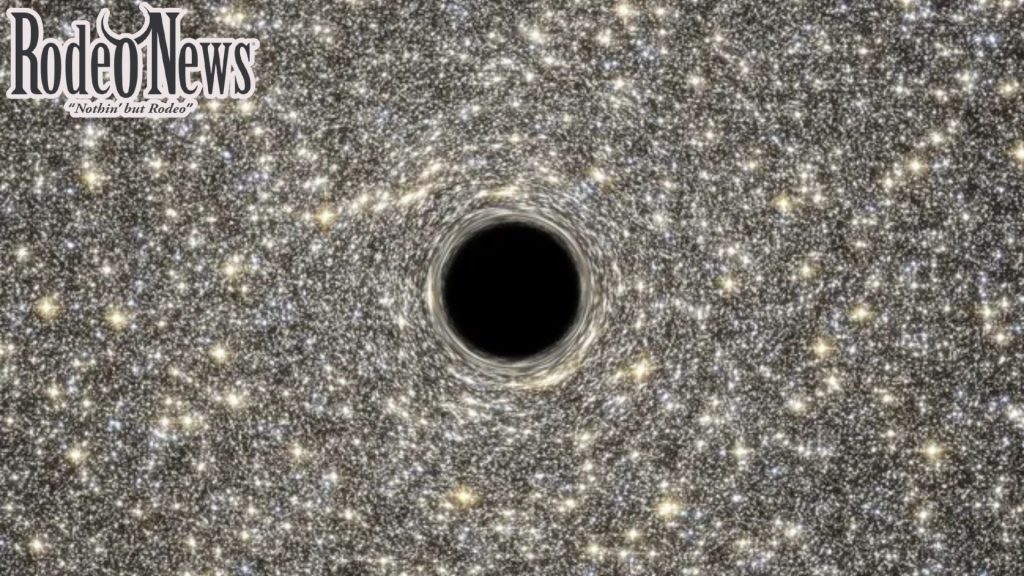
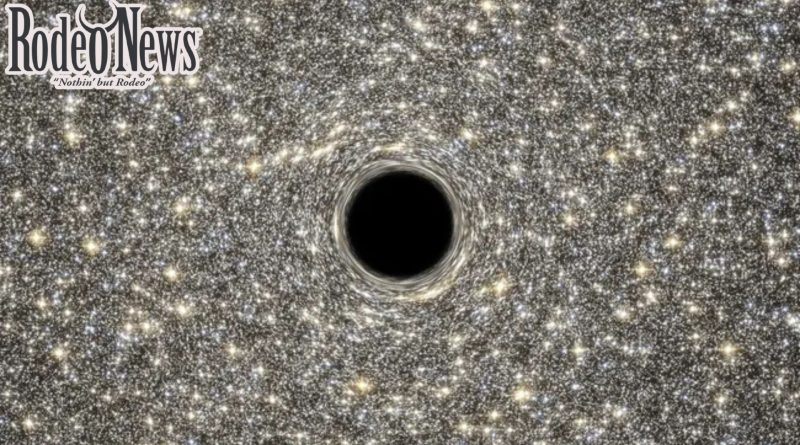
Your descent begins innocently enough: stars shining in a brilliant field, your gloves floating in front of you in zero gravity. Slowly, though, the darkness grows. That dark sphere ahead isn’t empty space—it’s the event horizon, the boundary beyond which nothing returns.
happen to light. The stars’ glow multiplies, appears in different places, and bends around the black hole. Gravity warps not just space, but what you can see. You may see phantom echoes of stars, distorted by gravity’s unrelenting pull.
In the vacuum, there’s no wind, no rushing air, no external noise. All you hear is your own breath, your heartbeat. Your heart pounds as if sensing finality. The emptiness is horrifying and beautiful
Crossing the Point of No Return
When you pass the event horizon of the black hole, the known rules of physics begin to twist. Space and time trade roles; up is indistinguishable from down; there is no escape. You realise you cannot return to tell your tale. Everything ahead is unknown. Live Science
Size matters. If the black hole is super-massive (as big as a solar system), you might cross the event horizon relatively calmly, unaware of the change. But even then, your end may come in hours. If it’s smaller, the forces are more brutal, and you’ll feel the lethal effects sooner.
The Ultimate Fate: Spaghettification and the Singularity
Your body begins to stretch. Not like being pulled on a rack, but like your lower half is being drawn faster than your upper half. Your cells, muscles, nerves, even DNA, are stretched apart. This process is known as spaghettification. You feel almost nothing as your body is torn. Then you’re gone. Live Science
At the heart lies the singularity—a point of infinite density where space and time collapse. All matter that enters the event horizon is destined for that core. What happens past that point is beyond current physics.
Why This Happens: The Physics Behind the Horror
Extreme gravity: A black hole’s gravity is so intense that even light cannot escape. That’s why it appears black.
Tidal forces: The difference in gravitational pull between your feet and head becomes enormous near the event horizon, causing stretching.
Space-time distortion: Near a black hole, time slows relative to the outside, and paths of light curve dramatically.
Singularity: Our current theories cannot fully describe what happens at the singularity, making it the ultimate “no-return” zone.
The Takeaway
Falling into a black hole is both awe-inspiring and horrifying. You’d witness bizarre visual phenomena, feel your body distorted without realising it, and ultimately be pulled into a realm beyond physics. It’s a journey that no one can survive or report on. The darkness doesn’t just consume matter—it consumes all possibility of return.