Tesla Cybercab: 7 Shocking New Details Revealed
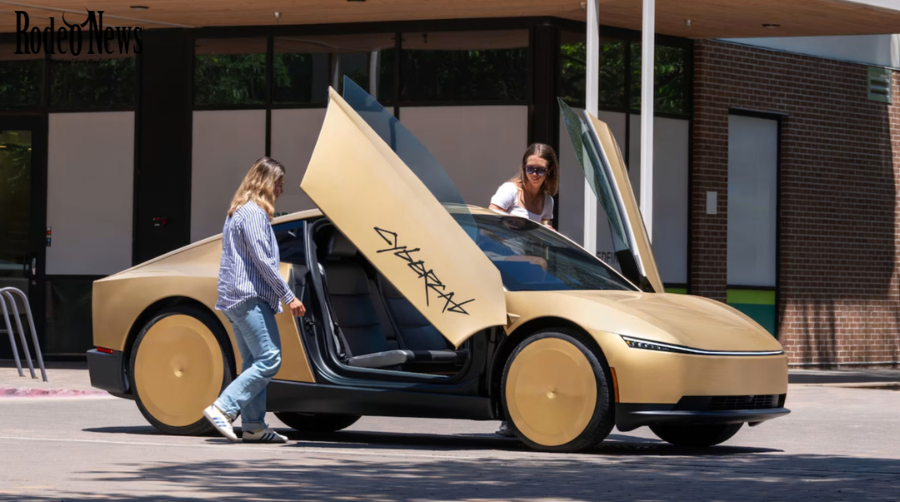
The Tesla Cybercab has officially entered a new phase, and some of the most important details are not about its futuristic gold exterior. Tesla’s driverless vehicle comes with strict rules for passengers, unusual accessibility features, a two-person cabin and a growing list of questions surrounding how the autonomous car will operate in the real world.
Tesla has begun offering Cybercab rides in limited areas of Austin, Texas. The vehicle is designed as a fully autonomous two-seater without a steering wheel or traditional driving pedals. According to Tesla, Cybercab uses camera vision and sensors to navigate roads without a human driver.
The rollout is one of the most significant steps yet in Tesla’s long-running robotaxi ambitions. However, it also arrives as regulators examine the company’s decision to put a vehicle without conventional manual controls onto public roads.
Here are seven important details about the Tesla Cybercab that potential passengers and technology watchers should know.
1. Tesla Cybercab Has a Strict Age Limit
One of the biggest surprises is the Cybercab’s restriction on younger children.
Tesla’s official rider rules state that passengers younger than 13 are not permitted to ride in a Cybercab. Teenagers between 13 and 17 can use the vehicle, but they must be accompanied by an adult.
That makes the Cybercab different from what some people might expect from a conventional taxi service.
For families, the restriction could be especially important. Parents traveling with young children cannot simply order a Cybercab and use it as they would an ordinary rideshare vehicle.
The rule also highlights a broader challenge for autonomous transportation. A robotaxi needs to operate without a driver, but transportation services still have to account for passengers who may require additional supervision or assistance.
Tesla’s decision to set the minimum age at 13 suggests the company is taking a conservative approach while its dedicated Cybercab service remains in its early stages.
2. The Cybercab Has No Steering Wheel or Pedals
The most obvious difference between the Cybercab and a traditional automobile is inside the cabin.
There is no steering wheel for the passenger to grab and no conventional brake pedal. Tesla designed the vehicle around the assumption that the computer, rather than a human occupant, will control every aspect of the journey.
Tesla says the Cybercab is fully autonomous and uses camera vision and sensors to navigate city streets, highways, intersections and parking lots.
That design represents a major departure from today’s passenger vehicles.
Most so-called self-driving systems still require a human driver to remain ready to take control. The Cybercab, by contrast, is being designed specifically as a vehicle where the passenger is not expected to drive.
The approach is central to Tesla’s larger robotaxi strategy.
However, it is also one reason the Cybercab has attracted regulatory attention.
The National Highway Traffic Safety Administration opened an investigation after Tesla deployed the vehicles in Austin. The agency said it is examining the technical data and process Tesla used to certify the Cybercab as compliant with federal vehicle safety standards.
3. Cybercab Rides Are Currently Limited to Austin
Despite Tesla’s enormous ambitions for autonomous transportation, Cybercab availability remains limited.
Tesla currently lists Cybercab rides as being available in limited areas of Austin, Texas. The company’s broader Robotaxi service also operates with Model Y vehicles in several Texas and Florida cities.
That distinction matters.
The Cybercab itself is not yet operating as a nationwide autonomous taxi network. Instead, Tesla is beginning with a relatively contained deployment that allows the company to gather experience with the dedicated vehicle.
Austin is also a natural testing ground for Tesla.
The city is home to Tesla’s Texas headquarters and has already become an important location for the company’s autonomous vehicle ambitions.
The limited launch means most customers will have to wait before they can experience the Cybercab.
Still, the Austin deployment could become an important benchmark for Tesla’s plans to expand the technology to other markets.
4. The Cybercab Is Built for Two Passengers
The Cybercab is not designed to compete directly with larger ride-hailing vehicles when it comes to passenger capacity.
Tesla’s official specifications confirm that the vehicle can carry up to two people.
That compact configuration fits Tesla’s vision for a purpose-built robotaxi.
Instead of adapting a conventional family vehicle for autonomous driving, Tesla has created a car specifically around autonomous transportation.
The cabin features bench-style seating, while Tesla says the vehicle has enough trunk capacity for two standard check-in suitcases and two carry-on bags.
That could make the Cybercab particularly useful for individual travelers or couples.
However, the two-seat configuration also limits its usefulness for families and larger groups.
Passengers traveling with three or four people would need a different vehicle, such as Tesla’s Model Y Robotaxi.
5. Tesla Is Putting Major Focus on Accessibility
Another noteworthy part of the Cybercab is its accessibility design.
Tesla says the vehicle includes bench-style seating positioned at wheelchair height to make transfers easier. It also provides trunk space for wheelchairs and other assistive equipment.
The cabin is also designed to accommodate service animals.
In addition, Tesla says Cybercab includes Braille markings on doors and overhead buttons, as well as audio and visual supplemental features accessible through the vehicle’s touchscreen and Robotaxi app.
These features are important because autonomous transportation cannot succeed simply by removing the driver.
The service also needs to work for passengers with different mobility and accessibility requirements.
For Tesla, the Cybercab provides an opportunity to rethink the passenger experience from the ground up.
Rather than adding autonomous technology to an existing vehicle, the company can design the interior around passengers who never need to sit behind a steering wheel.
6. Passengers Control the Ride Through an App
Without a steering wheel or pedals, the Cybercab needs a different way for passengers to interact with the vehicle.
Tesla’s Robotaxi app plays a major role.
Once the Cybercab arrives, passengers can verify the vehicle using its license plate information. They can then open the doors through the app, enter the vehicle, fasten their seat belts and tap a button in the app to start the ride.
Passengers can also use the app to interact with certain vehicle functions.
Tesla says users can adjust climate settings and seat positions. Entertainment features, including music streaming, are available through the vehicle’s touchscreen or the Robotaxi app.
The company also says passenger preferences can be saved to a profile and carried over between rides.
That creates an experience closer to using a smart transportation service than owning or driving a conventional car.
The vehicle itself becomes an extension of the software.
7. Tesla Cybercab Is Facing a Major Regulatory Test
Perhaps the most consequential development surrounding the Cybercab is not a passenger feature at all.
It is the regulatory challenge.
The NHTSA announced an investigation shortly after Tesla placed Cybercabs on public roads in Austin. The agency said federal vehicle safety regulations currently require certain manual controls, including brake pedals, although the U.S. Department of Transportation has proposed changes for vehicles designed to operate autonomously.
Tesla has told regulators that it self-certified the Cybercab as compliant with applicable Federal Motor Vehicle Safety Standards.
The NHTSA investigation is examining the technical information and certification process behind that claim.
This is significant because Tesla’s approach is not happening in isolation.
Amazon-owned Zoox previously went through a similar regulatory process for its purpose-built autonomous vehicle, which also lacks conventional steering and pedal controls. According to TechCrunch, Zoox eventually received a temporary exemption before beginning commercial robotaxi operations.
Tesla could therefore face an important regulatory test as it tries to scale the Cybercab.
The outcome could influence not only Tesla but the broader autonomous vehicle industry.
Why the Cybercab Matters to Tesla
The Cybercab represents much more than another Tesla model.
The company has spent years promoting a future in which autonomous vehicles could become a major transportation business. Instead of selling cars only to people who drive them, Tesla wants its vehicles to operate as robotaxis.
That could fundamentally change the economics of vehicle ownership.
A privately owned vehicle often sits unused for most of the day. An autonomous robotaxi, in theory, could spend much more time transporting passengers.
Tesla has also signaled interest in expanding beyond operating its own fleet. The company recently published a form asking businesses about purchasing Cybercab fleets or providing infrastructure for its robotaxi network, suggesting that third-party commercial operators could eventually play a role.
If that strategy succeeds, the Cybercab could become a platform rather than simply a vehicle.
But reaching that point will require Tesla to solve several difficult problems at once.
The technology must work reliably. Regulators must approve the vehicles. Passengers must trust them. Tesla must also demonstrate that autonomous transportation can operate safely and economically at scale.
Tesla Cybercab Enters a Critical New Era
The latest Cybercab details reveal a vehicle that is simultaneously futuristic and surprisingly restrictive.
Children under 13 cannot ride. Only two passengers can fit inside. There is no steering wheel or pedal system. Passengers depend heavily on Tesla’s app and touchscreen, while accessibility features are built into the vehicle’s design.
At the same time, Tesla is trying to move from demonstrations to real-world commercial operation.
That transition is arguably the hardest part.
A prototype can operate in a controlled environment. A commercial robotaxi has to deal with unpredictable traffic, passengers, weather, road construction, emergency situations and thousands of other variables.
Tesla now has to prove that its Cybercab can handle those challenges safely.
The regulatory investigation adds another layer of uncertainty. NHTSA has made clear that autonomous vehicle innovation is important, but existing federal standards remain in effect while proposed changes are still being developed.
For Tesla, the next stage could determine whether Cybercab becomes a genuine transportation revolution or another ambitious technology that takes longer than expected to scale.
For passengers in Austin, however, the future has already arrived in a limited form.
The gold-colored two-seater is on the road, and Tesla is now getting its first real opportunity to show whether a car without a steering wheel can truly become an everyday taxi.
Image Recommendation
Suggested image: A gold Tesla Cybercab with passengers entering the vehicle.
Image ALT Text:
Tesla Cybercab robotaxi with passengers in Austin
Suggested Internal Links
Because your target website/domain was not provided, use relevant existing articles from your own site for these anchor texts:
- Tesla robotaxi technology
- Tesla self-driving cars
- latest Tesla news
- autonomous vehicle technology
- Elon Musk and Tesla
Suggested External Links
- Tesla Cybercab official FAQ
- NHTSA official website
- TechCrunch’s original reporting on the Cybercab and its regulatory investigation.