A Momentary Pause in Bloodshed
On October 10, 2025, a ceasefire took hold in Gaza, ushering in the first pause in fighting since the war erupted nearly two years ago. The truce is structured as the opening phase of a negotiated agreement: Hamas will release Israeli hostages; in return, Israel will free Palestinian prisoners and allow a dramatic increase in aid access into Gaza.
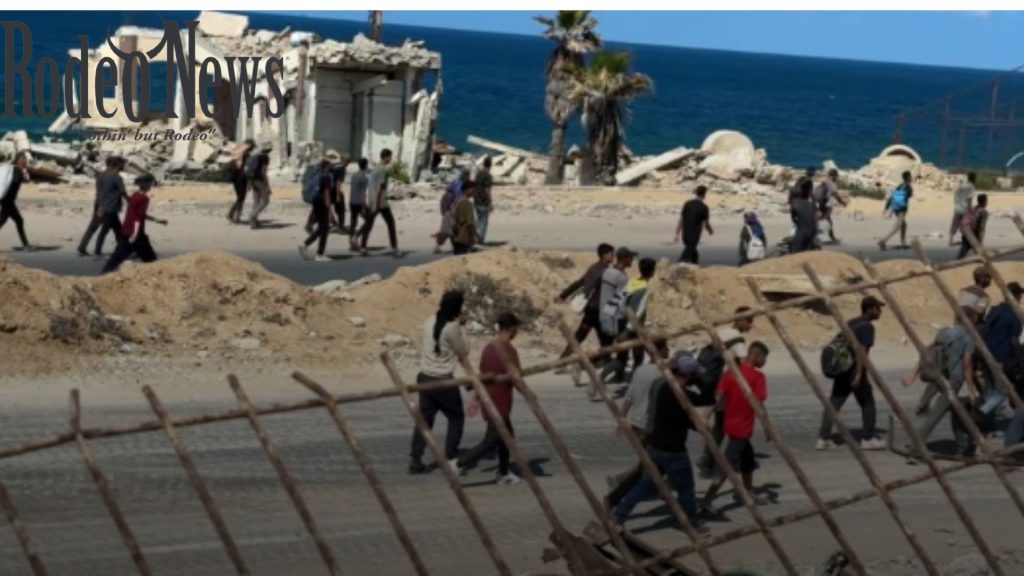
Thousands of displaced Gazans have begun making the perilous return northward, even though much of their homeland lies in ruins. Israeli forces have pulled back from key urban areas, though they maintain control over portions of the strip.
Terms of the Deal: What the Truce Includes
- Hostage Releases & Prisoner Swap
In the first phase, Hamas is expected to release Israeli hostages—including living individuals and remains—while Israel commits to freeing about 250 Palestinian prisoners (some serving long sentences) as well as detainees held for shorter terms.
However, Israel has rejected inclusion of Marwan Barghouti, a high-profile Palestinian leader, in the release list. - Humanitarian Access & Aid Influx
The agreement stipulates up to 600 aid trucks per day will enter Gaza to deliver food, medicine, shelter supplies, and fuel. Reconstruction of critical infrastructure is also set to begin, with international oversight. - Conditional Military Withdrawal
Israel has begun withdrawing from densely populated zones, but retains control over strategic areas. The complete withdrawal is contingent on Hamas’s compliance with disarmament and governance terms.
On-the-Ground Realities: Returns Amid Rubble
For many Gazans, returning is an act of courage against bleak conditions. Entire neighborhoods are reduced to piles of concrete and twisted metal. Electricity, water, and hospital systems are crippled.
Aid agencies warn that the scale of destruction and unexploded ordnance make repopulation dangerous. Even with the ceasefire, delays in verification or implementation could stall movement.
Risks and Fault Lines Ahead
- Ceasefire Fragility
The truce is time-limited and heavily conditional. Any violation—such as delayed hostage release—could reignite violence. - Governance & Disarmament Disputes
A central contention is how Gaza will be governed post-ceasefire, and whether Hamas will relinquish its military wing. Hamas rejects foreign control and disarmament without guarantees. - Political Pressure in Israel
Hardliners in Israel’s government oppose releasing long-term prisoners, fearing future security risks. The exclusion of Barghouti underscores how politically fraught the exchange is.
Why This Ceasefire Matters
This is more than a temporary halt in fighting. It represents a fragile test of trust and diplomacy after a conflict that has claimed over 67,000 Palestinian lives, displaced millions, and left Gaza’s infrastructure devastated.
If successful, it could kick‐start reconstruction, open humanitarian corridors, and lay the groundwork for future negotiations on Gaza’s long-term status. If it falls apart, it risks plunging both sides back into full-scale war.