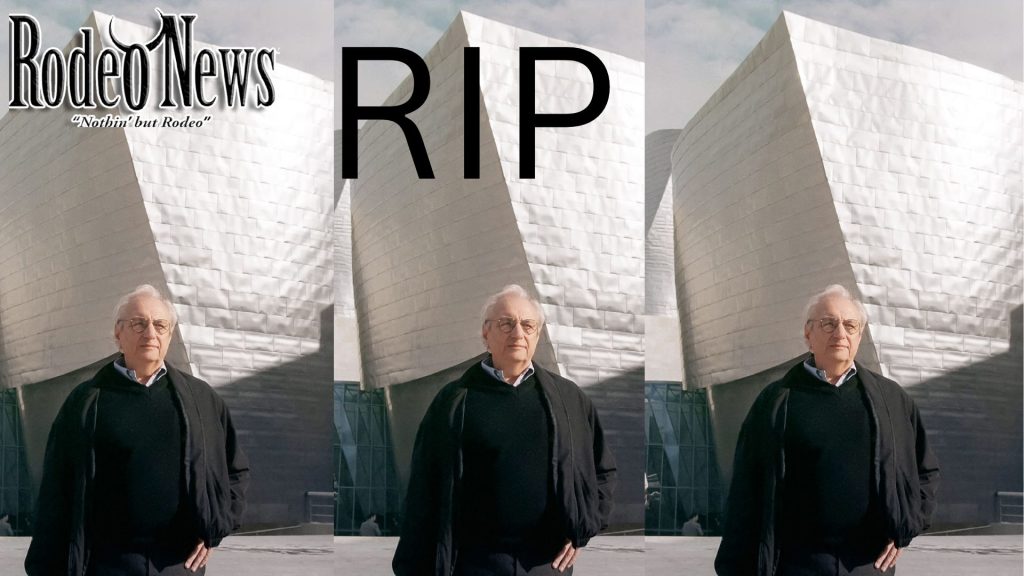
From Humble Beginnings to “Starchitect”
Born in Toronto in 1929 as Frank Owen Goldberg, Gehry grew up in a modest Jewish family, experiencing hardship and frequent moves. The Washington Post+1 He later relocated to Los Angeles, studied architecture at the University of Southern California, and — after a stint in Europe — struck out on his own, changing his name along the way. The Washington Post+1
Gehry’s early creative impulses were rooted not in clean modern lines, but in playful use of materials — he once wrapped a humble bungalow in corrugated metal and plywood, calling it “cheapskate architecture.” That audacious move foreshadowed a career of bold experiments. The Washington Post
Defying Convention: Buildings as Art
Gehry was not content with the rectilinear, predictable forms of traditional architecture. He embraced fluid curves, sculptural shapes, and unconventional materials. The result: buildings that seemed to defy gravity and redefined the relationship between architecture and art. The Washington Post+1
Two of his most famous works exemplify this transformation:
- Guggenheim Museum Bilbao in Spain: A shimmering titanium-clad museum whose sweeping curves helped spark the “Bilbao effect,” a phenomenon where bold architecture revitalizes a city culturally and economically. The Washington Post+1
- Walt Disney Concert Hall in Los Angeles: An architectural and acoustic triumph, the hall’s curved metallic surfaces and bold form made it a cultural landmark. The Washington Post+1
Beyond these, Gehry’s portfolio spanned concert halls, cultural centers, residences, and corporate campuses — each carrying his signature fearless creativity. The Guardian+1
Innovation Through Technology and Controversy
A major turning point in Gehry’s career was his embrace of technology. He adapted aerospace-engineering software (CATIA) to architecture — allowing complex, curving forms conceived in cardboard or clay to be translated into buildable, real-world structures. The Washington Post+1
But his avant-garde style wasn’t without critics. Some dismissed his buildings as chaotic or impractical. Structures like the Stata Center at MIT drew harsh criticism over cost-overruns and functional problems. The Washington Post
For Gehry, though — and many admirers — the value lay in emotion and experience. He believed architecture should “have passion … make people feel something, even if they get mad at them.” The Washington Post+1
A Legacy That Transcends Buildings
By the time he died, Gehry had become — in the words of many — not just an architect, but a cultural force. His designs blurred the boundaries between architecture, sculpture, and art. His influence reshaped how people think about buildings. The Guardian+1
He was more than a “starchitect”; he was a pioneer who helped show that architecture could be expressive, emotional, and transformative. Cities that once craved renewal now dared to dream bigger — thanks in no small part to him.
Funeral & Survivors: Gehry passed away from a brief respiratory illness. He is survived by his wife, Berta Aguilera, their two sons, and a daughter from a prior marriage. The Washington Post+1
More on Gehry’s legacy and passing