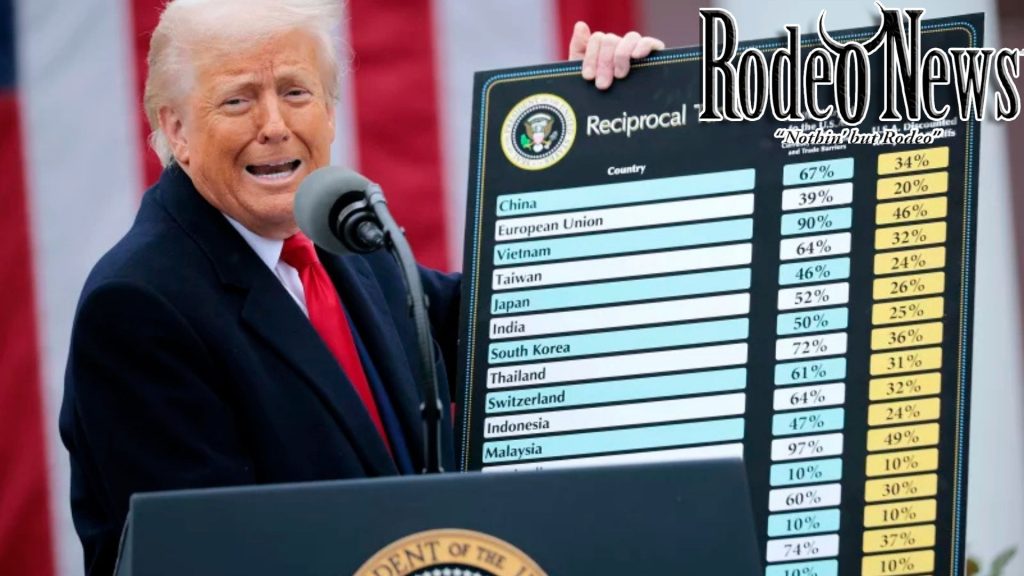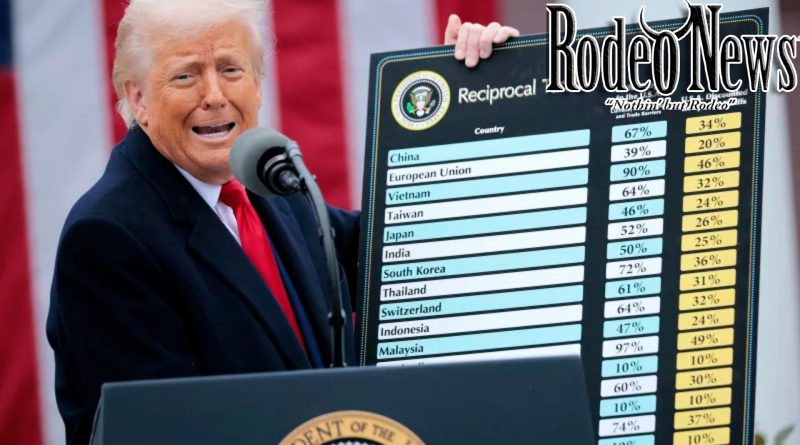
Since President Donald Trump moved forward with sweeping import taxes, the U.S. economy finds itself navigating new pressures on multiple fronts. The tariff regime — which imposes duties of 10 % or more on broad categories of imports and substantially higher on certain goods — is reshaping the cost environment for consumers, businesses and government alike.
Tariffs, Revenue and the Hidden Tax
One immediate result: the U.S. government is collecting large volumes of tariff revenue. For example, tariff and excise collections rose by roughly 78 % in the first five months of the year compared to the year prior.
But behind that windfall lies a key insight: tariffs essentially function as taxes on imported goods, and the cost tends to be passed on — ultimately borne by American businesses and households
What About Inflation?
Earlier this year, inflation appeared relatively moderate, with annual consumer price growth around 2.3 %–2.4 %. PBS However, as the higher tariffs begin to feed into supply chains and producer costs, inflation has started to tick upward. Apparel, furniture and other heavily import-dependent categories are among the first to feel the effect.
Economic Growth Under Strain
Meanwhile, growth is showing signs of stress. In the first quarter, the U.S. economy contracted at an annualised rate of –0.3 %. NPR
This slowdown is driven in part by tariff-related uncertainty: businesses delay investment and imports ahead of tariff changes, consumers delay purchases, and the usual rhythm of commerce is disrupted.
The Fed’s Dilemma
The Federal Reserve is caught in a bind. On one hand, higher tariffs raise inflationary risk; on the other, slower growth argues for easier monetary policy. In May the Fed held its benchmark rate steady, explicitly citing tariff-driven uncertainty as part of its calculus. NPR
The Bigger Picture: Costs vs. Gains
Tariffs may generate government revenue and bolster domestic producers in theory. But the broader economics suggest significant trade-offs:
- Inflation tends to rise as importers pass on costs.
- Economic growth tends to slow amid elevated uncertainty and disruption.
- Consumers absorb much of the cost, often without realizing it.
Looking Ahead: What to Watch
- Price monitoring: Will inflation continue to climb as tariffs filter through the economy?
- Policy decisions: Will the Fed keep rates higher for longer because of inflation risk, even if growth weakens?
- Business behaviour: Will firms reshape supply chains or shift sourcing to avoid tariffs — and will that lead to longer-term domestic industrial gains?
- Consumer sentiment: How will households respond if real incomes are squeezed by higher prices?
Conclusion
The tariff strategy under President Trump is proving to be a double-edged sword. While producing revenue and aiming at strengthening domestic production, it is also driving inflation pressures and slowing growth. The fiscal and monetary implications are significant — and their impact will play out over months and years. Businesses, consumers and policymakers all face the ripple effects.
If you’d like, I can expand this into a longer feature article (2,000 + words) with interviews, data charts and sector-by-sector breakdowns — would you like that?Attach
.