Trump Announces Historic Israel Lebanon Talks Set for Thursday Amid Escalating Middle East Tensions
US President Donald Trump has announced that leaders of Israel and Lebanon will hold direct talks on Thursday, marking what could be the most significant diplomatic contact between the two countries in more than three decades. The announcement comes at a time of heightened instability in the Middle East, where military tensions and fragile ceasefire efforts continue to shape the regional landscape.
The planned meeting, confirmed by Trump via his social media platform, is being viewed as a potentially historic development in the long-running conflict between Israel and Lebanon, two countries that have not held high-level direct leader-to-leader communication in approximately 34 years.
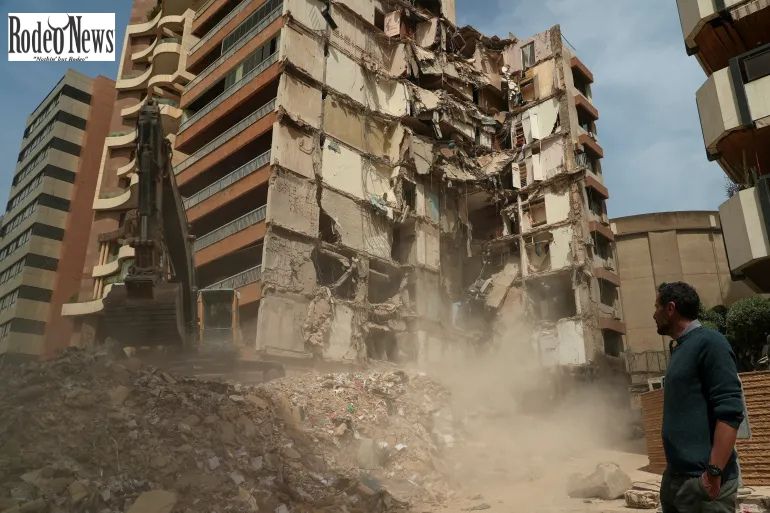
A Rare Diplomatic Breakthrough in Israel Lebanon Talks
The upcoming Israel Lebanon talks are expected to focus on reducing tensions along the border and exploring possible pathways toward de-escalation. While full details of the agenda have not been officially released, the discussions are widely believed to center on security arrangements and efforts to limit ongoing military confrontation.
Trump described the initiative as an attempt to create “a little breathing room” between the two sides, emphasizing that sustained communication could help reduce the risk of further escalation in the region.
The announcement follows a series of lower-level diplomatic contacts, including rare meetings between Israeli and Lebanese envoys held in Washington earlier this week, signaling that groundwork for direct engagement had already begun.
Background: A Long History of Hostility
Israel and Lebanon have technically remained in a state of conflict for decades, largely due to unresolved disputes involving border security, military operations, and armed groups operating in southern Lebanon.
Tensions have been especially high in recent months due to ongoing clashes involving Hezbollah, a powerful armed group based in Lebanon that has frequently exchanged fire with Israeli forces. These confrontations have contributed to thousands of casualties and widespread destruction in border regions.
Despite multiple international efforts over the years, diplomatic relations between Israel and Lebanon have never fully normalized, making the upcoming Israel Lebanon talks a rare and closely watched development.
Rising Regional Pressure and US Mediation
The United States has played a central role in facilitating indirect dialogue between the two sides. American officials have reportedly encouraged both governments to explore diplomatic solutions as part of broader efforts to stabilize the Middle East.
The announcement of direct talks comes amid a wider regional crisis involving Israel, Lebanon, Iran, and other regional actors. Ceasefire initiatives and mediation efforts have been ongoing, but results remain fragile and inconsistent.
Analysts suggest that Washington’s increasing diplomatic engagement reflects growing concern over the risk of a wider regional conflict if tensions continue to escalate unchecked.
What the Israel Lebanon Talks Could Achieve
While expectations remain cautious, the upcoming meeting could open the door to several potential outcomes:
- Establishment of communication channels between Israel and Lebanon
- Discussions on border stabilization and military de-escalation
- Potential groundwork for future ceasefire frameworks
- Increased involvement of international mediators
However, experts also warn that deep-rooted political and military divisions between the two countries may limit immediate progress.
The situation remains highly unpredictable, and it is unclear whether the talks will lead to concrete agreements or serve primarily as a symbolic diplomatic gesture.
Regional Implications of the Talks
If successful, the Israel Lebanon talks could have broader implications beyond bilateral relations. Stability along the Israel-Lebanon border is closely linked to wider regional dynamics involving Iran-backed groups, US foreign policy, and ongoing security operations in the Middle East.
Any progress in negotiations could potentially reduce military escalation risks and contribute to broader ceasefire efforts currently being explored across the region.
At the same time, continued violence or breakdowns in dialogue could further intensify instability and complicate ongoing diplomatic initiatives.
Conclusion
The announcement that Israel and Lebanon’s leaders will engage in direct talks represents a rare and potentially significant moment in Middle East diplomacy. While uncertainty remains high, the development signals renewed international efforts—led in part by the United States—to reduce tensions and prevent further escalation in one of the world’s most volatile regions.
Whether the Israel Lebanon talks lead to lasting progress or remain symbolic will depend on the willingness of both sides to translate dialogue into actionable steps toward de-escalation.