Big Boost to Cambodia Tourism as PBS Premieres Angkor Documentary
Cambodia’s tourism industry has received a timely lift following the international premiere of Angkor: Hidden Jungle Empire, a new documentary from PBS’s flagship science series NOVA, which offers striking new insights into one of Southeast Asia’s most extraordinary ancient cities.
Airing to a global audience this week, the 53-minute film explores the rise, engineering brilliance, and eventual decline of Angkor, the former capital of the Khmer Empire. Through cutting-edge archaeological research and immersive on-site visuals, the documentary paints a vivid portrait of a civilisation that once rivalled the world’s greatest urban centres.
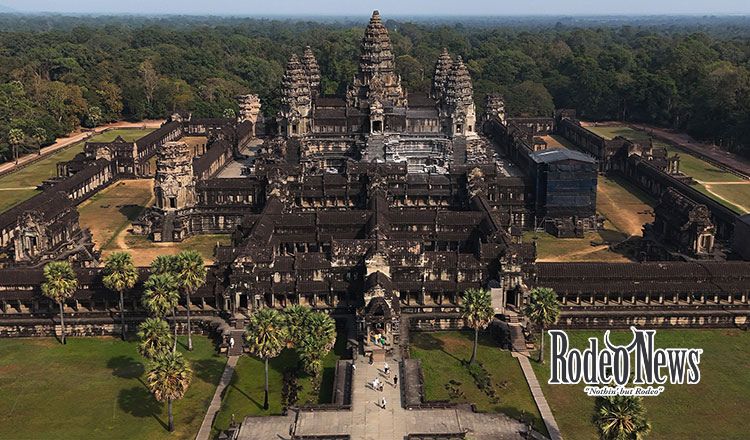
For Cambodia, the exposure comes as renewed interest in cultural and heritage tourism continues to build, particularly around Angkor Wat and the surrounding temple complexes in Siem Reap Province.
A City Larger Than History Once Imagined
At the heart of the PBS presentation is a re-evaluation of Angkor’s true scale. Long known for Angkor Wat — the world’s largest single religious monument — the ancient capital is now understood to have extended far beyond its iconic stone temples.
Recent research featured in the documentary suggests Angkor was among the largest cities on Earth at its peak, covering an area of at least 1,000 square kilometres. Beneath dense jungle canopies, scientists have uncovered the remnants of an immense urban network made up of canals, reservoirs, roads, and residential zones.
Using advanced technologies such as LiDAR (Light Detection and Ranging) and sediment analysis, researchers have been able to “see through” vegetation and map the city’s hidden infrastructure in unprecedented detail. These findings have reshaped scholarly understanding of Angkor, revealing a highly organised metropolis capable of supporting vast populations centuries before modern urban planning.
Engineering Genius — and Its Limits
One of the documentary’s central themes is the paradox that defined Angkor’s history. The same sophisticated water management systems that enabled the city to flourish may also have contributed to its decline.
Angkor’s rulers constructed a complex hydraulic network designed to control seasonal monsoons, store water during dry periods, and support intensive rice agriculture. For centuries, this system sustained the Khmer Empire’s political and economic power.
However, evidence presented in the film points to increasing environmental stress. Prolonged droughts, severe flooding, and the sheer scale of maintaining such an expansive infrastructure may have strained the city’s capacity to adapt. Over time, these pressures appear to have weakened Angkor’s resilience, contributing to its gradual abandonment between the 14th and 15th centuries.
Rather than a sudden collapse, the documentary frames Angkor’s decline as a slow, complex process shaped by climate variability, environmental degradation, and human decision-making.
International Collaboration and Cambodian Expertise
Angkor: Hidden Jungle Empire places strong emphasis on collaboration between international researchers and Cambodian experts. Archaeologists, historians, and local scholars featured in the film highlight the importance of combining modern science with regional knowledge to interpret Angkor’s legacy.
The documentary also underscores Cambodia’s ongoing efforts to preserve and study the site. While much of Angkor remains buried or only partially explored, decades of conservation work have stabilised key temples and improved understanding of the broader landscape.
Today, Angkor stands not only as a symbol of national heritage but also as a global case study in ancient urbanism and environmental sustainability.
Tourism Impact and Preservation Challenges
The global reach of PBS and NOVA is expected to translate into increased international attention for Cambodia’s most famous historical site. NOVA remains the most-watched primetime science series on American television, averaging millions of viewers per week and attracting audiences interested in history, science, and culture.
Tourism officials and industry observers say such exposure can have a direct impact on travel interest, particularly among long-haul visitors from North America and Europe. Prior to the pandemic, Angkor attracted millions of visitors annually, with international tourism forming a key pillar of Cambodia’s economy.
In recent years, visitor numbers have begun to recover, with nearly one million tourists estimated to have visited Angkor last year. Many of the site’s major temples have been restored, while others remain intentionally untouched to preserve their archaeological integrity.
However, experts also caution that growing popularity presents significant challenges. Increased foot traffic, environmental pressure, and urban development around Siem Reap raise concerns about long-term preservation. Balancing tourism growth with conservation remains a central issue for authorities managing the UNESCO World Heritage Site.
A Global Spotlight on an Ancient Empire
By combining dramatic visuals with the latest scientific discoveries, Angkor: Hidden Jungle Empire brings new depth to a civilisation that once dominated mainland Southeast Asia. The documentary reframes Angkor not merely as a collection of temples, but as a vast, living city shaped by innovation, ambition, and environmental limits.
For Cambodia, the timing could not be better. As global travel rebounds, renewed fascination with Angkor’s hidden past may encourage a new generation of visitors to explore the country’s cultural heart — while reminding the world of the enduring lessons buried beneath the jungle.