

Hegseth: “We Didn’t Start This War,” but Trump Administration Vows to Finish It
WASHINGTON — Defense Secretary Pete Hegseth delivered the clearest signal yet that the United States is preparing for a sustained military campaign against Iran, declaring Monday that while Washington did not initiate the conflict, it intends to see it through under President Donald Trump.
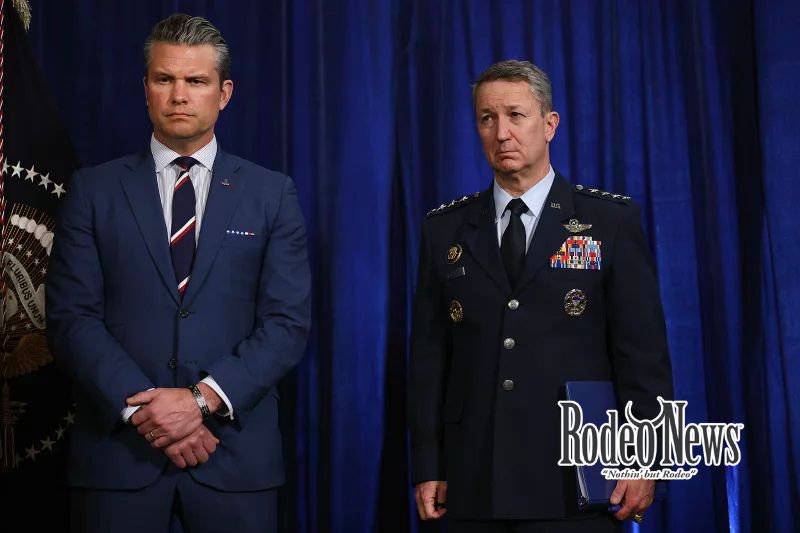
“We didn’t start this war, but under President Trump we’re finishing it,” Hegseth told reporters at the Pentagon, framing the joint U.S.-Israeli military operations as a long-awaited response to what he described as years of Iranian aggression targeting American forces and interests globally.
The remarks marked the administration’s first public comments since coordinated U.S.-Israeli strikes began over the weekend. The military action followed weeks of tense diplomatic engagement aimed at avoiding open confrontation. Those efforts collapsed as the region edged closer to full-scale war.
A Conflict That Escalated Quickly
Since operations began Saturday, the conflict has widened dramatically. Iranian retaliatory strikes have reached beyond their borders, pulling additional Middle Eastern actors into the crisis and heightening fears of a broader regional war.
The violence has come at significant cost. Four American service members were killed in Kuwait amid Iranian missile retaliation, according to U.S. officials. Meanwhile, Iran’s supreme leader and several senior figures within the country’s military and political establishment were confirmed dead following precision strikes that targeted Tehran’s command structure.
“This is not a so-called regime change war,” Hegseth said. “But the regime sure did change. And the world is better off for it.”
His comment appeared to acknowledge the seismic political shift inside Iran while distancing the administration from accusations that Washington deliberately sought to overthrow Tehran’s leadership.
Military Objectives: “No Nukes, No Missile Threat”
Standing alongside Hegseth, Gen. Dan Caine, chairman of the Joint Chiefs of Staff, cautioned that the road ahead would be difficult.
“The military objective in Iran will be difficult to achieve, and in some cases will be difficult and gritty work,” Caine said. “We expect to take additional losses, and as always, we will work to minimize losses.”
According to Pentagon officials, the initial phase of the campaign focused on crippling Iran’s command-and-control systems, naval assets, ballistic missile launch sites and intelligence infrastructure. The aim, Caine said, was to leave Iranian forces “without the ability to see, coordinate or respond effectively.”
Hegseth distilled the mission into three blunt goals: “Destroy the missile threats, destroy the navy, no nukes.”
Administration officials insist the campaign is not designed to evolve into a prolonged occupation or nation-building effort — a point repeatedly emphasized amid memories of America’s extended wars in Iraq and Afghanistan.
“There will be no nation-building,” Hegseth said. “This is about neutralizing threats to the United States and our allies.”
Planning Years in the Making
While the current escalation unfolded rapidly in public view, Caine indicated that much of the operational groundwork had been laid long ago.
“Some of this work is the result of months, and in some cases years, of deliberate planning and refinement,” he said.
Defense analysts note that contingency plans for strikes on Iran’s missile networks and naval capabilities have existed for decades, updated through successive administrations as tensions ebbed and flowed. What changed, they say, was the political decision to activate those plans in coordination with Israel.
The Israeli government has long argued that Iran’s ballistic missile program and regional proxy networks posed an existential threat. The latest operations appear to reflect unprecedented military synchronization between Washington and Jerusalem.
Trump Signals Weeks of Combat
In an interview with The New York Times published Sunday, Trump suggested the fighting could continue for “four to five weeks” if necessary.
Combat operations will persist, he said, “until all U.S. objectives are achieved,” though he declined to specify those objectives in detail.
The timeline hints at a campaign measured in weeks rather than days, despite official assurances that the United States is not seeking a drawn-out war. Military experts caution that Iran’s asymmetric capabilities — including proxy militias and cyber operations — could complicate any prediction of a quick resolution.
Regional bases housing U.S. forces remain on heightened alert. Naval assets in the Persian Gulf have repositioned, and additional air defense systems have been deployed to protect American installations.
Regional Fallout and Global Implications
The broader geopolitical implications remain uncertain. Oil markets have reacted sharply to the instability, while diplomatic channels between Washington and European capitals are reportedly working overtime to prevent further escalation.
Allies across the Middle East face delicate calculations. Some governments have quietly supported efforts to blunt Iranian power projection. Others fear that sustained fighting could ignite domestic unrest or inflame sectarian tensions.
Caine described the mission in defensive terms: “To protect and defend ourselves, and together with our regional partners, prevent Iran from the ability to project power outside of its borders.”
Yet even as U.S. officials frame the campaign as limited in scope, the removal of Iran’s top leadership represents a profound transformation of the country’s political order — one that could usher in either instability or recalibration.
A War Redefined
Hegseth’s assertion that “we didn’t start this war” underscores the administration’s effort to cast the conflict as reactive rather than preemptive. For years, Washington has accused Tehran of orchestrating attacks through proxy forces across the region, from Iraq to Syria and beyond.
Now, with direct confrontation underway, the administration is betting that decisive force can reset the balance.
Whether that gamble produces lasting deterrence — or deepens volatility — remains to be seen.
For now, the Pentagon is preparing Americans for a campaign that may intensify before it winds down.
“We know what the objective is,” Hegseth said. “And we intend to finish it.”