
Enceladus Life: 2 Studies Reveal New Clues
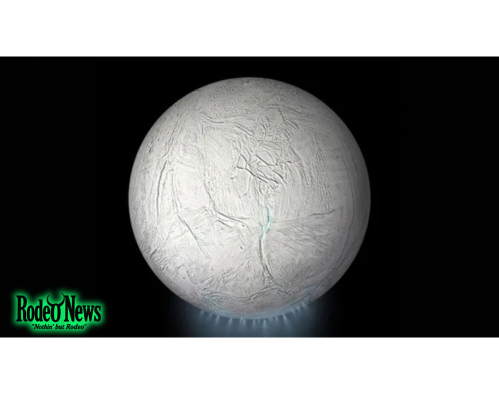
The search for Enceladus life has gained new momentum after scientists found that an Earth microorganism can survive under laboratory conditions designed to mimic the harsh environment of Saturn’s icy moon. At the same time, researchers have found that the moon’s spectacular water plumes could naturally concentrate possible biological material, potentially making future searches for life easier.
The findings do not prove that life exists on Enceladus. Instead, they address two important questions in the search for extraterrestrial life: could microorganisms survive in the moon’s underground ocean, and could a spacecraft actually detect evidence of them?
The answers from two new studies are encouraging.
Researchers recreated key chemical conditions believed to exist beneath Enceladus’ frozen surface. They then introduced a methane-producing microorganism associated with deep-sea hydrothermal environments on Earth. The organism survived and continued producing methane despite conditions that previously appeared difficult for such microbes.
A separate study examined what happens to material from Enceladus’ ocean when it erupts through the moon’s south-polar cracks and freezes into ice particles. The process could separate biological material from other substances, leaving potential biosignatures concentrated in individual ice grains.
Together, the studies provide a new reason for scientists to regard Enceladus as a particularly promising destination in the search for life beyond Earth.
Enceladus Life Search Gets a Major New Clue
Enceladus is relatively small, measuring roughly 300 miles (500 kilometers) across. Yet beneath its bright, frozen exterior is believed to be a global liquid-water ocean.
The moon became a major target for astrobiologists after NASA’s Cassini spacecraft discovered enormous plumes erupting from fractures near its south pole.
Those plumes are crucial because they effectively give spacecraft a way to sample material originating from the hidden ocean without drilling through miles of ice.
NASA’s Cassini mission previously detected a wide range of chemical compounds in particles originating from Enceladus. In 2023, scientists reported evidence of phosphorus, an element essential to life as we know it, in salt-rich ice grains ejected from the moon.
More recently, NASA reported that Cassini data revealed previously undetected organic compounds in fresh ice particles coming directly from the subsurface ocean. Researchers described the material as particularly valuable because the particles had been ejected from the ocean only minutes before Cassini encountered them.
These discoveries do not demonstrate biology. But they show that Enceladus has several ingredients and environmental processes that make it scientifically interesting as a possible habitat.
Enceladus Microbes Survived Extreme Conditions
The new laboratory research takes the question a step further.
Scientists recreated an environment resembling the chemistry expected inside Enceladus’ ocean. The simulated environment was extremely alkaline, with a pH reaching about 11.
It also contained very little oxygen.
That combination would be difficult for many organisms on Earth. However, the researchers selected a microorganism that is adapted to environments where oxygen is not required.
The organism, Methanothermococcus okinawensis, is a methane-producing archaeon associated with deep-sea hydrothermal environments near Japan.
Instead of relying on oxygen, these microorganisms can use hydrogen and carbon dioxide as part of their metabolism, producing methane.
That is important because water-rock reactions on Enceladus may generate hydrogen in the moon’s ocean.
The laboratory experiment therefore tested whether a type of metabolism known on Earth could function under conditions resembling those scientists expect inside the Saturnian moon.
The results were surprising.
The microorganism continued growing in the simulated Enceladus environment and adapted to low concentrations of carbon dioxide.
Researchers emphasized that this is not evidence that the same organism exists on Enceladus.
Instead, the experiment demonstrates that one known form of microbial metabolism can remain viable under conditions that could occur there.
Why the Ocean Beneath Enceladus Matters
Liquid water is one of the most important requirements considered in the scientific search for life.
Enceladus appears to have plenty of it.
The moon’s outer surface is dominated by water ice, but gravitational measurements and other observations have provided evidence for a large ocean beneath the frozen crust.
The ocean is particularly interesting because it is not simply a passive reservoir of water.
Scientists believe chemical reactions occur where the ocean interacts with the rocky seafloor.
Those reactions could generate chemical energy that microorganisms might potentially use.
This is where Enceladus differs from a simple frozen world.
Its internal environment may contain three important ingredients for habitability: liquid water, chemical compounds and an energy source.
The new laboratory results suggest that at least one microbial metabolic pathway can operate in such an environment.
However, habitability and inhabited are not the same thing.
A world can have conditions capable of supporting life without life ever developing there.
Enceladus Plumes Could Make Life Easier to Find
The second new study addresses a different challenge.
Even if microorganisms exist beneath Enceladus’ ice, how could scientists detect them?
A spacecraft cannot simply look through the moon’s crust.
Fortunately, Enceladus naturally sends material from its ocean into space.
The moon’s south-polar fractures produce powerful plumes containing water vapor and ice particles. These particles can travel into space, where spacecraft can potentially analyze them.
The new research suggests that the freezing process may help scientists identify biological material.
As droplets from the ocean freeze, different substances can become separated. Some ice particles could contain biological material at higher concentrations than the original ocean water.
That means a spacecraft may not need to detect life everywhere in the plume.
Instead, it could search for individual particles containing unusually concentrated organic or microbial material.
That could significantly simplify the search.
Scientists Could Look for Biosignatures in Individual Ice Grains
A biosignature is a measurable feature that could provide evidence of biological activity.
Finding one would not automatically prove extraterrestrial life. Scientists would need to rule out nonbiological explanations and independently verify the result.
Nevertheless, concentrated biosignatures would be extremely valuable.
Frank Postberg of Freie Universität Berlin, who worked on the new research, said future spacecraft could analyze individual ice particles in Enceladus’ plume. If a particle contained microbial material, existing analytical technology could potentially identify relevant biosignatures.
This is one of the most important implications of the new studies.
Scientists are not simply learning that Enceladus could be habitable. They are also learning how its natural environment might help expose material from the hidden ocean.
In effect, the moon could be sampling itself.
Cassini Already Demonstrated the Opportunity
The idea of sampling Enceladus’ ocean indirectly is not theoretical.
NASA’s Cassini spacecraft repeatedly flew through the moon’s environment during its mission around Saturn.
Cassini’s instruments detected water ice particles and analyzed their chemical composition.
In 2025, NASA reported a new analysis of Cassini data that identified additional organic compounds in fresh ice grains originating from Enceladus’ ocean. The study added to earlier evidence that chemically complex material is present beneath the moon’s surface.
Cassini also detected phosphorus in particles associated with the moon’s ocean.
Phosphorus is important because it plays a central role in biological molecules on Earth, including DNA, RNA and cellular energy systems. NASA reported that the concentration of phosphate in Enceladus’ ocean could be substantially higher than in Earth’s oceans.
Again, none of these findings establishes life.
But the discoveries have progressively strengthened the scientific case for investigating Enceladus.
The New Research Does Not Mean Scientists Found Aliens
The distinction is important.
Headlines about microbes surviving on Enceladus-like conditions can easily be interpreted as evidence that life has already been found.
That is not what the research shows.
The microorganisms used in the laboratory were from Earth. Researchers placed them in an artificial environment designed to reproduce important aspects of Enceladus’ ocean.
Their survival demonstrates possibility, not discovery.
Scientists also do not know whether life ever emerged on Enceladus.
Even if the moon has suitable conditions, there could be no organisms living there.
The experiments also lasted for a limited period. Researchers therefore cannot yet say whether organisms could remain viable for years, centuries or millions of years under actual Enceladus conditions.
There is another major uncertainty.
Any hypothetical Enceladus organisms could be fundamentally different from life on Earth.
Scientists use terrestrial organisms as experimental models because they are available for laboratory testing. That does not mean extraterrestrial biology would necessarily follow the same pathways.
Hydrothermal Activity Could Be the Key
One of the most intriguing aspects of Enceladus is the possible interaction between its ocean and rocky interior.
On Earth, hydrothermal vents support ecosystems in environments where sunlight cannot penetrate.
Instead of relying on photosynthesis, microorganisms around these vents can use chemical reactions to obtain energy.
Some microbes consume hydrogen and carbon dioxide and release methane.
The new experiment was designed around this type of metabolism.
Researchers reproduced water-rock reactions believed to occur inside Enceladus and found that those reactions generated hydrogen that the microorganisms could use.
This provides an important model for how microbial ecosystems could theoretically survive in a dark ocean beneath an icy crust.
It does not establish that such an ecosystem exists.
But it removes another obstacle from the scientific case for possible microbial life.
Future Missions Could Search Directly for Evidence
The findings could influence the design of future missions to Enceladus.
A spacecraft would ideally need instruments capable of analyzing individual ice particles with extremely high sensitivity.
Instead of simply measuring the overall chemical composition of the plume, scientists could search for specific particles containing complex organic material or possible microbial structures.
That approach could make the search more targeted.
Freie Universität Berlin notes that future missions, including an ESA concept currently being planned, could investigate the moon specifically for signs of life.
Such a mission would face major technical challenges.
Saturn is more than a billion kilometers from Earth, depending on the positions of the two planets. A spacecraft would need to travel enormous distances, operate in an extremely cold environment and conduct highly sensitive measurements millions of miles from Earth.
It would also need to avoid contaminating Enceladus with microorganisms from Earth.
Planetary protection would therefore be an important part of any mission intended to search for life.
Enceladus Could Become a Priority in the Search for Life
The new research adds to a growing body of evidence that makes Enceladus one of the most compelling places to investigate for extraterrestrial biology.
Scientists now have evidence for a subsurface ocean.
They have detected organic compounds.
They have found phosphorus.
They have identified chemical processes that could generate energy.
And laboratory experiments indicate that Earth microorganisms can survive under simulated conditions resembling those of the moon’s ocean.
The moon also provides a natural sampling mechanism through its water and ice plumes.
That final point could be especially important.
On many potentially habitable worlds, scientists would need to land and drill into the surface to reach an underground ocean.
Enceladus may not require such an extreme approach.
A spacecraft could potentially fly through the plume and collect material that originated from the hidden ocean.
A New Chapter in the Search for Enceladus Life
The latest research does not announce the discovery of life on Saturn’s moon. Instead, it strengthens two critical parts of the scientific case.
First, a terrestrial microorganism demonstrated that methane-producing metabolism can function in a laboratory environment designed to resemble Enceladus’ unusual ocean chemistry.
Second, researchers found that the moon’s plume particles could potentially concentrate biological material, creating a more favorable target for spacecraft instruments.
Together, those findings make the search more practical.
The question is no longer simply whether Enceladus has an environment that could theoretically support microorganisms. Scientists are increasingly able to identify specific biological processes that might work there and specific ways future spacecraft could search for their traces.
That does not guarantee a discovery.
But if Enceladus life exists, the moon may already be sending samples of its hidden ocean into space.
And future spacecraft could be in a position to catch them.