Browns Rookie Minicamp Day 1 Observations Set Early Tone in Cleveland
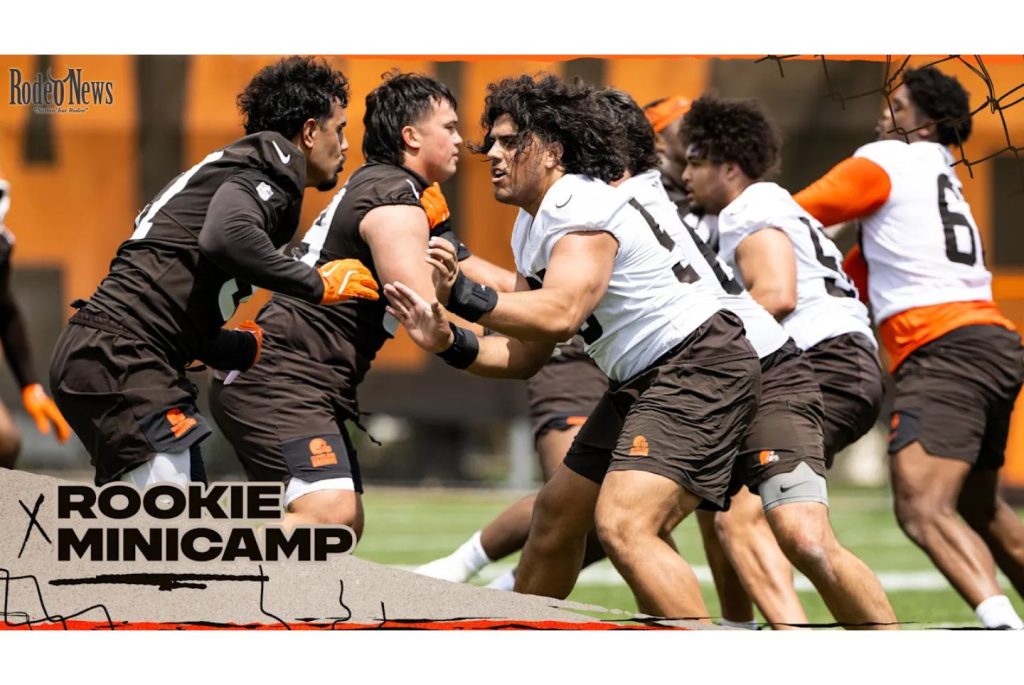
The Browns rookie minicamp Day 1 observations from Berea, Ohio offered an early glimpse into how Cleveland’s newest draft class is beginning to adjust to the speed, structure, and expectations of the NFL. While no pads were worn and the action remained controlled, the first day still provided meaningful insights into quarterback development, rookie adaptation, and the coaching staff’s early evaluation process.
For the Cleveland Browns, rookie minicamp is less about competition and more about installation, communication, and mental processing. However, even within that framework, certain trends and performances quickly stood out.
Quarterback Focus Dominates Early Action
As expected, the most closely watched part of the Browns rookie minicamp Day 1 observations centered on the quarterback room. Rookies such as Shedeur Sanders and Dillon Gabriel were at the heart of the installation work.
Early reports from practice sessions indicate that both quarterbacks received structured reps in rotation rather than a defined depth-chart order. This approach is common in rookie minicamp, where coaching staffs prioritize evaluation over competition.
Sanders showed strong command of pre-snap responsibilities and displayed the ability to work through basic progressions. However, like most rookies adjusting to NFL speed, he had moments where his pocket movement drifted under pressure.
Gabriel, meanwhile, focused heavily on timing-based throws and quick decision-making during scripted drills. Neither quarterback was asked to operate in complex defensive looks yet, as the emphasis remained on fundamentals and system learning.
This early quarterback evaluation is part of a longer developmental process that will continue through OTAs and training camp.
Coaching Staff Emphasizes Mental Processing Over Physical Play
One of the clearest themes in the Browns rookie minicamp Day 1 observations was the coaching staff’s focus on mental development rather than physical dominance.
Without pads or full-contact drills, the Browns staff concentrated on:
- Alignment discipline
- Playbook retention
- Communication in the huddle
- Pre-snap recognition
This reflects a standard NFL rookie integration strategy, where players are gradually introduced to complexity before physical competition increases.
Coaches were observed frequently stopping drills to correct positioning, terminology usage, and timing errors. These corrections are a normal part of rookie development and often matter more than any individual highlight play.
Early Offensive Rookie Adaptation
Beyond quarterbacks, several offensive rookies experienced their first exposure to NFL-level tempo.
Skill-position players worked primarily in controlled passing drills, focusing on route precision and spacing. The coaching staff emphasized timing between quarterbacks and receivers, ensuring synchronization within the offensive system.
Running backs also participated in passing-game installs, highlighting the Browns’ continued emphasis on versatile backfield usage.
While no major standout statistical performances were recorded, the overall assessment of offensive rookies was positive in terms of effort, attention, and responsiveness to coaching.
Defensive Rookies Focus on Alignment and Technique
On the defensive side, rookie players spent much of Day 1 working on fundamental positioning and assignment discipline.
Without live tackling, defensive evaluations were centered on:
- Stance consistency
- Gap recognition
- Coverage responsibility
- Communication in zone schemes
Defensive linemen were evaluated on get-off speed and hand placement during individual drills, while linebackers and defensive backs focused on coverage drops and transition mechanics.
The Browns coaching staff repeatedly emphasized discipline and assignment integrity, signaling that rookies must first master structure before earning expanded roles.
Energy and Environment Stand Out in Berea
Another notable takeaway from the Browns rookie minicamp Day 1 observations was the overall energy level of the group.
Rookies reportedly arrived early, engaged actively in walkthroughs, and maintained strong focus throughout long installation sessions. This kind of early professionalism is often seen as a positive indicator of how quickly a rookie class may adjust to NFL expectations.
The environment in Berea was structured but encouraging, with coaches reinforcing mistakes as teaching opportunities rather than performance failures.
This type of atmosphere is designed to accelerate learning curves while minimizing pressure during a player’s first NFL exposure.
No Depth Chart Conclusions Yet
Despite heavy media attention, it is important to note that no meaningful depth chart conclusions can be drawn from rookie minicamp.
The Browns coaching staff made clear through their usage patterns that rep order is not reflective of roster status or long-term positioning.
Instead, rookie minicamp serves as:
- A system introduction phase
- A communication evaluation period
- A baseline athletic and mental assessment window
Any early assumptions about starting roles or quarterback hierarchy would be premature at this stage.
What Comes Next for Browns Rookies
Following Day 1, the Browns’ rookie class will continue through several phases of development:
- Additional rookie minicamp sessions
- Organized Team Activities (OTAs)
- Mandatory minicamp
- Training camp in the summer
Each stage will introduce more complexity, speed, and competition. The real separation between players typically begins during padded practices in training camp, not rookie minicamp.
For now, Cleveland’s focus remains on installation, learning, and building a foundation for the 2026 season.
Final Takeaway
The Browns rookie minicamp Day 1 observations reveal a structured and methodical start to Cleveland’s offseason development process. While quarterbacks naturally draw the most attention, the broader story is one of adjustment, learning, and system absorption across the entire rookie class.
There are no conclusions yet—only early indicators. And in the NFL, those early indicators often matter less than how players respond when the intensity increases in the weeks ahead.