Tesla Cybercab: 5 Shocking Austin Launch Facts
Tesla has officially brought its long-awaited Tesla Cybercab into the spotlight in Austin, Texas, marking one of the company’s most consequential steps yet toward a future built around driverless transportation.
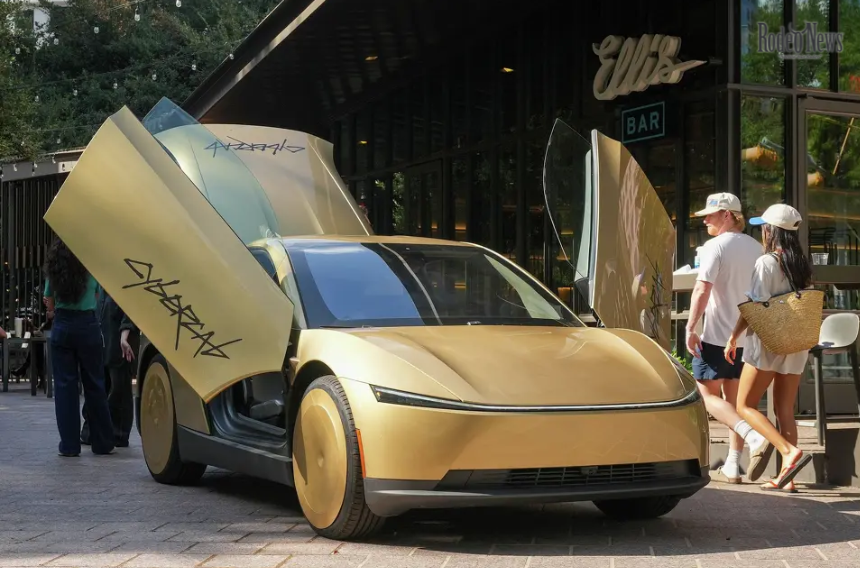
The two-seat electric vehicle is radically different from a conventional car. Most notably, the Cybercab is designed without a steering wheel or pedals, meaning passengers are not expected to take control of the vehicle during a normal ride. Reuters+1
The Austin launch comes as Tesla attempts to turn its long-running robotaxi ambitions into a commercially viable business. The company has already operated limited robotaxi services using modified versions of existing Tesla vehicles. The Cybercab, however, is intended from the beginning to be a dedicated autonomous vehicle.
That makes the Austin event more than another Tesla product unveiling. It is a test of whether Tesla can convince regulators, investors and the public that its autonomous-driving strategy is ready for a much larger scale.
Here are five of the biggest things to know.
1. Tesla Cybercab Has No Steering Wheel or Pedals
The most striking feature of the Tesla Cybercab is also the simplest to understand: there is no conventional driver-control system.
Unlike an ordinary Tesla equipped with a steering wheel and pedals, the Cybercab is designed around autonomous operation. The vehicle has two seats and is intended primarily to transport passengers rather than provide them with a traditional driving experience. Reuters+1
That design makes the Cybercab fundamentally different from Tesla’s current passenger vehicles.
It also highlights the enormous bet Tesla is making on autonomous technology.
A conventional electric vehicle can still function if its driver-assistance software is unavailable. A purpose-built Cybercab without a steering wheel or pedals cannot simply hand control back to a passenger.
The autonomous system therefore becomes the central component of the vehicle.
Tesla’s strategy is built around using artificial intelligence and its camera-based approach to navigate roads without relying on the lidar systems used by some competitors. AP News+1
If that technology performs reliably, the simpler hardware could potentially help Tesla produce autonomous vehicles at scale.
But the opposite is also true.
Any major weakness in the autonomous system could become a much larger problem because passengers have no conventional controls available to them.
2. Austin Is Becoming Tesla’s Robotaxi Test Ground
Austin has become one of the most important cities in Tesla’s autonomous-driving strategy.
Tesla has already been testing and operating robotaxi services in the Texas capital. The Cybercab launch now gives the company an opportunity to move from using existing Tesla models toward a vehicle specifically engineered for autonomous transportation. Reuters+1
The choice of Austin is significant.
Texas has developed into an important testing market for autonomous vehicles, while Tesla’s headquarters and major manufacturing operations are also located in the state.
The company’s Gigafactory Texas near Austin is closely connected to its broader plans for future vehicle production.
The Cybercab’s appearance in Austin therefore places manufacturing, testing and commercial deployment within the same regional ecosystem.
That could give Tesla an advantage if it can successfully increase production.
However, autonomous driving is not simply a manufacturing problem.
The vehicle must deal with pedestrians, cyclists, construction zones, emergency vehicles, unusual road layouts, weather conditions and unpredictable human drivers.
Austin provides a large real-world environment in which Tesla can gather data and demonstrate whether its system can operate safely.
3. Tesla Is Betting Its Future on Robotaxis
The Cybercab launch comes at an important moment for Tesla.
For years, CEO Elon Musk has described autonomous driving and robotaxis as major parts of Tesla’s future. The company increasingly presents itself not only as an electric-car manufacturer but also as an artificial-intelligence and robotics company.
The Cybercab is arguably the clearest physical representation of that strategy.
Tesla wants a vehicle that can potentially spend much more time transporting passengers than a privately owned car typically spends on the road.
A privately owned vehicle might sit parked for much of the day.
A robotaxi, by contrast, could theoretically operate for long periods, generating revenue from multiple passengers.
That changes the economics of vehicle ownership.
Instead of selling only the car, Tesla could potentially participate in a transportation network in which the vehicle continuously generates revenue.
Tesla’s official robotaxi strategy describes the broader ambition of creating a fleet of autonomous vehicles for a dedicated network. Tesla
That is why investors have been watching the Cybercab so closely.
The vehicle itself matters.
But the larger question is whether Tesla can build a profitable autonomous transportation business around it.
4. Tesla Faces Serious Competition
Tesla is not entering an empty market.
Companies such as Waymo have already established significant real-world robotaxi operations, giving them substantial experience operating autonomous vehicles with passengers.
That makes Tesla’s challenge more complicated than simply demonstrating that a Cybercab can drive itself.
Tesla needs to show that it can operate safely, reliably and economically at scale.
Waymo’s approach also differs technically from Tesla’s.
Tesla has emphasized cameras and artificial intelligence, while competitors including Waymo use a combination of sensors that includes lidar and radar. TechCrunch+1
The disagreement over sensor technology is one of the most important debates in autonomous driving.
Tesla’s approach could ultimately prove less expensive and easier to scale if its software can achieve the required level of reliability.
But competitors argue that additional sensors can provide valuable information in difficult driving situations.
The industry therefore has a major question to answer:
Can a camera-heavy system deliver truly reliable autonomy across a huge variety of real-world conditions?
The Cybercab will provide another important test.
5. Regulation and Public Trust Could Determine Success
Building an autonomous vehicle is only one part of the challenge.
Tesla must also persuade regulators that vehicles without traditional driver controls can safely operate on public roads.
Reuters reported ahead of the launch that U.S. federal regulations present restrictions around commercial deployment of vehicles without steering wheels, while Tesla also faces permitting issues in some major markets. Reuters
Those regulatory questions could determine how quickly Cybercab operations expand beyond Austin.
Public confidence is another major factor.
Even if a vehicle performs well statistically, consumers must be willing to enter it.
That is particularly important because passengers in a Cybercab are giving up direct control.
A person sitting in the back seat of a driverless vehicle cannot simply grab a steering wheel if something unexpected happens.
Tesla therefore has to build confidence through safety performance, transparency and consistent operation.
The company also faces scrutiny because its broader autonomous-driving systems have attracted regulatory attention over previous incidents and safety concerns. AP News+1
The Cybercab represents a chance for Tesla to demonstrate that it can move beyond experimental demonstrations and into dependable commercial transportation.
What Makes the Cybercab Different?
The Cybercab’s purpose-built design is arguably its biggest strategic advantage.
Existing robotaxi programs often begin with conventional vehicles that are modified with autonomous-driving hardware and software.
Tesla is taking a different approach.
The Cybercab is designed around autonomous operation from the start.
That could eventually allow Tesla to eliminate components associated with conventional driving and optimize the interior for passengers.
The two-seat configuration is another important detail.
Rather than attempting to replace a traditional family car, the Cybercab is designed primarily for point-to-point transportation.
That means Tesla can optimize the vehicle around short urban trips, ride-hailing and fleet operation.
The design also reflects an important economic theory behind robotaxis: the cheaper and more efficient each autonomous vehicle becomes, the more attractive the service could be compared with conventional taxis or ride-hailing.
The Bigger Tesla Bet
The Cybercab launch is ultimately about much more than a new Tesla vehicle.
Tesla is attempting to redefine what a car is.
For more than a century, automobiles have been built around the assumption that a human being will sit behind the wheel.
The Cybercab challenges that assumption.
If autonomous driving becomes reliable enough, a vehicle could become a mobile service rather than simply a privately owned machine.
That possibility explains why the Cybercab has generated such intense interest.
It also explains why expectations are so high.
Tesla’s valuation and long-term growth story have increasingly incorporated expectations surrounding artificial intelligence, autonomy and robotics. Reuters reported that investors view the robotaxi initiative as important to Tesla’s future growth prospects. Reuters
The company therefore needs the Cybercab to demonstrate more than technical novelty.
It needs to show a path toward a scalable business.
What Happens Next?
The Austin launch is only the beginning.
Tesla’s next challenge will be proving that Cybercab can move from a high-profile launch event to a dependable transportation service.
That means expanding the fleet, improving autonomous-driving performance, navigating regulations and building the infrastructure required to operate large numbers of vehicles.
Charging will also become increasingly important.
A robotaxi is expected to spend much more time on the road than a privately owned vehicle. Tesla therefore needs an efficient system for charging, maintenance, cleaning and fleet management.
Those operational details may eventually matter just as much as the vehicle’s artificial intelligence.
Tesla will also need to demonstrate that customers actually want to use the service.
A futuristic vehicle can attract attention during a launch.
A transportation network must attract repeat customers.
Tesla Cybercab Could Mark a Turning Point
The Tesla Cybercab represents one of the boldest experiments in the automotive industry’s transition toward autonomous transportation.
Its lack of a steering wheel and pedals makes the vehicle instantly recognizable. More importantly, it demonstrates Tesla’s willingness to design an automobile around the assumption that software, rather than a human driver, controls the journey.
Austin is now the proving ground.
Tesla has the opportunity to demonstrate that its vision of a large-scale autonomous transportation network can work in the real world.
But the road ahead is far from guaranteed.
Competition is intense. Regulation remains complicated. Public trust will take time to build. And autonomous-driving technology must perform reliably in thousands of situations that cannot be predicted in advance.
For Tesla, the Cybercab is therefore both an opportunity and a major test.
If the technology works at scale, the company could become a significant force in the global robotaxi market.
If it does not, the Cybercab could become another example of how difficult fully autonomous driving remains.
For now, Austin is where Tesla is putting that vision to the test.
And the world is watching.