Myanmar President Challenges ASEAN Ties as Nation Faces Uncertain Future
Myanmar’s newly appointed leader, Min Aung Hlaing, has acknowledged the immense difficulties facing his government while pledging to rebuild strained regional relationships. In his first major address, the Myanmar president challenges ASEAN ties as a central pillar of his foreign policy, signaling a potential shift after years of isolation.
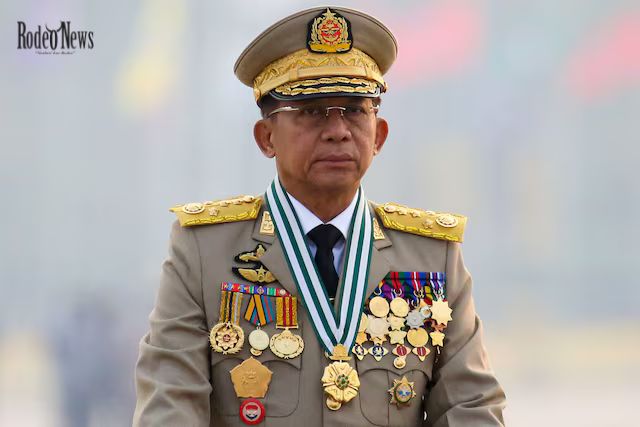
Speaking during his inauguration in Naypyitaw, the president emphasized that his administration must confront a wide range of political, economic, and diplomatic challenges. However, restoring ties with the Association of Southeast Asian Nations (ASEAN) appears to be at the forefront of his agenda.
A Nation Facing Deep-Rooted Challenges
Myanmar has been grappling with instability since the 2021 military coup, which dismantled a decade-long experiment with democracy and triggered widespread unrest. The conflict evolved into a prolonged civil war, severely impacting the country’s economy and international standing.
In his speech, Min Aung Hlaing admitted that the road ahead would not be easy. He stated that Myanmar is “on its way toward democracy,” but acknowledged that significant obstacles remain.
These challenges include ongoing armed conflict, economic stagnation, and a sharp decline in foreign investment. Once considered one of Asia’s most promising frontier markets, Myanmar has seen investors withdraw amid political uncertainty and sanctions.
Moreover, thousands of political prisoners remain detained, and opposition groups continue to resist military rule, further complicating efforts to achieve national reconciliation.
Myanmar President Challenges ASEAN Ties After Years of Isolation
One of the most notable aspects of the president’s speech was his commitment to re-engage with ASEAN. Myanmar has been largely sidelined by the regional bloc since the coup, with its leaders barred from high-level meetings due to failure to implement a peace plan.
Min Aung Hlaing stated that his government would “enhance international relations” and strive to restore normal engagement with ASEAN after years of strained ties.
This marks a significant diplomatic objective. ASEAN, which consists of 10 Southeast Asian nations, has been a crucial platform for regional cooperation, trade, and political dialogue. However, Myanmar’s exclusion has limited its ability to participate in regional decision-making.
Efforts to normalize relations will likely depend on Myanmar’s willingness to reduce violence and engage in dialogue—key demands outlined in ASEAN’s peace framework.
Economic Recovery and Foreign Investment Goals
Beyond diplomacy, the Myanmar president challenges ASEAN ties in tandem with broader economic ambitions. He emphasized the need to attract foreign investment and revitalize domestic industries.
The government plans to implement long-term strategies aimed at boosting economic growth, particularly in agriculture and natural resource sectors.
However, analysts remain skeptical. Without political stability and credible reforms, it may be difficult for Myanmar to regain investor confidence. Sanctions imposed by Western nations and ongoing conflict continue to deter international businesses.
Still, the president’s message suggests an awareness that economic recovery is closely linked to improved international relations, particularly with neighboring ASEAN countries.
A Controversial Path to Power
Min Aung Hlaing’s presidency comes after a controversial election widely criticized by Western governments and international observers. Critics argue that the vote was designed to legitimize continued military rule under a civilian façade.
The military-backed party secured a dominant victory, and the new parliament is heavily populated with military-aligned lawmakers.
This has raised concerns that the new administration may not represent a genuine transition to democracy. Instead, many believe it consolidates power within the military establishment.
Despite these criticisms, the president has pledged to pursue a roadmap based on democracy and federalism. However, he provided few concrete details on how these goals would be achieved.
Peace and Reconciliation as Key Priorities
In his address, Min Aung Hlaing repeatedly emphasized peace and national unity. He called on citizens to work together to stabilize the country and support development efforts.
“Our priorities are democracy and peace,” he said, underscoring the government’s stated commitment to reconciliation.
Yet, achieving peace remains a daunting challenge. Armed resistance groups continue to operate across the country, and clashes between military forces and opposition fighters are ongoing.
Human rights organizations have also accused the military of widespread abuses, allegations that the government denies. These issues are likely to complicate both domestic peace efforts and international diplomacy.
ASEAN’s Role in Myanmar’s Future
ASEAN has played a critical role in addressing the Myanmar crisis, although its efforts have faced limitations. The bloc has attempted to mediate dialogue and reduce violence through its Five-Point Consensus, but progress has been minimal.
Myanmar’s exclusion from ASEAN summits has been a significant diplomatic setback. While some member states have advocated for engagement, others insist on stricter measures until meaningful reforms are implemented.
Thailand, for instance, has expressed willingness to act as a mediator to help reintegrate Myanmar into ASEAN.
The success of these efforts will largely depend on whether Myanmar demonstrates tangible progress toward peace and political inclusivity.
International Reactions and Geopolitical Implications
Myanmar’s evolving political landscape has attracted global attention. While Western nations remain critical, some countries, including China and Russia, have maintained engagement with the new government.
More than 50 foreign delegates attended the inauguration, highlighting a mix of support and cautious diplomacy.
This geopolitical dynamic underscores Myanmar’s strategic importance in Southeast Asia. Its natural resources, geographic location, and regional connections make it a key player despite ongoing instability.
However, balancing international relationships while addressing domestic challenges will be a complex task for the new administration.
The Road Ahead: Uncertainty and Opportunity
The Myanmar president challenges ASEAN ties at a time when the country stands at a crossroads. On one hand, there is an opportunity to rebuild relationships and stimulate economic growth. On the other, deep political divisions and ongoing conflict threaten to derail progress.
Experts suggest that meaningful change will require concrete actions rather than broad statements. This includes reducing violence, releasing political prisoners, and engaging in genuine dialogue with opposition groups.
Without these steps, efforts to normalize ASEAN ties may face significant hurdles.
Conclusion
Myanmar’s new leadership has set an ambitious agenda, with restoring ASEAN relations and addressing internal challenges at its core. While the president’s speech signals a willingness to re-engage with the international community, the path forward remains uncertain.
The success of this strategy will depend on whether the government can translate its promises into tangible reforms. For now, the world—and ASEAN—will be watching closely as Myanmar navigates this critical period in its history.