Gas Prices Drop Soon? Trump Makes Bold Claim
U.S. President Donald Trump has sparked renewed debate over energy markets after insisting that gas prices drop quickly once the ongoing conflict with Iran ends. His comments directly contradict the outlook of his own energy officials, highlighting growing uncertainty over fuel costs and the broader economic outlook.
The disagreement comes at a critical moment, as Americans face rising gasoline prices and global oil markets remain volatile due to geopolitical tensions in the Middle East.
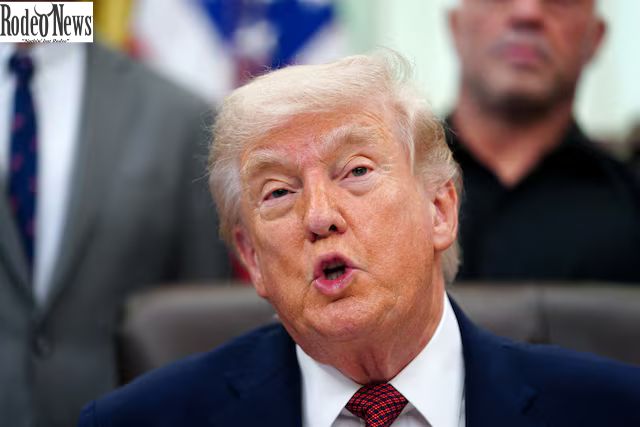
Trump Rejects Energy Chief’s Timeline
Trump publicly dismissed the assessment of U.S. Energy Secretary Chris Wright, who recently suggested that gasoline prices may not fall below $3 per gallon until late 2026 or even 2027.
Instead, Trump offered a far more optimistic outlook.
He argued that gas prices drop almost immediately after the war concludes, stating that expectations of a long delay are “totally wrong.”
This sharp disagreement has exposed a divide within the administration over how quickly energy markets can stabilize.
While both Trump and Wright agree that prices will eventually decline, their timelines differ significantly. Wright’s view reflects a cautious, market-based assessment, while Trump’s statement appears more politically driven, especially as economic pressure builds ahead of upcoming elections.
Why Gas Prices Are Rising Now
To understand whether gas prices drop soon, it’s essential to examine the factors pushing them higher in the first place.
The ongoing Iran conflict has disrupted global oil supplies, particularly through the Strait of Hormuz — one of the world’s most critical energy chokepoints.
The war, which began in late February 2026 with U.S. and Israeli strikes on Iran, triggered a chain reaction across global energy markets.
Key impacts include:
- Closure or disruption of the Strait of Hormuz
- Reduced oil shipments worldwide
- Increased geopolitical risk premiums
- Rising transportation and refining costs
As a result, global oil prices have surged, and U.S. gasoline prices have climbed to around $4.04 per gallon — significantly higher than a year ago.
The Strait of Hormuz: A Critical Factor
At the center of the crisis is the Strait of Hormuz, a narrow waterway responsible for transporting roughly 20% of the world’s oil supply.
When access to this route is restricted, the effects ripple across global markets almost instantly.
During the current conflict:
- Iran has repeatedly restricted or closed the strait
- The U.S. imposed a naval blockade on Iranian ports
- Shipping disruptions have strained supply chains
These developments have created what analysts describe as one of the most severe energy disruptions in decades.
Even temporary closures can cause sharp price spikes, making it difficult to predict when stability will return.
Can Gas Prices Drop Quickly?
Trump’s claim that gas prices drop rapidly after the war ends is not entirely unfounded — but it may be overly optimistic.
Historically, energy prices do tend to fall when geopolitical tensions ease. However, several factors influence how quickly this happens:
1. Supply Chain Recovery
Oil production and transportation systems do not instantly return to normal. Restarting shipments and rebuilding inventories takes time.
2. Market Confidence
Investors need assurance that the conflict is truly over. Even after a ceasefire, lingering risks can keep prices elevated.
3. Infrastructure Damage
If oil facilities or shipping routes are damaged, repairs can delay supply recovery.
4. Political and Economic Uncertainty
Ongoing negotiations, sanctions, or new conflicts can slow down price normalization.
Because of these factors, experts like Wright believe it could take months — or even years — before prices fall significantly.
Political Pressure Mounts
The debate over whether gas prices drop soon is not just economic — it’s deeply political.
High fuel costs have become a major concern for voters, especially as inflation continues to affect everyday expenses.
With midterm elections approaching, Trump and his allies are under pressure to demonstrate progress on lowering costs.
According to recent reports:
- Rising gas prices are hurting consumer sentiment
- Inflation remains a key political issue
- Approval ratings have declined amid economic concerns
This context helps explain why Trump is pushing a more optimistic narrative, even as experts remain cautious.
Conflicting Signals from the Administration
The mixed messaging on gas prices reflects broader inconsistencies within the administration’s approach to the Iran conflict and energy policy.
While some officials emphasize caution and uncertainty, others project confidence and rapid improvement.
For example:
- Treasury officials have expressed hope for price stabilization by summer
- Energy officials warn of longer timelines
- Trump continues to make bold, sometimes contradictory statements
These conflicting signals have added confusion to an already volatile situation, making it harder for markets — and the public — to form clear expectations.
Global Impact Beyond the U.S.
The question of whether gas prices drop soon is not just a U.S. issue — it has global implications.
Countries in Asia and Europe are particularly vulnerable to disruptions in Middle Eastern oil supplies.
In many cases:
- Nations rely heavily on imports through the Strait of Hormuz
- Alternative supply routes are limited or costly
- Energy shortages can impact manufacturing and transportation
Some countries have already experienced:
- Reduced crude imports
- Rising fuel costs
- Increased economic pressure
This global dimension means that even if the U.S. sees some relief, worldwide recovery may take longer.
What Happens If the War Continues?
If the conflict drags on, the outlook becomes more concerning.
Extended disruption could lead to:
- Further increases in oil prices
- Supply shortages in key markets
- Higher inflation globally
Analysts warn that prolonged instability could push oil prices even higher, potentially exceeding $100 per barrel if disruptions worsen.
In that scenario, expectations that gas prices drop soon would become increasingly unrealistic.
Short-Term vs Long-Term Outlook
To better understand the situation, it helps to separate short-term and long-term expectations.
Short-Term Outlook
- Prices likely remain volatile
- Dependent on ceasefire progress
- Sensitive to news and market sentiment
Long-Term Outlook
- Prices may decline if stability returns
- Recovery depends on infrastructure and supply chains
- Global demand trends will also play a role
In other words, while prices could eventually fall, the timeline remains uncertain.
Conclusion: Optimism vs Reality
Trump’s assertion that gas prices drop quickly after the Iran war ends reflects a hopeful scenario — but one that may not align with current market realities.
While it is true that resolving the conflict would ease pressure on global oil supplies, the path to lower prices is rarely immediate.
Experts caution that recovery will take time, influenced by supply chain dynamics, geopolitical stability, and market confidence.
For now, consumers should prepare for continued volatility, even as policymakers and markets watch closely for signs of a resolution.