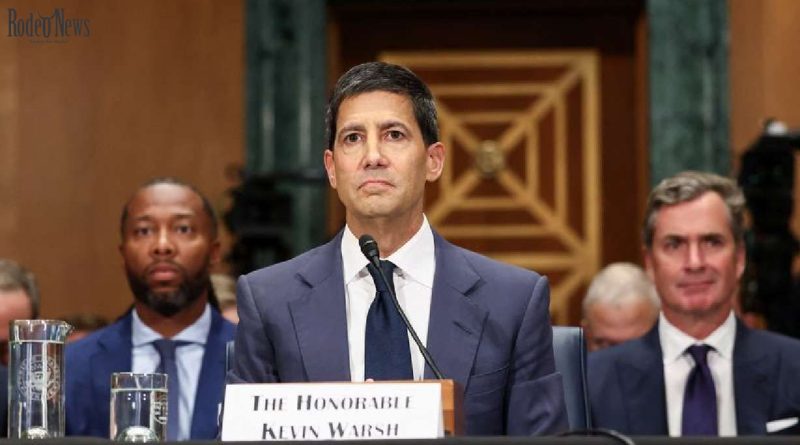
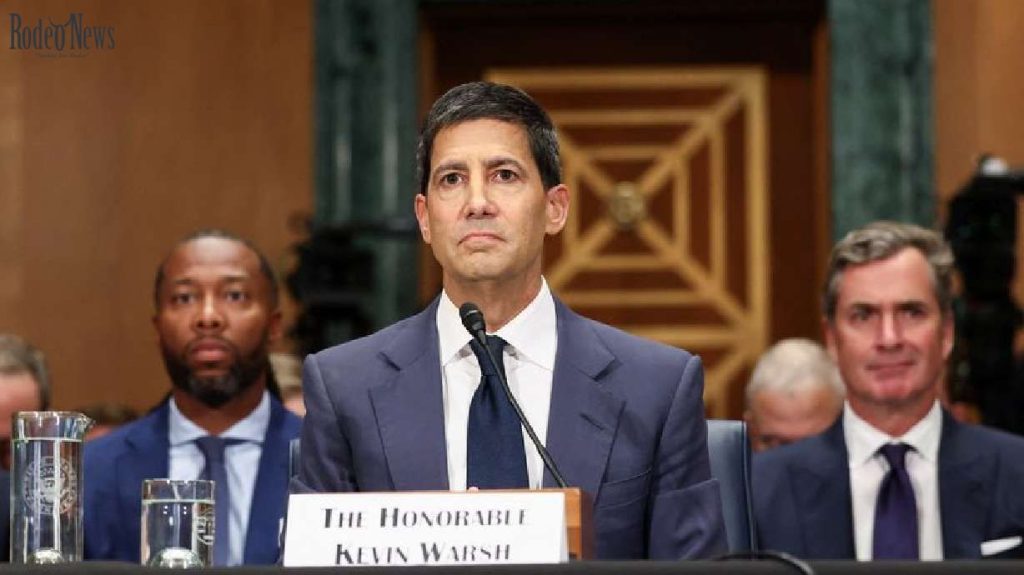
The Fed balance sheet plan took center stage during a high-stakes Senate confirmation hearing, where Federal Reserve chair nominee Kevin Warsh outlined a bold vision to shrink the central bank’s massive holdings. His remarks signaled a potential shift in U.S. monetary policy, sparking debate among lawmakers, economists, and financial markets.
Warsh’s proposal comes at a time when the Federal Reserve’s balance sheet remains historically large, following years of aggressive bond-buying programs designed to stabilize the economy during crises. However, his argument is clear: a smaller balance sheet could lead to lower interest rates, reduced inflation pressure, and a stronger long-term economic outlook.
What Is the Fed Balance Sheet Plan?
The Fed balance sheet plan refers to Warsh’s intention to gradually reduce the Federal Reserve’s holdings of assets, which currently total around $6.7 trillion after peaking near $9 trillion in 2022.
These holdings primarily consist of U.S. Treasury bonds and mortgage-backed securities, accumulated through years of quantitative easing. While these tools helped support economic recovery, critics argue they have also distorted financial markets.
Warsh emphasized that the central bank’s balance sheet has grown far beyond its original purpose and now plays an outsized role in the economy.
1. Why Warsh Wants a Smaller Fed Balance Sheet
At the heart of the Fed balance sheet plan is Warsh’s belief that the current size of the central bank’s holdings is doing more harm than good.
He argued that excessive asset purchases have:
- Favored Wall Street over Main Street
- Distorted financial markets
- Increased political pressure on the Federal Reserve
According to Warsh, the balance sheet has become a “recurring force” rather than a temporary crisis tool, raising concerns about long-term sustainability.
This perspective contrasts with many current Fed officials, who are less concerned about the balance sheet size as long as monetary policy tools remain effective.
2. How the Fed Balance Sheet Plan Could Lower Interest Rates
One of the most surprising aspects of the Fed balance sheet plan is its connection to interest rates.
Warsh suggested that reducing the balance sheet could actually create room for lower short-term interest rates. The logic is rooted in monetary tightening mechanics:
- A large balance sheet injects liquidity into the system
- Reducing it removes excess liquidity
- This can reduce inflation pressure
- Lower inflation allows for lower interest rates
Economists note that shrinking the balance sheet acts as a form of tightening, meaning rate cuts could follow as a counterbalance.
This idea challenges the traditional view that balance sheet reduction and rate hikes always move in the same direction.
3. Coordination with the U.S. Treasury
Another key element of the Fed balance sheet plan is Warsh’s proposal to work closely with the U.S. Treasury.
He indicated that reducing the balance sheet would require coordination on:
- Debt issuance strategies
- Market liquidity management
- Financial system stability
Warsh stressed that any changes would be implemented “slowly and deliberately,” aiming to avoid market disruption.
However, analysts remain uncertain about how such coordination would work in practice, especially given the Federal Reserve’s traditional independence from political institutions.
4. Risks and Challenges of the Plan
Despite its potential benefits, the Fed balance sheet plan faces significant challenges.
Reducing the central bank’s holdings is not as simple as selling assets. Experts warn that:
- Even small reductions can trigger market volatility
- Liquidity shortages could disrupt financial systems
- Interest rates in long-term markets may rise unexpectedly
Past attempts to shrink the balance sheet have led to spikes in borrowing costs, highlighting the delicate balance required.
Moreover, structural changes—such as adjusting banking regulations—may be necessary to support a smooth transition.
5. Political and Economic Implications
The Fed balance sheet plan is not just an economic issue—it is also deeply political.
Warsh’s nomination itself has been controversial, with lawmakers questioning:
- His independence from political influence
- Potential conflicts of interest
- His broader monetary policy stance
During the hearing, he defended his commitment to central bank independence while acknowledging criticism of past Fed decisions.
The debate reflects broader tensions over the role of the Federal Reserve in shaping the U.S. economy, especially in a period marked by inflation concerns and economic inequality.
The Bigger Picture: A Shift in Monetary Policy?
The Fed balance sheet plan could signal a major shift in how the Federal Reserve approaches monetary policy.
For nearly two decades, the central bank has relied heavily on asset purchases to stabilize markets and support growth. Warsh’s proposal suggests a move away from that model toward a more restrained approach.
Supporters argue this could:
- Restore market discipline
- Reduce asset bubbles
- Strengthen long-term economic stability
Critics, however, warn that reducing the Fed’s role too quickly could undermine recovery and increase financial risks.
Market Reaction and What Comes Next
Financial markets are closely watching developments around the Fed balance sheet plan.
Investors are particularly focused on:
- The pace of balance sheet reduction
- Potential changes to interest rate policy
- Signals about future economic conditions
While Warsh has not provided a detailed roadmap, his emphasis on gradual implementation has offered some reassurance.
Still, uncertainty remains high, especially as his confirmation process continues and political divisions persist.
Conclusion
The Fed balance sheet plan unveiled during Kevin Warsh’s confirmation hearing represents one of the most significant potential shifts in U.S. monetary policy in years.
By advocating for a smaller balance sheet, Warsh is challenging the status quo and opening the door to a new approach that could reshape interest rates, inflation dynamics, and financial markets.
However, the path forward is far from simple. The success of this plan will depend on careful execution, strong coordination, and the ability to navigate both economic risks and political pressures.
As the debate continues, one thing is clear: the future of the Federal Reserve—and the broader U.S. economy—may hinge on how this plan unfolds.