Russia Victory Day Parade Scaled Back Amid War
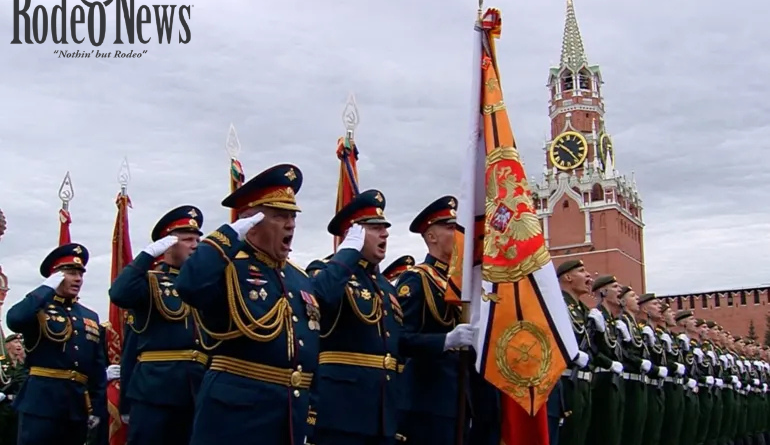
Russia’s annual Victory Day celebrations returned to Moscow on May 9 under unusually tight security, as the Russia Victory Day parade unfolded in a significantly reduced format amid ongoing tensions linked to the war in Ukraine.
The military event, traditionally one of the Kremlin’s most important national displays of power, was noticeably smaller this year. Authorities limited the exhibition of heavy military hardware while increasing security measures across the Russian capital due to concerns about possible Ukrainian drone attacks.
The parade commemorates the Soviet Union’s victory over Nazi Germany during World War II. For decades, Victory Day has served as both a patriotic celebration and a symbolic demonstration of Russian military strength. However, the 2026 edition reflected the realities of a prolonged and costly conflict in Ukraine.
Moscow Under Heavy Security
Security preparations dominated the atmosphere in Moscow ahead of the parade. Internet disruptions, anti-drone systems, and increased police presence were visible throughout the city during the days leading up to the event.
Russian officials openly acknowledged that the scaled-back format was linked to the threat of Ukrainian strikes targeting key infrastructure or symbolic locations during the celebrations.
Authorities reportedly restricted mobile internet services in several parts of Moscow to reduce risks associated with drone navigation systems. Airports in multiple Russian cities also faced temporary disruptions earlier in the week after drone incidents were reported.
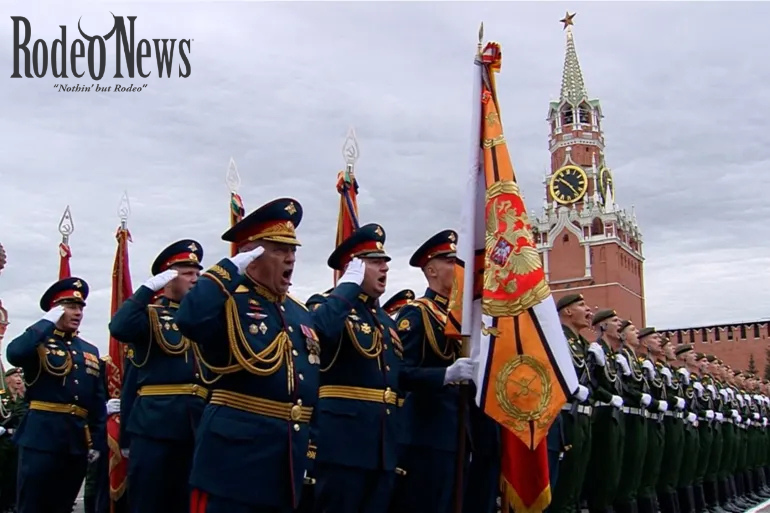
Despite the security concerns, thousands gathered in Red Square to watch soldiers march through the historic center of Moscow.
Putin Uses Victory Day Speech to Defend Ukraine War
Russian President Vladimir Putin used his Victory Day speech to reinforce support for Russia’s military campaign in Ukraine.
During his address, Putin compared Russia’s current military efforts to the Soviet struggle against Nazi Germany during World War II. He described Russian troops fighting in Ukraine as defenders against what he called Western-backed aggression.
The Kremlin has repeatedly framed the Ukraine conflict as part of a broader confrontation with NATO and the West. Victory Day speeches in recent years have increasingly linked historical wartime narratives with current geopolitical tensions.
Analysts noted that Putin’s rhetoric aimed to maintain domestic support for the war at a time when public fatigue and economic pressure appear to be growing inside Russia.
Military Hardware Display Reduced
One of the most noticeable differences this year was the absence of the large-scale display of tanks, missiles, and armored vehicles that traditionally dominate the parade.
Instead of showcasing extensive military equipment in Red Square, organizers used video presentations highlighting Russia’s drone capabilities and strategic weapons systems.
Observers said the reduced display reflected both security concerns and the operational demands of the war in Ukraine. Large quantities of military equipment remain deployed on the battlefield, limiting the Kremlin’s ability to organize the massive demonstrations seen in previous years.
The parade itself reportedly lasted around 45 minutes, significantly shorter than earlier Victory Day ceremonies.
Ukraine Conflict Continues to Shape Russian Politics
The war in Ukraine continues to influence nearly every aspect of Russian public life, including major national ceremonies such as Victory Day.
Russian authorities accused Ukraine of launching drone attacks in the days before the parade, while Ukrainian officials maintained pressure through continued military operations and strategic messaging.
At the same time, international attention remained focused on whether Moscow and Kyiv could maintain even temporary ceasefire agreements surrounding the commemorations.
Reports indicated that a short three-day ceasefire and prisoner exchange arrangement had been discussed involving both Russia and Ukraine. Former US President Donald Trump publicly referenced efforts to support the temporary pause in fighting.
However, both sides continued accusing each other of violating ceasefire conditions almost immediately after the announcements.
Foreign Attendance More Limited Than Previous Years
Another major difference during this year’s Russia Victory Day parade was the reduced number of high-profile foreign leaders attending the event.
Historically, Victory Day ceremonies in Moscow have attracted presidents, prime ministers, and military delegations from countries aligned with Russia. In recent years, however, diplomatic isolation and geopolitical tensions have narrowed participation.
According to reports, attendance in 2026 was largely limited to leaders from a small group of allied or friendly nations.
Several Western nations have boycotted Russian state ceremonies since the full-scale invasion of Ukraine began in 2022. Meanwhile, Moscow has increasingly relied on partnerships with countries willing to maintain closer political or military ties despite sanctions and international criticism.
Economic Pressure Emerging Inside Russia
Beyond the battlefield, Russia is also facing mounting economic pressure linked to the prolonged conflict.
While military spending initially boosted industrial output, analysts now warn that inflation, labor shortages, and sanctions are creating long-term strain on the Russian economy.
Public frustration reportedly increased in recent weeks due to internet outages and security restrictions connected to Victory Day preparations. Businesses in some regions also complained about financial losses linked to communication disruptions.
Although public criticism of the Kremlin remains limited due to strict political controls, analysts say signs of war fatigue are becoming more visible among segments of Russian society.
Victory Day Remains Central to Russian Identity
Despite the scaled-back format, Victory Day remains one of Russia’s most important national holidays.
The annual event honors the Soviet Union’s enormous sacrifices during World War II, in which an estimated 27 million Soviet citizens died.
For many Russians, the commemoration carries deep emotional and historical significance beyond politics. Veterans, military families, and citizens across the country continue to view Victory Day as a symbol of national resilience and sacrifice.
However, critics argue that the Kremlin increasingly uses the historical legacy of World War II to justify modern military actions and strengthen nationalist sentiment.
Ukraine Drone Threats Change Moscow’s Strategy
The growing sophistication of Ukrainian drone operations has significantly altered Russia’s domestic security calculations.
Over the past year, Ukrainian drones have targeted military facilities, energy infrastructure, and symbolic locations deep inside Russian territory. These operations have demonstrated Kyiv’s ability to reach areas once considered relatively secure.
As a result, Russian authorities approached this year’s Victory Day parade with far greater caution than in previous years.
Military analysts said the reduced public display likely reflected concerns that large concentrations of military hardware in Moscow could become potential targets or create security vulnerabilities.
International Attention Focused on Moscow
The Russia Victory Day parade attracted widespread international attention because it offered another glimpse into the current state of the Kremlin’s political and military position.
The smaller ceremony contrasted sharply with the grand parades Russia held before the Ukraine war intensified. Analysts interpreted the changes as evidence of the conflict’s broader impact on Russian military resources, domestic politics, and global standing.
Nevertheless, the Kremlin attempted to project confidence and stability throughout the event. Putin’s speech emphasized perseverance, patriotism, and Russia’s long-standing narrative of resistance against external threats.
Conclusion
The 2026 Russia Victory Day parade highlighted the growing influence of the Ukraine war on Russian society, security, and politics.
Although the Kremlin successfully held the ceremony in Moscow without major disruptions, the reduced scale, heightened security, and limited military display reflected the pressures facing Russia after years of conflict.
Victory Day remains deeply symbolic for Russia, but this year’s event showed how modern warfare and geopolitical tensions are reshaping even the country’s most historic national traditions.