Alex Eala Is Turning New York Into Little Manila
Alex Eala has become much more than a rising tennis star at the 2026 US Open. In New York, her presence has sparked a wave of excitement that stretches far beyond the courts and into Queens, where Filipino fans are embracing one of the biggest sporting moments in their community.
The 21-year-old Filipina arrived at this year’s US Open with a dramatically different profile from the player who competed in New York a year ago. She entered the tournament as the No. 17 seed after a breakthrough season that included her first WTA singles title in Washington, D.C., and a fourth-round run at Wimbledon.
That rise has transformed the atmosphere around her matches.
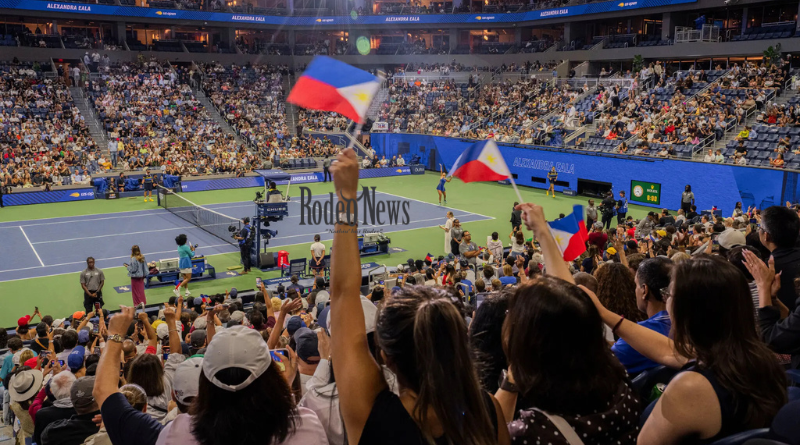
When Alex Eala stepped onto Louis Armstrong Stadium for her first-round match against American Mary Stoiana, thousands of Filipino supporters made their presence known. Flags, signs and chants filled the stadium as Eala delivered a dominant 6-1, 6-2 victory.
But the story does not end at the tennis center.
Across Queens, particularly in the Roosevelt Avenue neighborhood known as Little Manila, Eala’s rise has become a cultural event. The area is only a short subway ride from the US Open grounds and has become an unofficial gathering place for Filipinos eager to celebrate their newest sports superstar.


7
1. Alex Eala Has Become a National Sports Symbol
The scale of support surrounding Eala is rooted in something bigger than one tournament.
For years, Philippine tennis has struggled to command the international attention enjoyed by basketball, boxing and other major sports. Eala is changing that equation.
Her breakthrough has been unusually rapid. In 2025, she announced herself to the wider tennis world with a memorable US Open victory over then-No. 14 seed Clara Tauson. That win made her the first Filipino player in the Open Era to win a Grand Slam main-draw match.
One year later, the situation is completely different.
Eala is no longer an unknown teenager hoping for a breakthrough. She entered the 2026 US Open ranked inside the world’s top 20 and seeded No. 17. The US Open itself described her as one of the tournament’s biggest attractions.
Her progress has also been reinforced by results against elite competition.
Before arriving in New York, Eala reached the fourth round at Wimbledon and defeated defending champion Iga Swiatek during that run. She then captured her maiden WTA singles title in Washington, D.C., defeating Jessica Pegula in the final.
Those achievements have given Filipino fans something powerful: a player they can realistically believe belongs among the world’s best.
2. Little Manila Is Embracing the Alex Eala Effect
The connection between Eala and New York’s Filipino community is particularly striking because of where the US Open is located.
The USTA has highlighted Woodside, Queens, as New York’s Little Manila. Roosevelt Avenue is home to a concentrated Filipino community, with an estimated 50,000 people of Filipino heritage living in Queens. The neighborhood is approximately a 10-minute subway ride from the USTA Billie Jean King National Tennis Center.
That proximity has helped create an unusually strong connection between the tournament and the local community.
In the days leading up to Eala’s first-round match, excitement was already building in Woodside. Local businesses, restaurants and public spaces were preparing for fans who wanted to celebrate the Filipino star.
The neighborhood’s identity has also been shaped by generations of Filipino immigrants and healthcare workers who settled in the area. Today, Eala’s success has added another layer to that cultural identity.
For many supporters, going to watch Eala is not simply about watching tennis.
It is an opportunity to celebrate Filipino heritage in one of the world’s most diverse cities.
3. Alex Eala’s Fans Are Becoming Part of the Show
The atmosphere surrounding an Eala match has become almost as important as the tennis itself.
At Louis Armstrong Stadium, Filipino supporters arrived carrying Philippine flags and signs supporting their favorite player. The US Open has repeatedly documented the enthusiasm surrounding Eala, describing the phenomenon as the “Eala Effect.”
That support was especially visible during her first-round victory over Stoiana.
Eala won the opening set 6-1 and maintained control throughout the second before closing out the match 6-2. She won the final five games of the contest, ending the night in emphatic fashion.
The crowd responded accordingly.
Afterward, Eala acknowledged the New York community and the broader tennis audience supporting her. She also recognized that the enthusiasm around her is helping bring more attention to women’s tennis.
That is an important part of the Eala story.
Her popularity is not confined to Filipino audiences. Her matches are becoming events that attract tennis fans who simply want to experience the energy surrounding a player whose profile is rising rapidly.
4. Filipino Food and Tennis Are Creating a New York Celebration
Eala’s influence is also being felt away from the stadium.
The US Open recently highlighted Little Manila’s restaurants and food culture as part of the Eala experience. Roosevelt Avenue offers Filipino specialties ranging from lumpia to halo-halo, giving visiting fans another reason to explore the neighborhood before or after a match.
The combination is significant.
A major sporting event can bring temporary crowds into a neighborhood. But Eala’s popularity is helping connect the US Open experience with an established Filipino cultural center.
Restaurants become gathering places.
Stores become places to buy Filipino products and Eala-inspired merchandise.
Public tennis courts become spaces where young players can imagine themselves following a similar path.
The result is a much broader cultural phenomenon.
Eala is not merely appearing in New York. She is helping Filipino New Yorkers see their culture represented on one of tennis’s biggest stages.
5. Alex Eala’s Rise Is Inspiring the Next Generation
Perhaps the most lasting effect of Eala’s popularity will be seen among younger athletes.
The US Open reported growing interest among young players in the Queens area, including teenagers playing at nearby public courts while wearing Eala-themed clothing.
That kind of visibility matters.
Professional athletes often become role models because young fans can see a possible future through them. For Filipino children interested in tennis, Eala provides something that has historically been difficult to find: a world-class player who shares their national identity.
Her story is particularly compelling because her success did not arrive overnight.
Eala began playing tennis at a young age and later developed her game at the Rafa Nadal Academy in Mallorca. Her progression through the junior and professional ranks eventually led to her becoming the first Filipina to win a WTA singles title.
Her message to supporters has also remained remarkably consistent.
Dream big.
Work hard.
Keep improving.
That combination of achievement and humility has helped explain why her popularity continues to grow.
Alex Eala Is Ready for the Next Challenge
The attention will only increase after her latest US Open victory.
Eala’s 6-1, 6-2 win over Stoiana moved her into the second round, where she is scheduled to face Oleksandra Oliynykova. The matchup offers an additional storyline because Oliynykova defeated Eala earlier this year in Strasbourg.
That means the next match is more than another step in a Grand Slam.
It is a chance for Eala to respond to a previous defeat.
At the same time, expectations around her have never been higher.
Entering the tournament, Eala had already moved from outside the top 100 to the top 20 within roughly a year. The US Open described that transformation as a dramatic shift from breakout prospect to household name.
Yet Eala has repeatedly indicated that rankings and fame are not her primary concerns.
Her focus remains on improving her level and winning more matches.
That mindset could prove important as the tournament progresses.
The Bigger Meaning Behind the Alex Eala Phenomenon
The rise of Alex Eala represents something larger than a successful tennis campaign.
It is a story about representation.
It is a story about immigration and community.
And it is a story about how sport can connect people across borders.
New York already has one of the largest Filipino communities in the United States. Eala’s appearance at the US Open has given that community a reason to gather around a shared source of pride.
The symbolism is particularly powerful because the US Open is taking place only minutes away from Little Manila.
A Filipino fan can eat Filipino food on Roosevelt Avenue, take the subway toward Flushing Meadows and then watch a Filipina athlete compete against the world’s best players.
That experience would have been difficult to imagine only a few years ago.
Now it is reality.
Eala’s success is also helping broaden the conversation around Philippine sports. Her achievements demonstrate that Filipino athletes can make an impact in sports where the country has traditionally had less international visibility.
Basketball may remain deeply embedded in Filipino sporting culture. Boxing has produced global icons. But tennis now has a player capable of creating a similar sense of national excitement.
What Comes Next for Alex Eala?
The immediate goal is simple: keep winning.
Eala has already secured a second-round place at the 2026 US Open. Her next opponent presents a familiar challenge, and another victory could send the Filipino star deeper into the tournament.
But regardless of how far she ultimately advances, the impact of her New York appearance is already clear.
She has attracted large Filipino crowds.
She has energized Little Manila.
She has brought new attention to women’s tennis.
And she has given young Filipino athletes a powerful example to follow.
The 2026 US Open may ultimately be remembered for its champions and deep runs. Yet for Filipino tennis fans, it is already becoming the tournament where Alex Eala transformed from a promising star into a genuine sporting phenomenon.
New York is watching.
The Philippines is watching.
And in Little Manila, the celebration is only getting louder.