John Galliano Met Gala Exhibit Canceled After Backlash
The John Galliano Met Gala exhibit has been canceled after intense criticism over the fashion designer’s history of antisemitic remarks, bringing an abrupt end to one of the most closely watched plans for the 2027 Met Gala. The Metropolitan Museum of Art and Galliano announced that they had jointly decided not to proceed with the planned exhibition, titled “John Galliano: Horizons.”
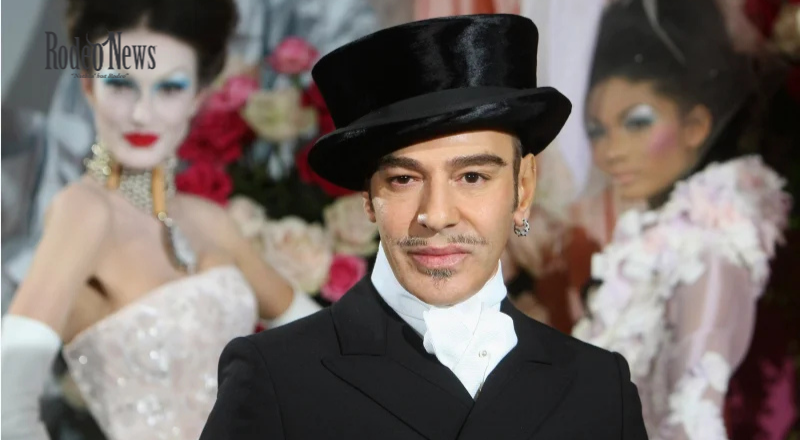
The decision represents a major reversal for the Met’s Costume Institute. The exhibition had been scheduled to open in May 2027 and was expected to form the centerpiece of the spring fashion calendar surrounding the annual Met Gala.
Instead, the museum said details of a new spring Costume Institute exhibition and the 2027 Met Gala will be announced later.
John Galliano Met Gala Exhibit Ends After Controversy
The planned John Galliano Met Gala exhibit was announced in July and was immediately met with mixed reactions.
Fashion insiders had anticipated the exhibition as a major retrospective of Galliano’s career. The show was expected to examine decades of work by one of the fashion industry’s most influential and theatrical designers.
However, the announcement also revived scrutiny of Galliano’s past.
In 2011, Galliano was dismissed as creative director of Christian Dior following the emergence of videos showing him making antisemitic remarks. He was later convicted in France of antisemitic behavior.
That history became central to the debate surrounding the proposed exhibition.
Critics questioned whether the Met should give such a prominent platform to a designer whose past conduct had caused significant harm, particularly when the exhibition was scheduled to coincide with one of the world’s most visible fashion events.
The backlash eventually became strong enough to put the future of the exhibition into question.
What Was “John Galliano: Horizons”?
“John Galliano: Horizons” was designed as a broad retrospective of Galliano’s four-decade career.
According to Vogue, the exhibition was intended to cover his work from his 1984 Central Saint Martins graduate collection through major periods at Givenchy and Dior and his later work at Maison Margiela.
The exhibition would have included garments, accessories, sketches, archival material and other objects documenting the designer’s creative development.
It also would have been unusually significant within the history of the Costume Institute.
Vogue reported that it would have been only the third solo retrospective at the Costume Institute devoted to a living designer, following exhibitions dedicated to Yves Saint Laurent in 1983 and Rei Kawakubo of Comme des Garçons in 2017.
That distinction helps explain why the announcement attracted considerable attention from the fashion world.
Galliano has long been regarded as a designer with extraordinary technical skill and an unusually theatrical approach to fashion. His shows often combined historical references, dramatic storytelling and elaborate craftsmanship.
Yet the same visibility that made the proposed retrospective culturally significant also magnified the controversy surrounding it.
Why John Galliano Faced Renewed Scrutiny
Galliano’s professional career has been marked by both major creative achievements and a highly publicized personal controversy.
His 2011 dismissal from Dior became a defining moment in modern fashion’s discussion about accountability. His subsequent career involved efforts to rebuild his professional reputation and return to the industry.
Galliano later became creative director of Maison Margiela, where he spent roughly a decade and produced collections that were widely praised for their craftsmanship and conceptual ambition. He left the role in 2024.
His return to prominence created a difficult question for cultural institutions: how should artistic achievement be evaluated when the artist’s personal history includes serious misconduct?
That question was particularly sensitive for the Met.
The Costume Institute exhibition was not simply another fashion show. It was intended to be a major institutional recognition of Galliano’s legacy.
Critics argued that such recognition risked overshadowing the communities affected by his past remarks.
Jewish Leaders and New York Officials Raised Concerns
Opposition to the exhibition came from Jewish community leaders, political figures and others who objected to the decision to honor Galliano.
New York City Council Speaker Julie Menin was among the prominent critics. She described the decision to honor Galliano as a mistake and urged the museum to reconsider.
Menin also emphasized the broader responsibility of major cultural institutions to uphold standards of inclusion and tolerance.
The controversy gained additional significance because of the timing of the planned exhibition and Met Gala.
According to the Associated Press, critics noted that the 2027 Met Gala was scheduled around Holocaust remembrance, adding another layer of sensitivity to the decision to honor Galliano at that particular moment.
For the Met, the issue therefore became larger than a question of fashion history.
It became a debate about institutional judgment, public accountability and whether artistic accomplishment should lead to formal recognition despite a controversial past.
John Galliano Takes Responsibility for His Past
Galliano’s response to the cancellation was notable because he did not reject the criticism surrounding his history.
In a statement released by the Met, the designer expressed gratitude for being considered for the exhibition while acknowledging the pain caused by his past words.
Galliano said he remained accountable for the hurt caused to Jewish and Asian communities and expressed regret for his previous behavior. He also argued that meaningful atonement cannot be achieved through a single exhibition, institutional honor or public gesture.
That distinction was central to his decision.
Rather than allowing the exhibition to proceed while controversy continued to dominate discussion, Galliano concluded that it was better for the project not to take place at this time.
He also said he did not want the debate surrounding him to put the Met in a difficult position or distract from the work of the Costume Institute.
The statement effectively turned the cancellation into a joint decision rather than a unilateral rejection by the museum.
Anna Wintour Supports the Decision
Anna Wintour, who plays a central role in the Met Gala and the Costume Institute’s public profile, also supported the decision.
Wintour described Galliano’s choice not to proceed with the exhibition as courageous and said she believed it was the right decision. She also praised his creative contribution to fashion.
Her comments highlight the complicated position of the fashion establishment.
Galliano’s influence on fashion is difficult to dispute. His work at Dior, Givenchy and Maison Margiela has been studied, copied and celebrated by designers across generations.
At the same time, the controversy surrounding his behavior cannot simply be separated from the institutional decision to celebrate his career.
The cancellation demonstrates that creative influence does not automatically guarantee institutional recognition.
What Happens to the 2027 Met Gala?
The cancellation of the John Galliano Met Gala exhibit does not mean the Met Gala itself has been canceled.
Instead, the museum said it will announce a new spring Costume Institute exhibition and provide additional information about the 2027 Met Gala at a later date.
That leaves the fashion industry waiting for a replacement concept.
Normally, the Costume Institute’s spring exhibition provides the thematic foundation for the annual gala. The exhibition influences the red-carpet dress code, celebrity styling and the broader visual identity of the event.
The sudden cancellation therefore creates a significant planning challenge.
Designers, celebrities, fashion houses and media organizations will now have to wait for the Met to determine how the 2027 event will be reshaped.
The museum has not yet publicly announced the replacement exhibition.
A Difficult Moment for the Fashion Industry
The controversy surrounding Galliano reflects a larger debate that has been unfolding across the cultural world.
Museums, galleries and other institutions increasingly face questions about whether and how to celebrate artists whose personal conduct conflicts with contemporary expectations.
Fashion presents an especially complicated case because designers are often treated simultaneously as artists, business leaders and cultural personalities.
Their work can remain influential long after their personal controversies become part of the public record.
Galliano’s career demonstrates that tension clearly.
His creative legacy has remained important to fashion, even after his 2011 scandal dramatically changed his professional trajectory.
His later success at Maison Margiela showed that rehabilitation within the fashion industry was possible.
But the Met’s decision suggests that rehabilitation and institutional celebration are not necessarily the same thing.
A designer may return to work, rebuild relationships and continue creating influential fashion without every major cultural institution being expected to honor that career with a retrospective.
The Met Faces Its Own Institutional Questions
The cancellation also puts attention on the Metropolitan Museum of Art.
The museum had initially decided that Galliano’s artistic legacy was significant enough to justify a major retrospective.
The institution reportedly considered how the exhibition could address his past while still examining his creative contributions.
But criticism continued.
The final decision suggests that the museum ultimately determined that the controversy surrounding the exhibition presented too significant a problem to overcome.
The Met’s official statement was brief. Director and CEO Max Hollein said that after discussions with Galliano, both sides had decided not to proceed with the exhibition.
The museum has not characterized the decision as a permanent rejection of Galliano’s work.
Instead, the language leaves open the possibility of future consideration under different circumstances.
That distinction could become important as Galliano’s career continues to evolve.
Why the Decision Matters Beyond Fashion
The John Galliano Met Gala exhibit controversy is ultimately about more than one designer or one museum exhibition.
It highlights the growing expectation that major cultural institutions consider the broader consequences of their choices.
The Met Gala has become one of the world’s most recognizable celebrity and fashion events. Its cultural influence extends far beyond the museum itself.
An exhibition connected to the gala therefore receives extraordinary public attention.
For supporters of cancellation, the decision demonstrates that institutions can respond when communities raise legitimate concerns.
For those who believe Galliano’s creative legacy deserves separate consideration from his past behavior, the cancellation raises another question: how should society evaluate artists who have acknowledged wrongdoing and attempted to rebuild their careers?
There is no simple answer.
The Met’s decision shows that artistic achievement, accountability and institutional recognition can collide in complicated ways.
The Future of the Met Gala Remains Open
For now, the biggest unanswered question is what will replace “John Galliano: Horizons.”
The Met has promised more information about the new Costume Institute exhibition and the 2027 Met Gala at a later date.
That announcement will likely attract enormous attention.
The replacement theme will determine not only what celebrities wear but also how the Costume Institute positions itself after the Galliano controversy.
The museum will have an opportunity to choose a subject that can generate excitement while avoiding the ethical questions that overwhelmed the original plan.
Meanwhile, Galliano’s place in fashion history remains complicated.
His technical brilliance and creative influence are widely recognized. His past remarks, however, remain an important part of the public record and continue to shape how his legacy is discussed.
The cancellation of his planned Met retrospective does not erase his contribution to fashion.
Nor does his creative legacy erase the harm caused by his past conduct.
Instead, the decision leaves both realities in view.
A New Chapter for the Met Gala
The cancellation of the John Galliano Met Gala exhibit marks an unexpected turn for the Costume Institute and the 2027 Met Gala.
What began as a celebration of one of fashion’s most influential designers became a broader debate over accountability, institutional recognition and the responsibilities of cultural organizations.
Galliano ultimately agreed that the exhibition should not proceed at this time. The Met supported that decision, while Wintour publicly backed the move.
Now attention turns to what comes next.
The Met must select a new exhibition, establish a new narrative and prepare another edition of fashion’s most influential annual red-carpet event.
For the fashion industry, the episode is likely to have a lasting impact.
It demonstrates that even the most celebrated creative legacies can face renewed scrutiny when institutions choose to elevate them.
And for the Met Gala, the next chapter will begin without John Galliano at its center—but with a much larger conversation about what it means to celebrate fashion, creativity and cultural influence in the modern era.