Roman Space Telescope Launch: 7 Big Discoveries Ahead
The Roman Space Telescope launch is entering its final stage as NASA prepares to send one of its most ambitious space observatories into orbit. The Nancy Grace Roman Space Telescope is scheduled to lift off aboard a SpaceX Falcon Heavy rocket on Sunday, August 30, from Launch Complex 39A at NASA’s Kennedy Space Center in Florida. Liftoff is targeted for 7:26 a.m. EDT, or 11:26 a.m. UTC.
The mission represents a major step for modern astronomy. Roman is designed to investigate some of the biggest unanswered questions in science, including the nature of dark energy, the behavior of dark matter and the formation of planetary systems.
Unlike the James Webb Space Telescope, which is designed to study relatively narrow targets in extraordinary detail, Roman is built to survey enormous sections of the sky rapidly. Its wide field of view could allow astronomers to create massive maps of the universe while also searching for distant planets and transient cosmic events.
The telescope has also reached an important milestone on Earth. NASA announced that Roman was cleared for launch following its Launch Readiness Review, while the observatory and its Falcon Heavy rocket were moved to the launch pad at Kennedy Space Center.
Roman Space Telescope Launch Is Finally Near
The Roman Space Telescope launch comes after years of development, testing and delays.
NASA has spent the final weeks completing a series of critical preparations. Engineers loaded the spacecraft with approximately 290 gallons of hydrazine fuel in July, attached it to its payload adapter and placed it inside the protective payload fairing used during launch. Roman also completed a launch-day dress rehearsal before entering its final preparation phase.
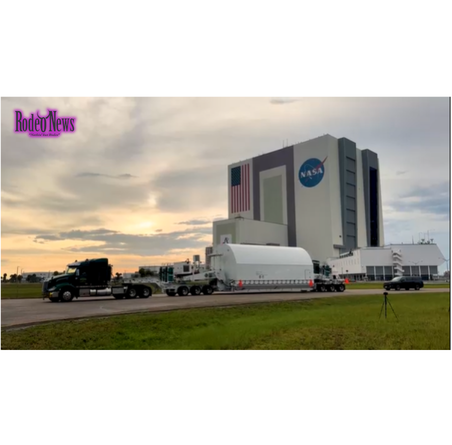
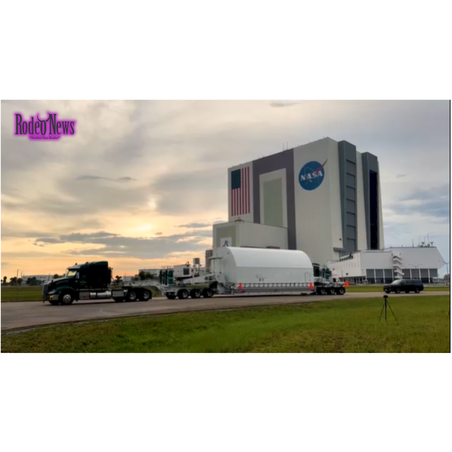
On August 25, NASA transported the encapsulated spacecraft to SpaceX’s hangar at Launch Complex 39A. The telescope was subsequently integrated with the Falcon Heavy system before the complete vehicle was rolled toward the launch pad.
By August 29, the rocket and telescope were standing at the launch complex with less than a day remaining before the planned liftoff.
NASA also conducted mission briefings covering the telescope’s scientific objectives, instruments and launch status as teams completed the final preparations.
Why the Roman Space Telescope Matters
Roman is not simply another replacement for Hubble.
Instead, NASA designed the observatory to complement Hubble and the James Webb Space Telescope.
Hubble has transformed astronomy through decades of observations, producing detailed images across a broad range of wavelengths. Webb, meanwhile, has provided unprecedented infrared observations of distant galaxies, stars and planetary systems.
Roman adds something different: speed and scale.
Its Wide Field Instrument will be capable of observing huge areas of the sky while maintaining high-quality infrared imaging. NASA expects the telescope to survey billions of stars and galaxies during its mission, creating enormous datasets for astronomers around the world.
That combination could change how scientists discover objects.
Rather than observing one galaxy or star system at a time, Roman can scan enormous regions and identify objects or events that deserve closer investigation.
Webb or other observatories can then perform more detailed follow-up observations.
Roman Space Telescope Launch Will Open a New Window on Dark Energy
One of Roman’s most important goals is understanding dark energy.
Dark energy is the mysterious component associated with the accelerating expansion of the universe. Scientists know that the universe is expanding faster than expected from ordinary matter and gravity alone, but they do not yet know exactly what causes that acceleration.
Roman will help scientists measure the universe’s expansion across enormous distances.
By observing large numbers of galaxies and other cosmic structures, astronomers can examine how the universe has evolved over time.
These measurements could help determine whether dark energy behaves like a constant property of space or whether its influence changes throughout cosmic history.
That question is fundamental to modern physics.
If Roman finds evidence that dark energy changes over time, scientists could need to rethink existing models of the universe.
If observations instead support a constant form of dark energy, they would provide an important confirmation of current cosmological theories.
Either result could be significant.
Roman Will Investigate the Mystery of Dark Matter
Dark energy is only one side of Roman’s scientific mission.
The telescope will also help scientists study dark matter.
Unlike ordinary matter, dark matter does not emit or reflect detectable light in the conventional way. Scientists infer its presence from gravitational effects on visible matter and light.
Roman’s enormous surveys could provide new ways to map these gravitational effects.
By observing billions of stars and galaxies, researchers can investigate how matter is distributed throughout the universe.
This is especially important because dark matter appears to play a central role in the formation of galaxies and large-scale cosmic structures.
A clearer map could help scientists test competing theories about the nature of dark matter.
The mission therefore has implications far beyond astronomy.
It could eventually contribute to one of physics’ biggest unanswered questions: what most of the matter in the universe actually is.
Roman Space Telescope Launch Could Transform Exoplanet Research
The search for planets beyond our solar system is another major part of Roman’s mission.
Astronomers have already discovered thousands of exoplanets using methods such as transits and gravitational microlensing.
Roman is expected to dramatically expand that effort.
Its observations will allow scientists to study planetary populations across the Milky Way and identify worlds that might otherwise be difficult to detect.
The telescope will also carry an experimental Coronagraph Instrument, designed to block the overwhelming light from stars and allow scientists to study much fainter objects nearby.
The technology could eventually help astronomers directly image exoplanets.
That is extraordinarily difficult.
A planet can be billions of times fainter than its parent star from Earth’s perspective. Trying to photograph such a world is similar to attempting to see a tiny firefly next to a powerful searchlight from an enormous distance.
Roman’s coronagraph is designed to suppress starlight and improve the ability to detect faint planetary light.
The instrument is also important as a technology demonstration for future missions.
If Roman proves that these techniques work effectively in space, the lessons could influence future observatories designed specifically to search for potentially habitable worlds.
A Telescope Built for Cosmic Surveys
Roman’s greatest strength may be its ability to observe huge areas of the universe quickly.
Its wide-field camera has an enormous field of view compared with traditional space telescopes. Spaceflight Now reports that a single full-resolution image from Roman’s 300-megapixel Wide Field Instrument would cover an area comparable to roughly 45 city blocks.
That scale matters because many astronomical discoveries are found by surveying large areas.
Supernovas appear and disappear.
Stars brighten or fade.
Black holes can produce changing signals.
Objects can pass through a telescope’s field of view unexpectedly.
Roman will be particularly valuable for identifying such changes.
Once an unusual object or event is detected, other observatories can turn their attention toward it.
This creates a powerful partnership between wide-field surveys and detailed follow-up observations.
Roman and James Webb Will Work Together
It would be a mistake to view the Roman Space Telescope launch as the arrival of a successor that makes Webb obsolete.
The two missions have very different strengths.
Webb has an exceptionally powerful ability to examine individual targets in detail. Its observations have already transformed scientists’ understanding of early galaxies, stellar nurseries and planetary systems.
Roman is designed to survey much larger areas.
That means the two observatories can work together.
Roman could identify an interesting galaxy, star system or transient event. Webb could then conduct a detailed observation of the target.
The combination could be more powerful than either telescope operating alone.
NASA and astronomers around the world therefore expect Roman to become a major surveyor for the next generation of space science.
The Falcon Heavy Adds Another Historic Element
Roman’s mission is also significant because of its launch vehicle.
SpaceX’s Falcon Heavy will carry the telescope into space from Launch Complex 39A.
The rocket uses three Falcon 9-derived first-stage boosters and provides the substantial lifting capability required for the mission.
The launch is also expected to be the final Falcon Heavy flight, according to current reporting. The vehicle is being phased out as SpaceX moves toward its next-generation Starship system.
That gives the mission an additional historical dimension.
Falcon Heavy has previously launched high-profile payloads, but sending Roman toward its deep-space destination would represent one of the rocket’s most scientifically important missions.
Roman Will Travel Far Beyond Low Earth Orbit
After launch, Roman will not remain in a conventional low-Earth orbit.
The spacecraft is expected to travel approximately 930,000 miles, or about 1.5 million kilometers, toward the Sun-Earth Lagrange Point 2.
That region of space is also home to the James Webb Space Telescope.
Operating around this location provides important advantages for an observatory designed for long-duration scientific observations.
Once Roman reaches its destination, NASA will begin a commissioning period.
Engineers must deploy and test the spacecraft’s systems before regular scientific operations begin.
According to current mission planning, Roman is expected to spend roughly a month traveling to its deep-space destination, followed by several months of commissioning before its science program begins.
The first major scientific images and observations will therefore come later rather than immediately after launch.
The Telescope Could Produce an Astronomical Amount of Data
Roman’s ability to scan enormous sections of the sky will create a major data challenge.
The observatory is expected to produce hundreds of terabytes of scientific data each year. Space.com reports that Roman could generate roughly 500 terabytes annually, illustrating the extraordinary scale of the mission.
That information will be valuable not only to large research institutions.
NASA’s mission design emphasizes broad scientific access to Roman’s observations, allowing researchers around the world to analyze the data.
This could lead to discoveries beyond the telescope’s original targets.
Astronomers may find unexpected objects, unusual stellar behavior or previously unknown planetary systems in Roman’s enormous datasets.
In astronomy, some of the most important discoveries happen when scientists notice something they were not specifically searching for.
Nancy Grace Roman’s Legacy Is Part of the Mission
The telescope carries the name of Nancy Grace Roman, a pioneering NASA astronomer who played a central role in establishing the agency’s space astronomy program.
Roman became NASA’s first chief astronomer and helped make space-based astronomy a major priority for the agency.
She is often associated with the development of what eventually became the Hubble Space Telescope.
Naming this new observatory after her therefore connects two generations of astronomical exploration.
Hubble transformed humanity’s view of the universe.
The Nancy Grace Roman Space Telescope is designed to expand that view dramatically.
Its mission reflects the same fundamental idea: putting powerful observatories above Earth’s atmosphere allows scientists to see the cosmos in ways that ground-based telescopes cannot.
What Happens After the Roman Space Telescope Launch?
The launch itself is only the beginning.
Following liftoff, Roman must separate from Falcon Heavy and begin its journey toward the Sun-Earth L2 region.
Mission controllers will then activate and test its major systems.
The telescope must deploy its solar arrays, communications systems and other spacecraft components before the scientific instruments can begin their work.
NASA will carefully calibrate the observatory.
That process is essential because astronomical instruments require extremely precise measurements.
Even a small systematic error can affect scientific results.
Once commissioning is complete, Roman will begin its major surveys.
Scientists expect the mission to operate for at least five years, with additional fuel potentially allowing it to continue for longer.
Seven Major Discoveries Roman Could Help Deliver
The telescope’s mission could produce discoveries across multiple areas of astronomy.
1. A Better Explanation of Dark Energy
Roman could provide some of the most precise measurements yet of how the universe’s expansion has changed over cosmic history.
2. New Clues About Dark Matter
Large-scale surveys could reveal how dark matter is distributed and how it influences galaxies and other structures.
3. Thousands of New Exoplanets
Roman’s survey capabilities could greatly expand the known population of planets beyond our solar system.
4. Direct Images of Some Exoplanets
Its experimental coronagraph could demonstrate new techniques for separating faint planetary light from much brighter stars.
5. Better Maps of the Milky Way
Roman will examine enormous numbers of stars, helping scientists understand the structure and history of our galaxy.
6. More Transient Cosmic Events
Its repeated surveys could identify objects that change rapidly, including supernovas and other temporary astronomical phenomena.
7. Unexpected Discoveries
Perhaps the most exciting possibility is something scientists have not predicted.
Every major astronomical survey has the potential to reveal objects or phenomena that challenge existing theories.
Roman’s enormous field of view could make such surprises more likely.
Final Outlook for the Roman Space Telescope Launch
The Roman Space Telescope launch marks the beginning of a new chapter in NASA’s effort to understand the universe.
As of August 29, the spacecraft and Falcon Heavy were at Launch Complex 39A and preparing for the scheduled August 30 liftoff. NASA had completed its launch-readiness process, putting the mission on track for the planned 7:26 a.m. EDT launch time.
But the significance of Roman extends far beyond the launch countdown.
The telescope is designed to survey the cosmos on an enormous scale, investigate dark energy and dark matter, search for exoplanets and create datasets that could shape astronomical research for years.
Hubble taught humanity to see the universe in extraordinary detail.
Webb pushed deeper into the infrared universe.
Roman is preparing to take a different approach: seeing more of the sky, more quickly, while searching for the clues that could explain how the universe works.
If the mission performs as planned, some of the most important discoveries of the next decade may begin with a telescope that is about to leave Earth.
And the countdown to that scientific revolution is now almost over.