OpenAI Cursor Deal Ends in Shocking Musk Feud
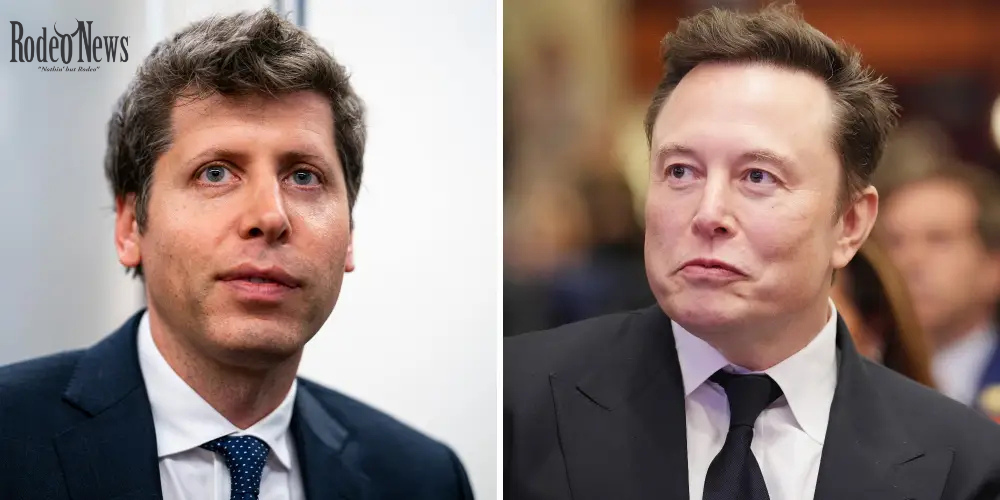
OpenAI is ending its OpenAI Cursor deal after Elon Musk’s SpaceX acquired Cursor’s parent company, escalating an already bitter rivalry between Musk and OpenAI CEO Sam Altman. The decision means Cursor users are expected to lose access to OpenAI’s artificial intelligence models beginning November 12, 2026.
The move is significant because Cursor has become one of the most prominent AI-powered coding platforms. The service allows developers to use artificial intelligence to write, edit, debug and understand software code. Before the ownership change, Cursor offered models from several major AI companies, including OpenAI and Anthropic.
OpenAI now says it no longer trusts SpaceX to comply with its contractual requirements. The company pointed to previous disputes involving other Musk-owned businesses as part of the reason for terminating the arrangement.
OpenAI Cursor Deal Set to End in November
OpenAI plans to stop supplying its models to Cursor on November 12, according to the reports. That would prevent Cursor from offering OpenAI models to its users under the existing arrangement.
The decision does not mean Cursor itself has been accused of violating OpenAI’s agreement. Instead, OpenAI’s concern centers on the company’s new ownership by SpaceX.
That distinction is important.
Cursor’s co-founder Michael Truell reportedly expressed disappointment with OpenAI’s decision and said discussions between the companies were continuing. He also indicated that OpenAI models account for only a relatively small portion of Cursor’s overall traffic, limiting the immediate impact on the platform’s broader service.
Cursor can continue relying on other AI providers. The platform already supports competing models, including Anthropic’s Claude and models from Google, while its new ownership gives it access to technology connected to Musk’s expanding AI ecosystem.
As a result, the dispute may ultimately accelerate Cursor’s shift away from OpenAI rather than threaten the company’s entire business.
Why SpaceX’s Cursor Acquisition Changed Everything
The conflict intensified after SpaceX completed its acquisition of Anysphere, the startup behind Cursor, in a deal valued at about $60 billion.
The acquisition transformed Cursor from an independent AI coding company into a business controlled by one of Musk’s largest companies.
SpaceX has increasingly expanded beyond its traditional rocket and satellite operations. The company has also become closely connected with Musk’s broader artificial intelligence ambitions through SpaceXAI and its relationships with other technology businesses.
Before the acquisition, Cursor was positioned as a relatively independent platform that could work with competing AI model providers. After the acquisition, however, OpenAI had to assess whether supplying its models to Cursor remained strategically and contractually acceptable.
Reuters reported that OpenAI’s decision reflects concerns about Musk-controlled companies and their previous interactions with OpenAI’s contractual requirements.
The result is a major shift in the competitive landscape for AI coding tools.
Musk and Altman’s Feud Moves Into AI Coding
The OpenAI Cursor deal is only the latest development in the long-running conflict between Musk and Altman.
Musk was among the people involved in founding OpenAI in 2015. He later left the organization and became one of its most prominent critics.
The disagreement became significantly more intense after OpenAI began moving away from its original nonprofit structure toward a more commercially oriented model.
Musk has repeatedly argued that OpenAI abandoned its founding mission. He has also pursued legal action against the company, while OpenAI has strongly disputed Musk’s claims.
The latest legal battle has added another layer to the rivalry. Reuters reported that Musk had pursued a lawsuit worth roughly $150 billion in claims against OpenAI, accusing the company of abandoning its nonprofit mission. The case was dismissed because of a filing issue involving the timing of the lawsuit.
Now, the conflict is reaching an important commercial relationship.
Instead of being limited to lawsuits, public statements and competing AI companies, the dispute is beginning to affect how AI products interact with one another.
OpenAI Cites Concerns About Musk Companies
OpenAI’s justification for ending the agreement focuses on trust and contract compliance.
The company has pointed to previous disputes involving Musk-owned businesses, including X and xAI.
According to Business Insider, OpenAI cited X’s termination of OpenAI’s access to certain data and an incident involving xAI’s use of OpenAI models for training its Grok AI system. OpenAI considers those events evidence that Musk-controlled companies may not reliably follow its contractual terms.
For OpenAI, that history appears to have become important after SpaceX took control of Cursor.
The argument is essentially that OpenAI is not accusing Cursor of misconduct but does not want to continue supplying its proprietary models to a company now controlled by an owner whose other businesses have been involved in contract disputes with OpenAI.
That creates an unusual situation in the technology industry.
Cursor may not have changed its product dramatically, yet its access to one of the world’s leading AI model providers is being affected because of a change in corporate ownership.
What Happens to Cursor Users?
For Cursor customers, the biggest question is what the end of the OpenAI agreement will mean in practice.
The immediate answer is that OpenAI models are expected to disappear from Cursor after November 12.
However, Cursor users are unlikely to lose access to AI coding altogether.
Cursor already supports multiple AI models, which means developers can choose alternatives rather than depending entirely on OpenAI. Anthropic is particularly important because Claude has become a major competitor in AI-assisted programming.
Reuters reported that Anthropic intends to increase its Claude model support for Cursor following OpenAI’s decision.
That could make the dispute a significant opportunity for Anthropic.
If developers who previously preferred OpenAI models remain loyal to Cursor, they may simply switch to Claude or another available model. Cursor could therefore maintain its user base while reducing its reliance on OpenAI.
At the same time, SpaceX’s ownership gives Cursor access to Musk’s growing technology infrastructure.
Business Insider previously reported that Cursor and SpaceX had begun collaborating on AI development, computing resources and product integration following the acquisition.
This suggests that Cursor’s future may increasingly be tied to Musk’s own AI ambitions.
Anthropic Could Become a Major Winner
One of the clearest potential beneficiaries is Anthropic.
The company competes directly with OpenAI in the rapidly expanding market for AI assistants and developer tools. Claude has gained significant traction among programmers because of its performance on coding and software-development tasks.
If Cursor expands its reliance on Claude after OpenAI’s exit, Anthropic could strengthen its position in the developer market.
That matters because coding has become one of the most important commercial applications for generative AI.
Developers are using AI systems not only to generate individual lines of code but also to plan projects, modify large codebases, identify bugs, write tests and automate repetitive programming tasks.
As AI coding agents become more capable, access to developers could become a major competitive advantage for model companies.
The OpenAI Cursor dispute therefore goes beyond one contract.
It could influence which AI model becomes the preferred technology for an entire generation of software developers.
SpaceX Is Becoming a Bigger AI Player
The situation also highlights how dramatically SpaceX’s technology ambitions have expanded.
SpaceX is best known for reusable rockets, satellite communications and its Starlink network. However, Musk has increasingly connected the company’s future to artificial intelligence.
The acquisition of Cursor gives SpaceX a direct position in software development and AI-assisted programming.
Cursor also provides a potential bridge between software developers and Musk’s broader AI ecosystem.
Business Insider previously reported that Cursor had begun working with SpaceX’s computing infrastructure and integrating Musk-related AI technology following the acquisition.
This creates a potentially powerful combination.
SpaceX brings enormous computing resources and a large technology operation. Cursor brings a popular developer platform. Musk’s wider AI ecosystem brings models and AI infrastructure.
Together, those assets could allow SpaceX to challenge established AI companies in areas well beyond aerospace.
The OpenAI Cursor Deal Shows the Importance of Ownership
The dispute also demonstrates how ownership can fundamentally change technology partnerships.
AI companies increasingly depend on one another.
A single application may combine models, cloud infrastructure, data services and specialized software from multiple providers. That creates partnerships that can become extremely complicated when companies are acquired by competitors.
Cursor is a particularly clear example.
As an independent startup, it could offer models from competing AI companies. Once SpaceX became its owner, one of those model providers decided the relationship was no longer acceptable.
That dynamic could become more common as AI consolidation accelerates.
Large technology companies are buying startups with valuable models, applications, developer communities and data. Those acquisitions can quickly transform business relationships that once appeared neutral.
For customers, this can create uncertainty.
A developer might choose a platform because it offers several AI models, only to discover later that one of those models disappears because of a corporate acquisition or contractual dispute.
AI Competition Is Becoming More Personal
The latest dispute also illustrates how personal rivalries can intersect with commercial competition.
Musk and Altman are no longer simply executives competing for market share. Their disagreement has developed into a broader struggle over the direction of artificial intelligence.
Musk has built an AI ecosystem around xAI and Grok while continuing to expand SpaceX’s technology operations.
Altman, meanwhile, is leading OpenAI as the company competes with Anthropic, Google and other major technology firms.
The companies are fighting over developers, enterprise customers, computing capacity, model performance and access to capital.
Against that backdrop, the decision to end the Cursor relationship sends a powerful message.
OpenAI is willing to sacrifice access to a significant developer platform rather than maintain a commercial arrangement it considers risky.
What Comes Next for Cursor and OpenAI?
The November 12 deadline leaves room for negotiations.
Cursor’s leadership has indicated that discussions with OpenAI are continuing, meaning the current plan could potentially change.
However, OpenAI’s public explanation suggests that the dispute is serious.
If no agreement is reached, Cursor will need to rely more heavily on alternative models. That could ultimately reduce OpenAI’s influence among Cursor’s users while increasing the importance of Anthropic and Musk’s own AI technology.
For OpenAI, the decision reinforces its effort to protect its models and contractual relationships.
For SpaceX, the dispute could encourage even greater investment in an independent AI ecosystem.
For developers, the outcome will likely be judged on one simple question: Which combination of AI models and coding tools produces the best results?
That means the commercial consequences may ultimately be more important than the personal feud itself.
A New Chapter in the Musk-Altman Battle
The end of the OpenAI Cursor deal marks a striking new chapter in the long-running Musk-Altman conflict.
What began as a disagreement over OpenAI’s mission has expanded into lawsuits, competing AI companies, public attacks and now a major technology partnership being dismantled.
Cursor itself remains positioned to continue operating because it has access to multiple AI providers. The company also has the resources and infrastructure of SpaceX behind it.
OpenAI, meanwhile, is making clear that corporate relationships matter as much as technical compatibility when deciding who can access its models.
The biggest consequence may therefore extend beyond Cursor.
As AI companies become more interconnected, ownership, contracts and competitive rivalries will increasingly determine which models developers can use.
For now, November 12 is the key date.
Unless OpenAI and Cursor reach a new agreement, OpenAI’s models will leave the platform, closing one partnership and opening another major front in the escalating battle between Elon Musk and Sam Altman.
Sources: Business Insider and Reuters.
Image ALT Text: OpenAI Cursor deal ends as SpaceX ownership intensifies Elon Musk and Sam Altman feud