Nepal Flood Risk: 2 Lakes Raise Fresh Alarm
The Nepal flood risk has intensified after authorities in Nepal and China warned that newly formed lakes could trigger another devastating surge of water in the Himalayan border region. The warning comes only days after a catastrophic flood killed hundreds of people and left large numbers missing across Nepal and China’s Tibet region.
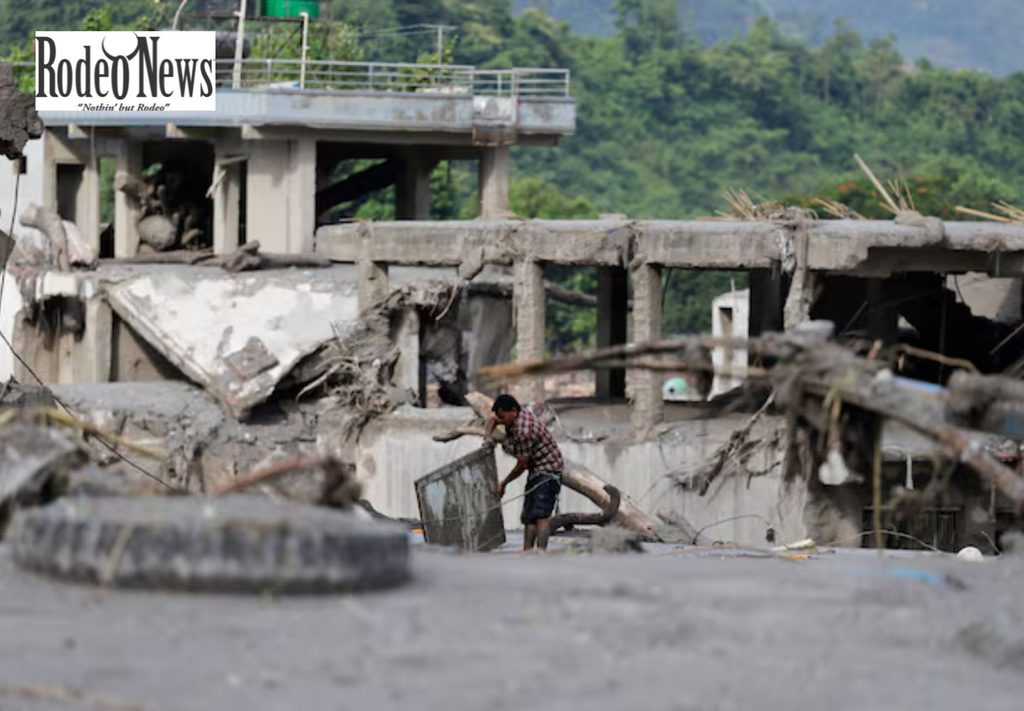
The latest threat has added a new and dangerous dimension to an already severe disaster. Rescue teams are still searching for survivors and missing people, while authorities are monitoring unstable areas where water has accumulated behind enormous quantities of rock, mud and other debris.
Officials in both countries are concerned that a sudden breach could send another powerful flood downstream.
Nepal Flood Risk Grows After Devastating Himalayan Disaster
The immediate concern follows a massive flash flood that swept through parts of the Nepal-China border area earlier this week.
The disaster was associated with a collapse involving ice, rock and debris in the high Himalayas. The resulting torrent moved rapidly through river valleys, destroying roads, bridges, homes and other infrastructure.
Reuters reported that the death toll had reached at least 362, while nearly 1,000 people were missing when the latest warning was issued. The numbers remain subject to change as rescue and recovery operations continue.
The scale of the destruction has made the possibility of another flood particularly alarming.
Communities that have already suffered major losses are now facing the possibility that unstable natural barriers could fail and release large quantities of trapped water.
Nepal Flood Risk Linked to a Rapidly Rising Lake
One of the most serious concerns is in Nepal, where debris has blocked a river and created a new lake.
Water has been accumulating behind the debris barrier, causing the lake to rise. Authorities have urged people in potentially dangerous areas to move away from the affected zone.
The warning extends beyond local residents. Rescuers and travelers have also been advised to avoid high-risk locations as officials assess whether the natural barrier can withstand increasing water pressure.
A naturally created lake behind a landslide or debris dam can be extremely difficult to predict. Unlike engineered dams, these barriers are irregular and may contain loose rock, soil, ice and other material.
If water begins flowing over the barrier, erosion can accelerate rapidly. A relatively small breach can therefore become a much larger failure in a short period.
That is one reason the current Nepal flood risk is being treated with urgency.
China Warns of Millions of Cubic Metres of Water
China is also monitoring a dangerous lake created by debris blocking a river system.
Chinese authorities estimate that approximately 3 million cubic metres of additional water could enter the already dammed lake over a period of three days. Officials have warned that the situation could become particularly dangerous around September 1.
The potential breach has raised concerns about another downstream flood at a time when the region is already struggling to respond to the earlier disaster.
Aerial observations have shown brown water accumulating behind the debris barrier. The imagery provides a visible indication of how much material has been deposited in the river system and how water is being retained.
Authorities are therefore watching water levels, weather conditions and the stability of the natural dam.
Why a Barrier Lake Can Become Dangerous
A barrier lake forms when a river is blocked by material such as rock, mud, landslide debris or ice.
The process can happen suddenly after a landslide or glacier-related collapse. Once the river is obstructed, water begins collecting behind the blockage.
At first, the lake may appear stable.
However, increasing water pressure can weaken the barrier. If the water reaches the top, it can begin cutting through the material. Erosion can then enlarge the opening and increase the speed of the discharge.
The result can be a sudden flood carrying not only water but also huge quantities of sediment and debris.
That combination makes these events particularly destructive in steep Himalayan valleys.
Rainfall Could Make the Nepal Flood Risk Worse
Weather conditions are another major concern.
Forecasts indicate that additional rainfall is possible during the coming week. More rain could increase water levels in already swollen rivers and add pressure to unstable natural dams.
Rain can also destabilize slopes by saturating soil and loose material.
For communities downstream, this creates a difficult situation. Even if an existing barrier remains intact, additional rainfall could contribute to new landslides or accelerate erosion around the lake.
Officials therefore have to monitor several hazards simultaneously rather than focusing on one potential source of flooding.
Rescue Teams Face a New Challenge
The warnings come while emergency crews continue their search for people missing after the original disaster.
Some rescue teams have already moved toward safer locations because of concerns about additional flooding. This illustrates the difficult balance emergency workers face: they must search for survivors while avoiding areas that could themselves become dangerous.
The continuing threat can also complicate the delivery of food, medicine and other emergency supplies.
Roads and bridges damaged by the initial flood have already disrupted transportation. A second major flood could make access even more difficult.
For isolated Himalayan communities, losing a transport route can mean losing access to essential assistance for days or longer.
Nepal-China Border Region Remains on High Alert
The affected area spans one of the world’s most rugged environments.
The Himalayas contain steep valleys, glaciers, unstable slopes and river systems that can respond rapidly to extreme weather and geological events.
The Nepal-China border also contains important transportation and trading routes. Damage to crossings and roads can have consequences far beyond individual communities.
The earlier disaster severely affected infrastructure in the region, including the important Gyirong border area on the Chinese side. Reuters previously reported major casualties and a large number of people missing in Tibet following the mudslide.
With the possibility of another flood, authorities have little room for error.
A Growing Concern for the Himalayan Region
The current emergency also highlights a wider concern about disaster risks in high mountain regions.
Glaciers and frozen ground help shape the stability of Himalayan landscapes. Scientists have increasingly studied how warming temperatures are affecting glaciers, snow and permafrost, although the precise causes of individual disasters require separate investigation.
Reuters reported that experts were examining the role of a glacier collapse in the earlier flooding. Satellite observations and geological analysis have also been used to investigate how ice, rock and debris entered the river system.
This matters because the Himalayas are not simply exposed to conventional river flooding.
The region can experience landslides, avalanches, glacier-related floods and glacial lake outburst floods. Several hazards can interact, creating events that are difficult to predict and extremely destructive.
What Is a Glacial Lake Outburst Flood?
A glacial lake outburst flood, often called a GLOF, occurs when water stored in or around a glacier-fed lake is suddenly released.
The lake may be held back by a natural barrier made of glacial sediment, rock or ice.
If that barrier fails, enormous volumes of water can move downstream at high speed.
GLOFs are especially dangerous when communities and infrastructure are located in narrow valleys below the lake. The steep terrain can concentrate the water and debris into a powerful flow.
Nepal has experienced such events before. In 2024, a glacial lake outburst flood struck the village of Thame in the Everest region, damaging homes and other infrastructure.
The latest disaster demonstrates why monitoring potentially dangerous lakes and improving early-warning systems remain important priorities for Himalayan countries.
Why Early Warning Systems Matter
The difference between a warning issued hours in advance and no warning at all can be enormous during a sudden flood.
Monitoring systems can track changes in lake levels, rainfall, river conditions and the stability of surrounding terrain.
Authorities can then issue evacuation orders when indicators suggest that a breach is becoming more likely.
However, mountainous terrain presents significant logistical challenges. Remote settlements may have limited communication networks, few evacuation routes and difficult access for emergency personnel.
That makes preparedness especially important.
Residents in high-risk valleys need to know where to go before an emergency occurs. Authorities also need reliable ways to communicate warnings quickly.
What Happens Next?
For now, authorities in Nepal and China are closely monitoring the threatened lakes and surrounding river systems.
The immediate priorities are protecting people in vulnerable locations, maintaining access for emergency operations and determining whether the natural barriers can withstand rising water levels.
The situation could change quickly.
Rainfall could increase the danger. Conversely, controlled drainage or natural changes to the barriers could reduce pressure. Officials therefore need continuous monitoring rather than relying on a single assessment.
For communities already devastated by the first flood, however, the possibility of another major surge has created an especially tense situation.
Nepal Flood Risk Highlights a Wider Climate and Disaster Challenge
The latest warnings show how quickly a natural disaster can evolve into a chain of threats.
A glacier or slope collapse can block a river. The blockage can create a lake. The lake can then become a potential source of another flood.
Each stage introduces a new hazard.
The situation also demonstrates why disaster preparedness in the Himalayas increasingly requires cooperation across borders. Rivers do not stop at political boundaries, and a landslide or lake breach upstream can affect communities far downstream.
Nepal and China therefore face a shared challenge: monitor rapidly changing mountain conditions and warn populations before another destructive event occurs.
The Nepal flood risk remains serious, particularly as additional rainfall is expected and unstable lakes continue to be monitored.
For residents, rescuers and travelers in affected areas, following official evacuation and safety instructions remains critical.
The immediate emergency is still unfolding. But the latest lake warnings make one thing clear: even after the first flood has passed, the Himalayan landscape can continue to generate dangerous and unpredictable threats.
Sources & Further Reading
- Reuters — latest report on the fresh flood threat in Nepal and China.
- Reuters — report on the wider Himalayan flood disaster and ongoing rescue operation.
- Reuters — report on the glacier collapse believed to have contributed to the disaster.
- Reuters — report on the situation in Tibet’s Gyirong region.
Suggested WordPress Image Caption
Aerial and satellite observations show the scale of flooding and debris accumulation in the Nepal-China Himalayan border region.