
Yayoi Kusama Obituary: 97-Year Art Legacy Revealed
The Yayoi Kusama obituary marks the passing of one of Japan’s most influential and recognizable artists. Kusama died at a hospital in Tokyo on Aug. 14, 2026, at the age of 97, according to a statement from her company released Thursday. Her death closes a remarkable artistic career that stretched across painting, sculpture, installation, performance, fiction and poetry.
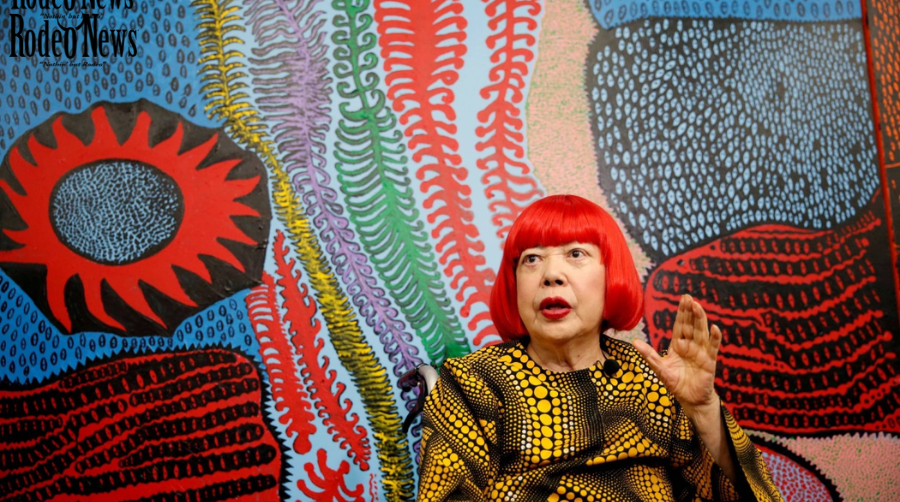
For generations of art lovers, Kusama was more than the creator of colorful polka-dot paintings. She developed an artistic language built around repetition, infinity, self-obliteration and immersive environments. Her signature dots and mirrored installations eventually transformed her from an avant-garde artist working on the margins into a global cultural icon.
The official announcement said Kusama continued painting until her final days. Her studio described her as a pioneering avant-garde artist whose creative work extended across multiple disciplines and said she remained committed to exploring themes of eternal love and the soul.
Yayoi Kusama Obituary and Her Final Chapter
Kusama’s death was announced by her studio and company on Aug. 27, although she had died nearly two weeks earlier. The official statement did not disclose a cause of death. She was 97.
The Japan Times report on Kusama’s death described her as an acclaimed Japanese contemporary artist whose influence reached far beyond traditional painting.
Her career remained unusually productive late into life. Rather than treating old age as a reason to slow down, Kusama continued developing new work and maintaining a disciplined artistic practice.
The Yayoi Kusama Museum announcement said she “continued to paint until her final days,” emphasizing the central role that artistic creation played throughout her life.
Her passing therefore represents not simply the death of a famous artist, but the end of one of the most distinctive creative careers of the modern era.
From Matsumoto to the International Art World
Yayoi Kusama was born on March 22, 1929, in Matsumoto, Nagano Prefecture, Japan. She began making art at a young age and eventually developed the visual motifs that would define her career.
According to biographical accounts published after her death, Kusama experienced hallucinations during childhood. She described seeing dots and net-like patterns that seemed to cover objects and surroundings.
Those experiences became deeply connected to her artistic identity.
Instead of simply attempting to escape the visions, Kusama transformed them into paintings, sculptures and installations. Repetition became one of the defining principles of her work.
Her early development was also shaped by her determination to pursue art despite expectations placed upon women in Japan at the time.
In 1957, she moved to the United States and eventually established herself in New York. There, she encountered an increasingly experimental art scene and began producing large-scale works that attracted attention.
One of her best-known early series was Infinity Net, consisting of repetitive painted marks that could extend across large canvases.
Her work challenged conventional ideas about painting and artistic scale. Rather than relying on a single central image, Kusama often created visual environments in which repetition appeared endless.
The Rise of the Polka Dots
The polka dot became Kusama’s most recognizable visual signature.
At first glance, the dots can look playful and decorative. However, their significance within Kusama’s art is considerably more complex.
She used repeated dots to explore ideas of infinity, disappearance and the relationship between the individual and the surrounding environment.
By covering objects, walls and entire rooms with repeated patterns, Kusama could make familiar spaces appear strange and limitless.
Her approach eventually became one of the most recognizable styles in contemporary art.
Large pumpkins covered in dots became another important part of her visual identity. The pumpkin sculptures combined a simple, familiar object with an exaggerated scale and intense patterns.
The result was unmistakably Kusama.
Her art could be immediately recognized even when viewers did not know the title of the work or the institution displaying it.
Yayoi Kusama Obituary: The Infinity Mirror Rooms
No discussion of Kusama’s legacy would be complete without her Infinity Mirror Rooms.
These immersive installations use mirrors, lights and repeated forms to create the illusion of an endless environment. Instead of standing outside a painting and looking at it, visitors enter the artwork itself.
That experience helped introduce Kusama to audiences far beyond the traditional contemporary art world.
The rooms also became especially popular with younger audiences because they offered a visually striking experience that could be photographed and shared.
Yet their popularity should not obscure their artistic importance.
The installations build upon Kusama’s decades-long interest in repetition and infinity. Mirrors multiply lights, objects and reflections until the viewer can lose a conventional sense of scale and boundaries.
In this way, the Infinity Mirror Rooms connect directly with ideas that appeared throughout her career.
The concept of infinity was not a late invention designed for museum visitors. It was part of a much longer artistic investigation.
A Career That Crossed Artistic Boundaries
Kusama never confined herself to one medium.
Her work included painting, sculpture, installation and performance. She also wrote novels, poetry and other literary works. The official statement following her death emphasized this unusually broad creative practice.
During the 1960s, Kusama became involved in New York’s experimental art scene.
She organized provocative performances and happenings that challenged social conventions. Her work during this period explored the body, sexuality, repetition and the relationship between art and everyday life.
She also experimented with mirrored surfaces and accumulations of repeated objects.
One notable example was Narcissus Garden, which she presented at the 1966 Venice Biennale despite not being officially invited. The work consisted of hundreds of mirrored spheres that reflected both viewers and their surroundings.
Decades later, Kusama’s experiments with mirrors would become central to her worldwide reputation.
From Avant-Garde Outsider to Global Icon
Kusama’s rise was not immediate.
For years, she operated outside the mainstream of the international art establishment. Her career included periods when she received limited recognition compared with some of the male artists associated with the same avant-garde circles.
Eventually, however, museums, galleries and collectors began reassessing her importance.
Her work increasingly appeared in major international exhibitions.
A major turning point came in 1993, when Kusama represented Japan at the Venice Biennale with a solo presentation. Her installation combined mirrors, pumpkins and her distinctive polka-dot aesthetic.
The exhibition helped reinforce her international reputation.
From there, her visibility continued to grow.
Her work was subsequently exhibited by major institutions, including the Museum of Modern Art in New York, Tate Modern in London and the Broad in Los Angeles. The Washington Post noted that a 1989 retrospective helped launch a new period of recognition for Kusama after years of relative obscurity in the United States.
Kusama and the Power of Repetition
Repetition was arguably the central concept connecting Kusama’s enormous body of work.
Dots, nets, mirrors, pumpkins and other repeated forms appeared again and again.
Rather than simply copying an image, Kusama used repetition to alter the viewer’s perception.
A single dot is ordinary.
Thousands of dots can become an environment.
A single mirror reflects a person.
Hundreds of mirrors can make the person appear to disappear into an apparently endless space.
This transformation from the familiar to the overwhelming became one of Kusama’s greatest artistic achievements.
Her work demonstrated how a simple visual idea could become psychologically powerful when repeated on a massive scale.
Art as a Way of Surviving
Kusama frequently spoke about the relationship between her art and her personal struggles.
She described creating art as an essential part of her ability to continue living and working.
Her experiences with hallucinations became part of the foundation for her artistic vocabulary. Rather than separating her personal experiences from her creative work, Kusama often incorporated them directly into her practice.
She voluntarily lived for decades in a psychiatric institution in Tokyo while maintaining a nearby studio and continuing to create art.
That unusual arrangement became an important part of the public understanding of her career.
However, her legacy extends beyond her personal story.
Kusama’s influence cannot be reduced to the challenges she experienced. Her importance comes from the way she transformed those experiences into a highly original artistic language that influenced contemporary art across generations.
A Complicated Legacy
Like many major cultural figures, Kusama’s legacy includes difficult and controversial aspects.
In 2023, an offensive passage from her 2002 autobiography resurfaced publicly and prompted criticism. Kusama apologized for the remarks and said her artistic message was intended to promote love, hope, compassion and respect.
The episode became part of a broader conversation about how audiences evaluate celebrated artists while also confronting troubling aspects of their personal histories.
That complexity is important when considering a historical figure of Kusama’s scale.
Her artistic achievements were enormous, but a complete account of her life must also acknowledge controversy rather than presenting an entirely uncomplicated portrait.
Yayoi Kusama’s Global Commercial Success
Kusama eventually became one of the most commercially successful female artists in the world.
Her paintings and sculptures have commanded millions of dollars at auction. One of her works sold for about $10.5 million in 2022, demonstrating the extraordinary financial value that the art market placed on her work.
Her influence also expanded beyond museums and galleries.
Kusama collaborated with major fashion and luxury brands, helping introduce her visual language to audiences who might never have visited a contemporary art exhibition.
Her bright colors, dots and repeated patterns became instantly recognizable across fashion, advertising and popular culture.
That crossover was unusual for an artist whose roots were in the avant-garde.
Why Yayoi Kusama Still Matters
The importance of Kusama’s work is not simply that millions of people recognize her polka dots.
Her deeper contribution was the way she challenged boundaries.
She questioned the distinction between painting and environment. She blurred the line between sculpture and architecture. She turned personal experiences into public installations.
Most importantly, she showed that repetition could become an artistic philosophy.
Kusama’s work asks viewers to reconsider their own position in relation to the world around them.
When surrounded by thousands of dots or reflected endlessly inside a mirrored room, the individual can appear both central and insignificant.
That tension runs through much of her work.
The Yayoi Kusama Museum Carries Her Vision Forward
Kusama’s artistic legacy will continue through museums, exhibitions, collections and the institutions dedicated to preserving her work.
The Yayoi Kusama Museum in Tokyo remains one of the most important places for audiences to encounter her work and artistic philosophy.
Following her death, the museum and foundation said her wishes would be carried forward through art and expressed hope that her work would continue bringing strength and hope to people around the world.
The museum also announced that its KUSAMA’s POP exhibition would continue as scheduled through Aug. 30.
That continuation is fitting.
Even after Kusama’s death, her work remains active.
Visitors continue entering her installations. Museums continue displaying her paintings. New audiences continue discovering her dots, pumpkins and mirrored spaces.
Yayoi Kusama Obituary: An Extraordinary 97-Year Journey
The Yayoi Kusama obituary ultimately tells the story of an artist who refused to remain within conventional boundaries.
She began as a young Japanese artist with an unconventional vision. She moved to New York, entered the experimental art world, developed radical new forms and spent decades building a career that did not fit comfortably into any single artistic movement.
Her recognition grew slowly.
Then it exploded.
By the final decades of her life, Kusama had become a worldwide cultural phenomenon.
Her red hair, polka dots and Infinity Mirror Rooms became instantly recognizable. More importantly, the ideas behind those images had entered the vocabulary of contemporary art.
Kusama died at 97, but her work remains remarkably present.
The official statement from her studio said she continued painting until her final days.
That detail perhaps captures her legacy better than any award, auction price or museum exhibition.
For Kusama, art was never simply a career.
It was the method through which she understood the world.
And for millions of people around the world, her art became a way to experience something that seemed impossible to describe: infinity.
Image ALT Text
Yayoi Kusama obituary: Japanese artist surrounded by her iconic polka-dot artwork
Suggested Featured Image
Yayoi Kusama photographed at her Tokyo studio or an authorized image showing Kusama with her signature polka-dot artwork.
External Sources
- The Japan Times — Yayoi Kusama obituary report
- Yayoi Kusama Museum — Official announcement
- Yayoi Kusama Official Website
- Associated Press — Kusama obituary and legacy
- The Washington Post — Kusama obituary
Internal Link Suggestions
- Japanese contemporary art → link to your existing Japanese art coverage
- Famous artists who changed modern art → link to a relevant artist profile or culture roundup
- Contemporary art exhibitions → link to your latest exhibition coverage
- Japan culture news → link to your main Japan culture category
SEO note: The focus keyword appears in the SEO title, meta description, slug, opening paragraph, multiple subheadings and naturally throughout the article. The title is under 60 characters, the slug is under 75 characters, and the meta description is under 160 characters.