
Bill Gates AI Jobs: Shocking Warning on 40% Human Work
Bill Gates AI jobs concerns have taken a sharper turn after the Microsoft co-founder warned that artificial intelligence could trigger profound changes across the global labor market. Gates says the transition could be far faster than previous technological revolutions and argues that governments need to prepare before large numbers of workers are displaced.
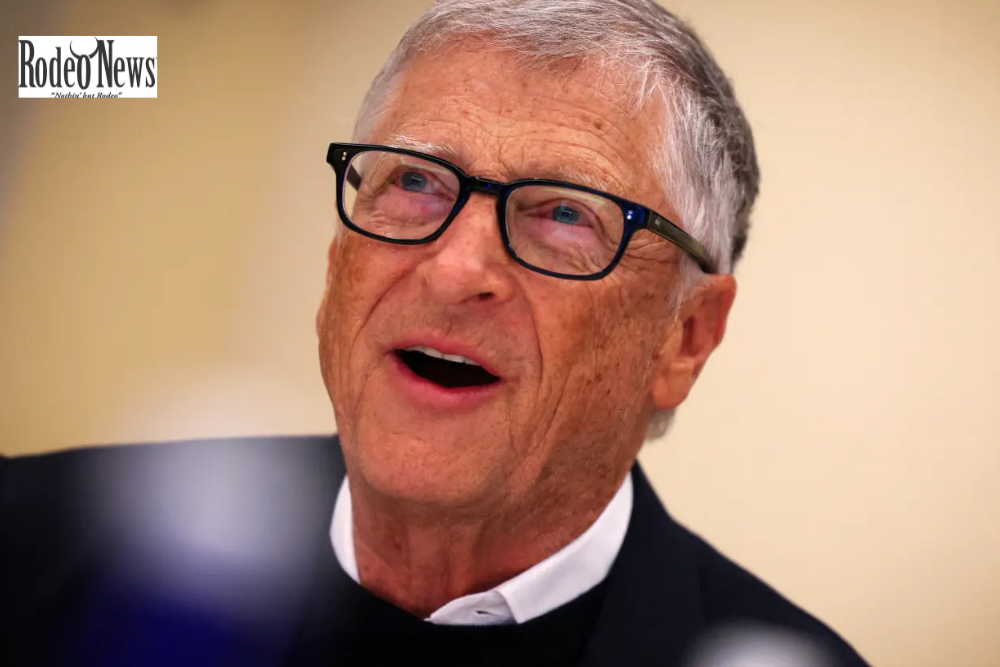
In a lengthy essay published on his Gates Notes website, Gates described the coming period as a potentially turbulent era for the economy. He warned that AI could become either an extraordinary tool for reducing inequality or one of the biggest sources of economic injustice ever created.
His warning comes as companies race to deploy increasingly capable AI systems across offices, factories, customer service operations, software development and other industries.
Gates believes the central question is no longer whether AI will change employment. Instead, he says societies must decide how the economic gains from AI will be distributed and what role humans should continue to play in the workforce.
Bill Gates AI Jobs Warning Is Getting More Serious
Gates argues that AI is fundamentally different from many earlier technologies.
Previous technological revolutions often took decades or even generations to transform the labor market. AI, however, can spread through existing computers and digital systems much faster. Workers do not necessarily need to learn entirely new machines because AI can interact through natural language and existing software.
That speed concerns Gates.
He believes AI could increasingly perform tasks that previously required human cognition, including analysis, communication, decision-making and professional judgment. As the technology becomes more reliable, companies will have stronger financial incentives to automate those tasks.
Gates expects the initial disruption to remain concentrated among entry- and mid-level jobs. However, he says the effects could eventually spread much further.
Sales, customer support, software engineering and paralegal work are among the areas he identifies as vulnerable. Other occupations involving loan assessments, data analysis and medical triage could also experience significant automation.
The implications could be especially serious for young workers.
Entry-level positions traditionally provide people with their first opportunity to develop professional skills. If AI eliminates a large portion of those positions, new workers could find it harder to enter established careers.
AI Could Move From White-Collar Jobs to Blue-Collar Work
The debate surrounding AI employment has largely focused on office workers.
Gates believes that is only the beginning.
AI software can already perform many digital tasks. Meanwhile, advances in robotics are gradually giving machines greater physical dexterity.
According to Gates, the combination of increasingly capable AI and cheaper, smarter robots could eventually affect construction, hospitality, manufacturing and other physical industries. He expects some forms of competition between robots and human workers to emerge before the end of the decade.
That creates a potentially broader economic challenge.
A software system can replace a specific office task without physically occupying a workplace. A robot, by contrast, could eventually perform a much wider sequence of physical activities.
The two technologies could also reinforce each other.
If one company automates successfully and lowers its costs, competitors may have little choice but to adopt similar technology. Otherwise, they risk becoming less competitive.
This could create what Gates describes as a cycle in which market competition accelerates automation.
Gates Wants Some Jobs Reserved for Humans
One of the most striking ideas in Gates’s proposal is his concept of “Human Reserved” work.
Rather than allowing every job to be automated simply because a machine can technically perform it, Gates argues that society could deliberately preserve certain occupations for humans.
He compares the concept to a nature reserve.
A nature reserve is not created because humans are incapable of developing the land. It exists because society decides that preserving something has value.
Gates believes some human activities could deserve similar protection.
Caregiving is one example.
In his essay, Gates discusses his father’s experience with Alzheimer’s disease and the caregivers who provided personal support during his illness. Gates argues that certain elements of compassionate human care are difficult to replace with machines, even if robots eventually become technically capable of performing many physical caregiving tasks.
Education and mental-health care could also remain partly human-led.
AI could assist professionals, but a human could remain responsible for important decisions and relationships.
The approach would not necessarily mean banning AI from entire industries. Instead, governments could determine where human involvement is considered socially important.
Gates acknowledges that deciding which occupations should receive this protection would be difficult.
Different countries could also make different choices depending on their demographics and economic conditions. Japan, for example, faces an aging population and labor shortages that could make robotic assistance particularly attractive.
Bill Gates Supports an AI and Robot Tax
Gates also revived another controversial proposal: taxing automation.
His argument is based partly on the existing structure of taxation.
When a company hires a person, the employment relationship generates payroll-related tax revenue. When a company purchases automation technology, the tax treatment can be very different.
Gates argues that this can create an incentive to replace workers with machines.
His proposal is to tax AI-related activity and robots in some form, while using the resulting revenue to support workers and strengthen social programs. Reuters reported that Gates discussed taxing revenue associated with AI output used to replace human labor.
The objective would not necessarily be to stop technological progress.
Instead, a tax could potentially slow the pace of displacement while giving governments additional resources for retraining, unemployment support and other programs.
Gates has supported versions of a robot tax for years. What has changed is the scale of the technology now being discussed.
AI is no longer limited to industrial robots performing repetitive physical tasks. It can increasingly perform cognitive work as well.
That makes the tax debate considerably more complicated.
Why AI Job Losses Could Be Different This Time
Supporters of technological progress often point to history.
Machines eliminated many agricultural jobs, for example, while industrialization and later the growth of office-based employment created entirely new occupations.
Gates does not believe that history guarantees the same outcome with AI.
His argument is that previous machines primarily replaced physical labor. AI can increasingly substitute for human cognition.
That distinction matters.
If a machine replaces a worker performing repetitive physical labor, the worker may be able to transition into a job requiring communication, analysis or other cognitive skills.
But what happens if increasingly capable AI systems can perform those cognitive tasks too?
That is the question Gates wants policymakers to confront now.
He says the transition could happen over a decade rather than over several generations.
However, that does not mean every job will disappear.
Some new occupations will emerge. Lower costs could also create new demand for products and services.
The uncertainty is about whether the number and quality of new jobs will be sufficient to replace those that disappear.
AI Could Increase Inequality
Perhaps the biggest issue behind Gates’s warning is not unemployment alone.
It is who owns the technology.
If AI dramatically increases productivity, companies could produce more goods and services with fewer workers. That could create enormous economic value.
But productivity gains do not automatically guarantee equal distribution of wealth.
If most AI systems are owned by a relatively small number of companies and investors, the financial benefits could become concentrated.
Workers could therefore face a difficult combination: fewer available jobs, weaker bargaining power and greater dependence on government support.
Gates argues that policymakers should address this before the problem becomes severe.
Reuters reported that Gates sees responsible management of AI as an issue requiring cooperation among governments, technology companies and international institutions. He has also called for a new international organization to address AI risks.
Gates Says AI Could Bring Major Benefits
Despite the alarming headlines, Gates is not arguing that AI should simply be stopped.
In fact, his essay makes a strong case for the opposite.
He believes AI could produce enormous benefits in healthcare, education, agriculture, clean energy and other areas.
AI could help doctors and healthcare workers process information faster. It could provide educational assistance to students and teachers. It could help researchers develop medicines and vaccines more efficiently.
For people with disabilities, AI could also create greater independence.
Small businesses could gain access to capabilities that previously required expensive specialists or large teams.
The challenge, Gates argues, is ensuring those benefits reach ordinary people rather than being captured primarily by wealthy individuals and large corporations.
That distinction is central to his argument.
Gates is not warning that AI itself is inherently bad. He is warning that society could manage the transition badly.
AI Safety Goes Beyond Jobs
Employment is only one part of Gates’s concern.
He also warns that increasingly powerful AI could give individuals and organizations new capabilities for cyberattacks, fraud, disinformation and potentially biological threats.
The same technology that helps cybersecurity professionals identify vulnerabilities could potentially help attackers find them.
Likewise, AI could accelerate medical research while also creating new risks if powerful biological capabilities are misused.
Gates therefore argues that AI governance cannot be treated solely as an employment issue.
It touches national security, healthcare, education, taxation, energy, elections, financial systems and public infrastructure.
This is one reason he wants stronger international coordination.
AI systems operate across borders, while governments remain primarily national.
That mismatch could become increasingly difficult to manage.
Gates Wants the U.S. and China to Cooperate
Gates has also called for greater cooperation between the United States and China on AI safety.
Reuters reported that he wants to discuss the issue with Chinese President Xi Jinping and believes international coordination could help address dangerous AI capabilities without preventing beneficial innovation.
Gates has proposed monitoring certain AI capabilities related to biological threats and creating an international framework inspired partly by existing systems for nuclear inspections and aviation safety.
The goal would be to establish common standards while allowing legitimate AI development to continue.
That will not be easy.
The United States and China are simultaneously competing for technological leadership, making cooperation on advanced AI especially complicated.
Nevertheless, Gates believes the potential consequences are large enough that countries cannot afford to ignore the problem.
What Bill Gates AI Jobs Warning Means for Workers
For workers, the message is relatively straightforward.
AI skills are becoming increasingly valuable, but simply learning how to use a chatbot may not be enough.
Workers should focus on capabilities that complement automation rather than compete directly with it.
Critical thinking, communication, leadership, relationship-building, domain expertise and the ability to supervise AI systems could become increasingly important.
At the same time, workers should expect their occupations to change.
A person may not lose their entire job to AI. Instead, a significant percentage of their daily tasks could become automated.
That could change what employers expect from the role.
The most important question may therefore shift from “Will AI take my job?” to “Which parts of my job can AI perform, and what valuable work remains uniquely human?”
The Bigger Economic Question
Bill Gates’s latest warning ultimately raises a question much larger than employment.
If AI makes economies dramatically more productive, society could potentially have more wealth than ever before.
But productivity alone does not determine whether people live better lives.
Governments will have to decide how to handle taxation, education, retraining, social protection and ownership in an economy where machines can perform an increasing share of productive work.
Gates’s proposals—including human-reserved occupations, taxes on AI and robots, stronger safety nets and international coordination—are controversial.
They also raise difficult questions.
Who decides which jobs are protected?
How would governments define an AI tax?
Could such taxes discourage useful innovation?
Would companies move automation to countries with lower taxes?
And if AI eventually becomes substantially cheaper and more capable than human labor, can regulation realistically prevent businesses from adopting it?
There are no simple answers.
The AI Transition Has Already Begun
The most important point in the Bill Gates AI jobs debate may be that the transition does not belong entirely to the future.
Companies are already experimenting with AI agents, automated customer service, coding systems, data analysis tools and increasingly autonomous software.
The question is now one of scale and speed.
Gates believes the world is moving toward a period in which AI could transform both white-collar and blue-collar employment much faster than previous technological revolutions.
His warning is therefore less about predicting one exact unemployment number and more about forcing governments and businesses to prepare before disruption becomes overwhelming.
The optimistic scenario is one in which AI makes healthcare, education, business and everyday life cheaper and more accessible.
The pessimistic scenario is one in which productivity rises while employment opportunities, wages and economic security become increasingly concentrated.
Gates believes the outcome is not predetermined.
His central message is that society still has time to shape the transition—but waiting until millions of workers have already been displaced could make the problem far harder to solve