Image ALT Text
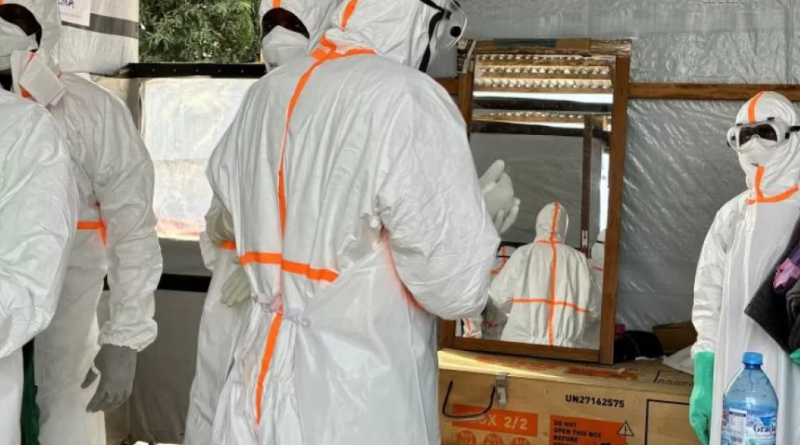
Congo Ebola outbreak: WHO health workers respond at an Ebola treatment center in Ituri, Democratic Republic of Congo
Full Article
Congo Ebola Outbreak Passes 5,200 Cases After 100 Days
The Congo Ebola outbreak has passed a grim milestone, with more than 5,200 confirmed cases recorded as the Democratic Republic of the Congo reaches 100 days since declaring the latest Ebola epidemic. The World Health Organization says the outbreak has become the country’s fastest-growing Ebola outbreak, with transmission continuing to outpace containment efforts.
The latest WHO assessment shows that the epidemic is expanding despite major improvements in testing, treatment capacity, surveillance and community outreach. Authorities and international partners are now being urged to significantly scale up operations in areas where transmission remains intense.
The outbreak is caused by Bundibugyo virus disease, a form of Ebola that has created a particularly difficult public-health challenge. Ituri Province remains the epicenter, accounting for about 85% of reported cases and 79% of deaths, according to WHO.
After 100 days, the message from health officials is clear: progress is possible, but the current response is not yet moving fast enough to stop the virus.
Congo Ebola Outbreak Is Growing Faster Than Previous Epidemics
The speed of the current Congo Ebola outbreak is one of its most worrying features.
WHO reported that an average of around 90 confirmed cases per day was recorded during the first three months of the outbreak. That pace is significantly higher than the rate observed during comparable periods of the 2014–2016 West Africa Ebola epidemic and the 2018–2020 Ebola outbreak in the Democratic Republic of the Congo.
The outbreak has also expanded geographically.
What initially emerged in the Mongbwalu health zone in Ituri has now reached a sixth province. WHO’s August 14 disease outbreak report identified transmission across 54 health zones in six provinces, including Ituri, North Kivu, South Kivu, Haut-Uélé, Tshopo and Bas-Uélé.
That expansion increases the logistical burden on response teams.
Each newly affected area requires laboratories, trained health workers, protective equipment, treatment facilities, surveillance teams and contact tracing. Roads and security conditions can make those resources difficult to deploy quickly.
The result is a race between the virus and the response system.
Ituri Remains the Epicenter of the Congo Ebola Outbreak
Ituri remains at the center of the crisis.
The province accounts for approximately 85% of cases and 79% of deaths, making it the most important area for intensified containment efforts.
The concentration of infections in Ituri provides an opportunity for health authorities to focus resources where they can have the greatest impact. However, the outbreak has already moved beyond the province, meaning that containment efforts cannot be limited to a single region.
WHO’s latest disease outbreak assessment said cases had been reported from 54 health zones across six provinces as of August 12. The newest affected province was Bas-Uélé, where a confirmed case was identified in Buta health zone after travel from Haut-Uélé.
This pattern highlights the importance of population movement in the epidemic.
People travel between communities for work, family, trade and access to essential services. In a region affected by conflict and displacement, those movements can be difficult to monitor.
Consequently, health authorities must strengthen surveillance not only around known transmission centers but also along major transportation routes and national borders.
Congo Ebola Outbreak Has Produced High Mortality
The death toll has also risen sharply.
WHO reported that community deaths accounted for around 60% of the 260 weekly fatalities recorded over the previous six weeks. That finding is particularly concerning because people dying outside Ebola treatment centers may never receive specialized care or be identified early enough for effective intervention.
Community deaths can indicate several problems at once.
People may not recognize Ebola symptoms early. Some may be unable to reach medical facilities. Others may avoid treatment because of fear, misinformation or distrust.
Insecurity can make the situation even worse.
When health teams cannot safely reach communities, suspected cases may remain undiagnosed. Contact tracing can also be interrupted, allowing additional transmission chains to continue unnoticed.
WHO has therefore emphasized the need to reach communities sooner and improve early reporting and referral.
The organization says mortality among patients who do reach treatment facilities may also reflect late admission, meaning that some patients arrive when the disease has already progressed severely.
Early diagnosis is therefore one of the most important tools available to the response.
Why Bundibugyo Virus Makes the Crisis Different
The Congo Ebola outbreak is being driven by Bundibugyo virus, rather than the Ebola virus species responsible for several of the largest previous epidemics.
That distinction matters because medical countermeasures developed for one Ebola species may not automatically work against another.
WHO’s latest rapid risk assessment says the outbreak remains severe and difficult to control. The assessment also notes the absence of a licensed vaccine for Bundibugyo virus, while surveillance and contact tracing continue to face major operational challenges.
Researchers are therefore working to evaluate potential treatments and vaccines.
WHO says scientific efforts include clinical trials of potential treatments, evaluation of candidate vaccines and deployment of the first emergency-listed molecular diagnostic test for Bundibugyo virus disease.
Those efforts could become critical not only for the current epidemic but also for future outbreaks.
A reliable diagnostic test can help health teams identify infections faster. Better treatments could improve survival rates. And an effective vaccine could transform the ability to contain future outbreaks caused by the same virus.
For now, however, containment still depends heavily on traditional public-health measures.
Congo Ebola Outbreak Response Has Expanded Dramatically
Despite the alarming growth of the epidemic, the response has made substantial progress during its first 100 days.
WHO says laboratory capacity has expanded from just one testing site to 19 laboratories, which together can process more than 3,000 samples per day.
Treatment capacity has also increased dramatically.
At the start of the response, fewer than 10 treatment beds were available. That figure has now risen to more than 1,300 beds, giving health authorities far greater capacity to isolate and care for patients.
More than 900 health facilities have also received infection-prevention and control support.
These improvements demonstrate that a large-scale response can produce meaningful gains even while the epidemic is expanding.
However, WHO says those gains have not yet been sufficient to reverse the overall trajectory.
The central challenge is now to ensure that expanded capacity reaches the communities where transmission is occurring.
Contact Tracing Has Improved Significantly
Contact tracing is another area where the response has made notable progress.
WHO reported that contact follow-up improved from only 9% during the first week of the outbreak to 84% by August 18.
That is a substantial improvement.
Contact tracing allows health authorities to identify people who have been exposed to confirmed cases and monitor them for symptoms. When contacts are identified early, health workers have a better chance of detecting infections before they generate additional chains of transmission.
However, an 84% follow-up rate also means gaps remain.
The challenge becomes even greater when people move between communities, when insecurity restricts access or when residents are reluctant to cooperate with response teams.
For that reason, WHO has stressed that technical measures must be accompanied by strong community engagement.
More Than 2.5 Million People Have Been Reached
Community engagement has become a major part of the response.
WHO says outreach activities have reached more than 2.5 million people during the first 100 days.
That work includes communicating information about Ebola symptoms, encouraging early care-seeking, promoting safe burial practices and addressing concerns within affected communities.
Public trust can make or break an Ebola response.
Health workers may have advanced laboratories and treatment centers, but those resources cannot stop transmission if people avoid medical facilities or refuse to share information about their contacts.
Community leaders therefore play an important role.
WHO Director-General Tedros Adhanom Ghebreyesus has emphasized that the outbreak can be brought under control, but only through scaled-up action led by national, provincial and local authorities together with affected communities.
That approach is particularly important in areas where communities have experienced prolonged conflict and repeated humanitarian emergencies.
Conflict Is Making the Congo Ebola Outbreak Harder to Control
The health emergency is unfolding against a backdrop of insecurity and recurrent conflict.
WHO says response operations are being affected by population displacement, attacks on health facilities, community reluctance and difficult access to affected areas.
Those problems can directly affect Ebola transmission.
A treatment team that cannot safely enter an affected community cannot identify patients quickly. A laboratory sample that cannot be transported safely cannot be tested promptly. A contact-tracing team that cannot reach a displaced population cannot monitor people who may have been exposed.
The consequences can accumulate rapidly.
WHO has also called for a halt in conflict to allow frontline teams to reach communities affected by Ebola.
In other words, ending the epidemic requires more than medical supplies.
It requires secure access, functioning health facilities, community trust and sustained cooperation between national authorities and international partners.
Regional Surveillance Is Becoming More Important
The expansion of the Congo Ebola outbreak also increases concerns about cross-border transmission.
The Democratic Republic of the Congo shares borders with several countries, including Uganda. Population movement across those borders means neighboring countries must maintain strong surveillance and preparedness systems.
WHO says neighboring countries are strengthening cross-border collaboration, harmonizing disease surveillance, sharing information and conducting joint planning to detect and contain imported cases.
The risk is not limited to neighboring states.
WHO’s August rapid risk assessment reported imported cases in Uganda, France and Germany, although there had been no sustained transmission outside the Democratic Republic of the Congo. WHO assessed the risk as very high within the DRC, high for neighboring countries and lower at the regional and global levels.
That distinction is important.
The outbreak is serious, but the available evidence does not indicate uncontrolled global transmission. Strong surveillance and rapid response remain key to preventing isolated imported cases from developing into wider outbreaks.
WHO Has Deployed Hundreds of Experts
International support has also expanded.
WHO says it has deployed more than 260 experts to support the response and delivered more than 330 tonnes of essential medical and operational supplies.
Those resources support a wide range of operations.
They include disease surveillance, laboratory testing, clinical care, infection prevention, logistics, community engagement and contact tracing.
However, WHO warns that sustained resources will be necessary.
An Ebola outbreak that continues for months places enormous demands on healthcare systems. Workers need protection, laboratories require supplies, treatment centers need equipment and communities need consistent communication.
Short-term emergency funding may help launch a response, but prolonged transmission requires a sustained commitment.
The Next 100 Days Could Be Critical
The first 100 days have demonstrated both the scale of the threat and the potential for progress.
On one hand, the Congo Ebola outbreak has become the country’s fastest-growing Ebola epidemic. Transmission has expanded to a sixth province, and thousands of confirmed cases and deaths have been recorded.
On the other hand, response capacity has improved significantly.
Laboratory testing has expanded. Treatment capacity has increased. Contact follow-up has improved dramatically. Millions of people have been reached through community engagement.
The question now is whether those improvements can begin to outpace transmission.
WHO’s regional director for Africa, Dr Mohamed Janabi, described the outbreak as having reached a defining moment. He said stronger action has delivered results but warned that incremental gains will not be enough.
That means the next phase of the response must be faster and more targeted.
Health teams need to detect cases earlier. Patients must reach treatment centers sooner. Surveillance must expand into high-risk communities. Contact tracing needs to remain strong even as people move across provinces and borders.
Most importantly, response teams need safe access to affected communities.
What Happens Next for the Congo Ebola Outbreak?
The coming months will determine whether the Democratic Republic of the Congo can turn improved response capacity into sustained control of the epidemic.
WHO says priorities include strengthening disease surveillance and contact tracing, expanding laboratory testing and clinical care, improving infection prevention and control, and working with communities to encourage early reporting and care-seeking.
Safe and dignified burials will also remain an important part of the response.
At the same time, scientific research could provide additional tools. Clinical trials and vaccine evaluations may eventually produce better options for treating or preventing Bundibugyo virus disease.
Until then, the response depends on speed, coordination and trust.
The Congo Ebola outbreak has already surpassed the scale of previous Ebola epidemics recorded in the country. WHO’s August disease outbreak report noted that the DRC had exceeded the 3,317 confirmed cases recorded during the 2018–2020 outbreak, making the current epidemic the largest Ebola outbreak ever documented in the country.
The milestone of 100 days is therefore more than a statistic.
It is a warning that the epidemic is moving quickly, but also a reminder that expanded surveillance, treatment, testing and community engagement can make a difference.
The immediate goal is to close the remaining gaps before the virus gains another advantage.
With more than 5,200 cases recorded, the Democratic Republic of the Congo now faces a crucial test: whether national authorities, communities and international partners can accelerate the response quickly enough to bring one of the world’s most dangerous infectious disease outbreaks under control.